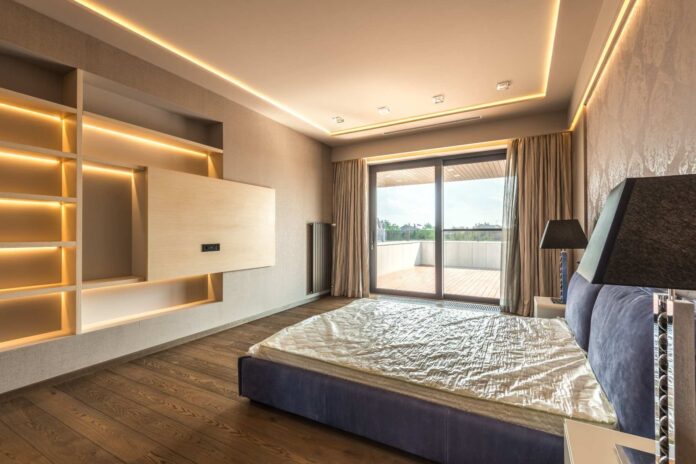
Most “black room decor” lists hand you 20–30 photos of finished rooms and let you guess which ideas fit yours. The real question isn’t style — it’s how much you’re willing to commit, and whether you’re prepared for what black actually looks like a week after you clean it. Sort by your situation below.
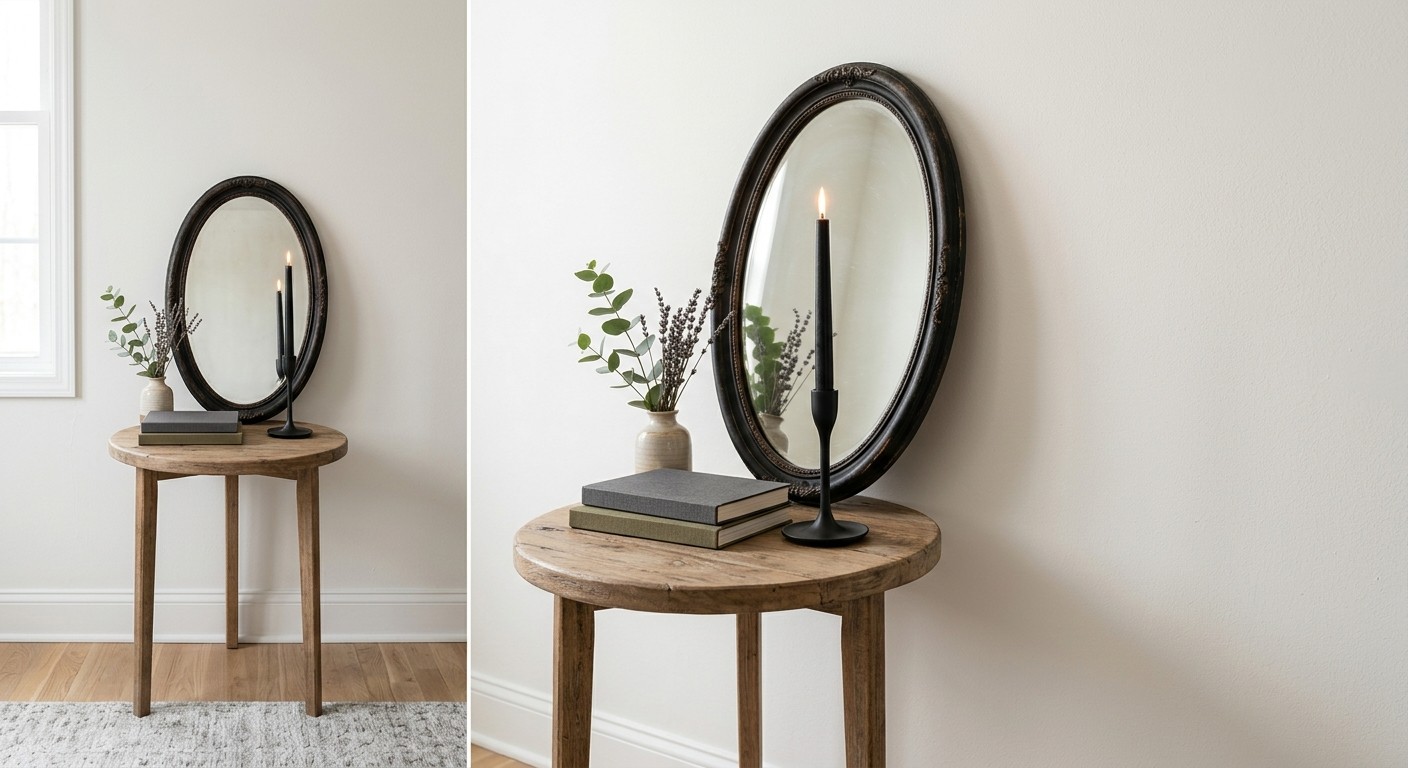
If you just want to test black without committing
This is the safest entry point, and it’s where most people should actually start before repainting anything.
- Black-framed mirror or gallery frames (Modern, Minimalist) — swaps in for existing frames with zero wall damage. Approx. $ 1,000–3,500 depending on size.
- Textured black throw pillows in velvet or bouclé (Glam, Boho) — the cheapest way to see how black reads in your actual lighting before buying anything bigger. Approx. $ 800–2,500 per cover.
- Black ceramic vases or taper candlesticks (Minimalist, Farmhouse) — small, moveable, and easy to remove if you don’t like the effect. Approx. $. 600–2,000.
- Before/after: a beige side table with a black lamp and a black-framed print reads intentional; the same table with no dark anchor reads unfinished. The shift is small, but it’s the difference reviewers of these lists usually skip.
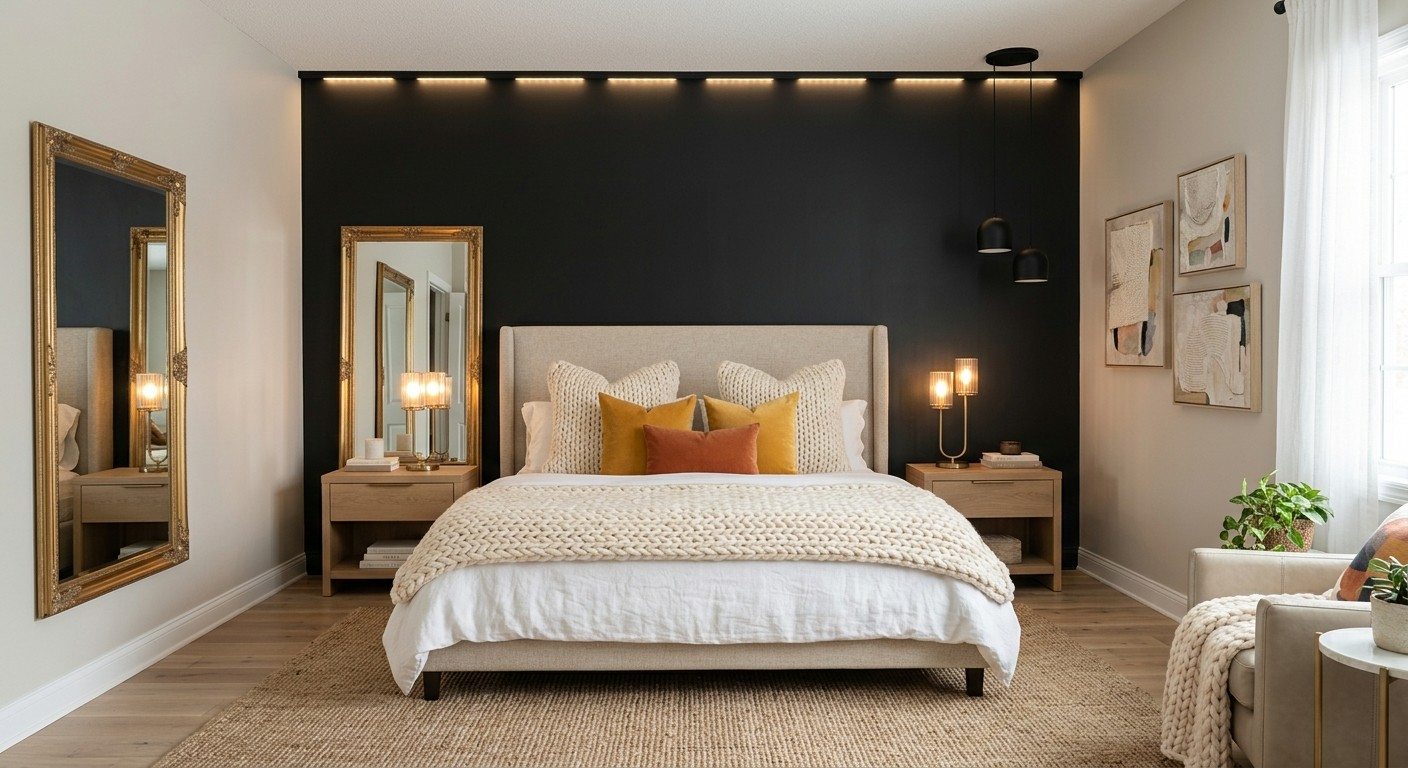
If you’re ready for a bigger step — but not a full black room
This is furniture or a single wall, not the whole space.
- One accent wall behind the bed or sofa (Modern, Maximalist-adjacent) — the standard entry-level DIY project; a can of paint and an afternoon. Skip pure jet black here — designers point out that the darkest possible black often reads harsher than a slightly softer, warmer-toned black, which still looks dramatic but is easier to live with day-to-day.
- Peel-and-stick black wallpaper or removable wall panels (Boho, Modern) for renters — same visual effect, no lease violation, comes off at move-out.
- One statement furniture piece — a black bouclé armchair or a black coffee table (Modern, Scandinavian) — carries the look without touching the walls at all. Approx. $ 15,000–40,000 for a mid-range accent chair, depending on material.
- Honest trade-off: an accent wall is easy to redo if you change your mind; a black furniture piece is a bigger financial commitment and harder to “undo” once it’s in the room.
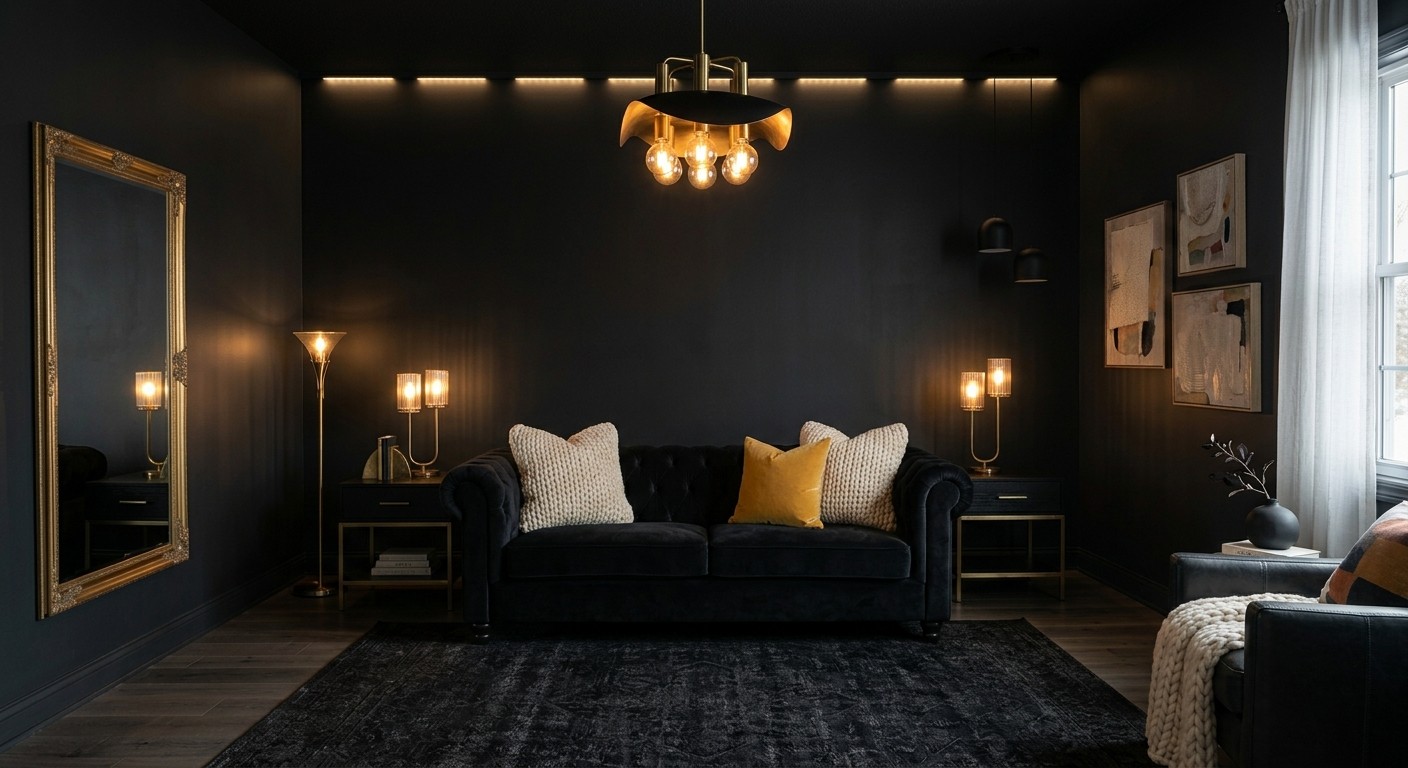
If you want a fully black (or majority-black) room
- Layer lighting before you paint — ambient, task, and accent light sources, not just an overhead fixture. This isn’t optional in a black room the way it’s optional in a lighter one; skipping it is the single most common reason a black room ends up feeling like a cave instead of a den.
- Mix textures deliberately — velvet, faux fur, matte-painted wood, and a metallic accent (brass, gold, or aged copper) in the same room. Flat black-on-black without texture variation is what makes a space look unfinished rather than moody.
- Choose your black by undertone, not just “black” — some tint slightly warm, some cool; test a sample patch under your actual bulbs before committing to gallons of paint.
- Honest trade-off: a fully black room is the most expensive to reverse. If you’re not sure you’ll want it in two years, this is the option to delay, not the one to start with.
If your room is small or doesn’t get much natural light
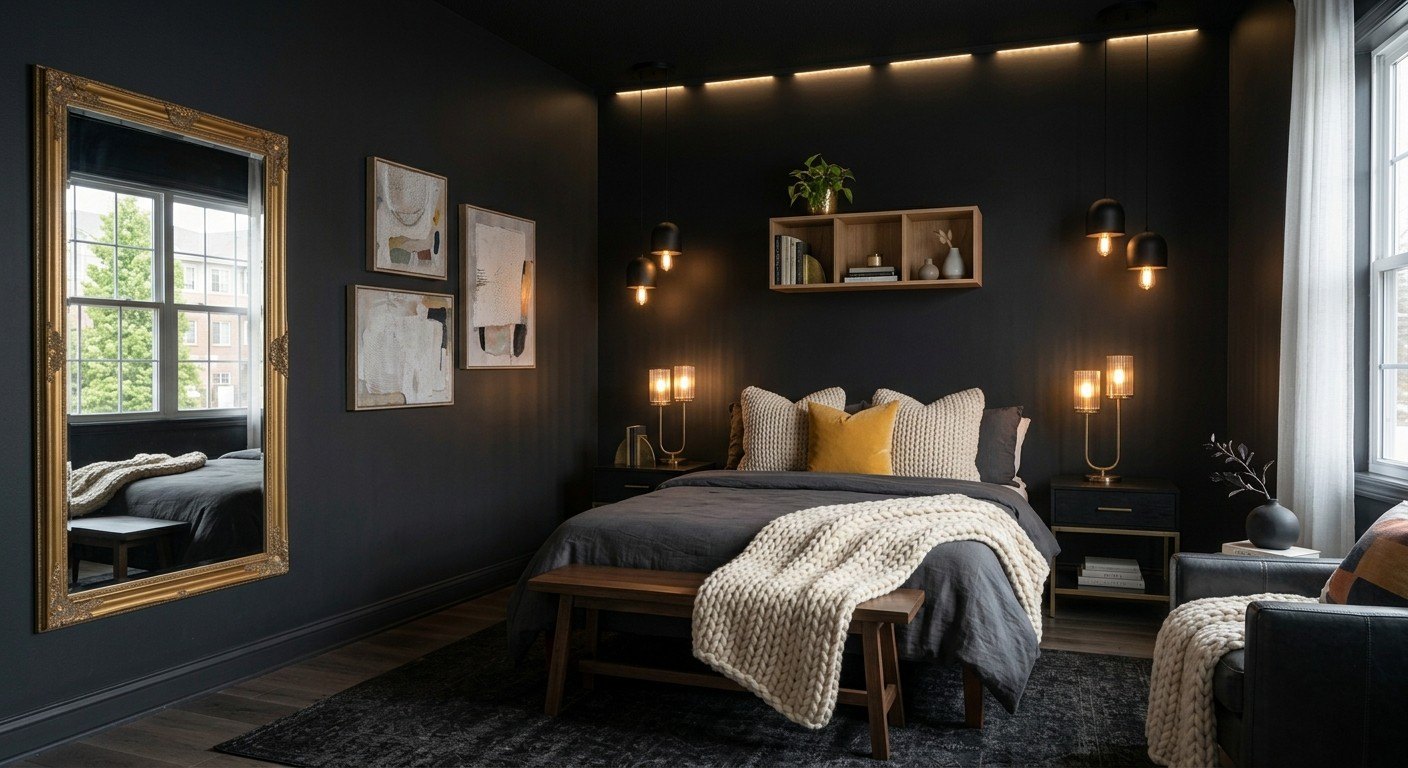
Design advice genuinely splits here, so both views are worth knowing. One camp says skip dark colors in small or dim rooms outright, because they can make the walls feel closer. Another camp argues black works fine in small spaces if it’s used on one plane — a single wall, a door, or trim — with a mirror or reflective surface placed to bounce whatever light exists back into the room. In practice: full-room black in a windowless space is the riskiest version of this idea; a single black wall opposite a mirror or a bright window is the version most likely to work.
The maintenance reality nobody puts in these lists
This is the part that gets skipped in almost every black-room guide, and it’s the difference between loving the room in month one and resenting it by month six.
- Black surfaces show dust, fingerprints, and pet hair more visibly than lighter ones — this isn’t a myth; it’s just rarely mentioned before you buy.
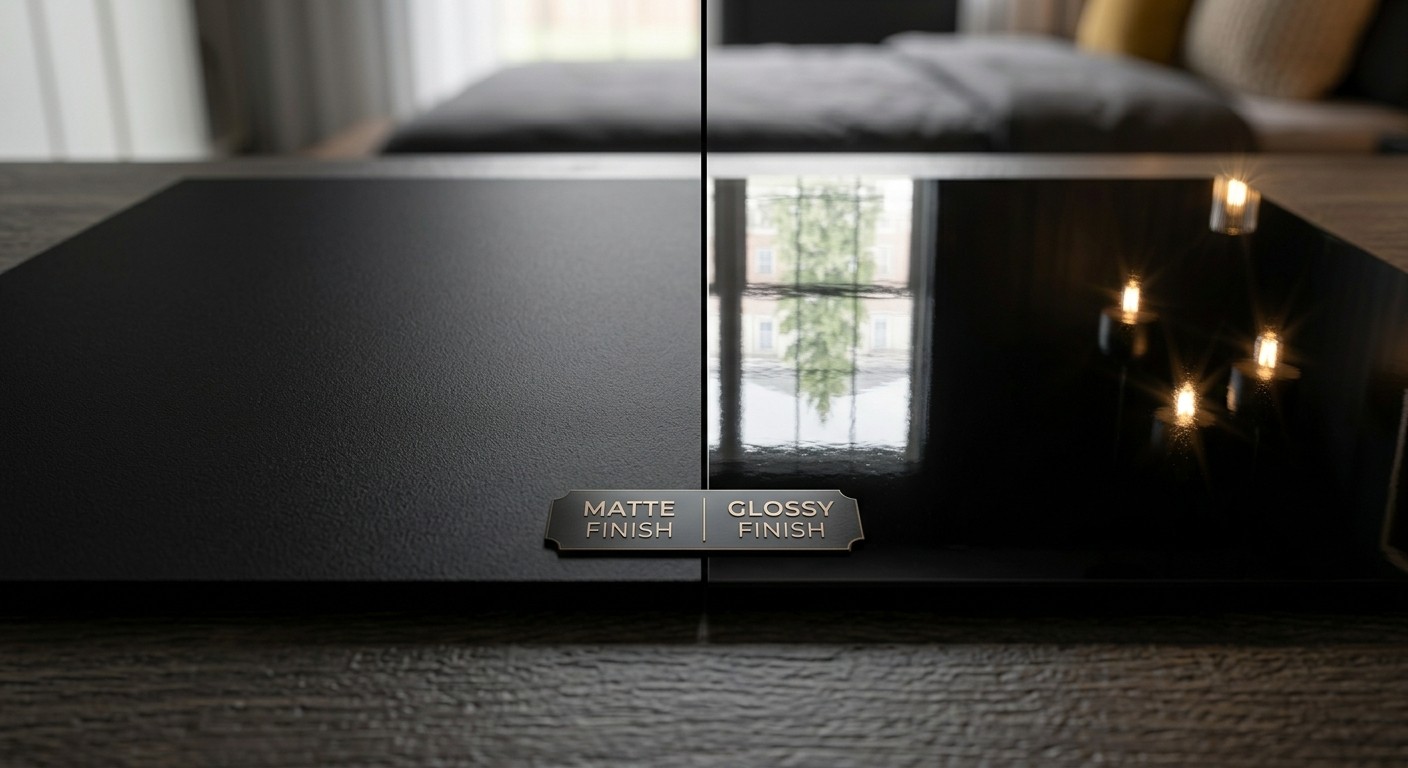
- Matte finishes tend to scatter light, so a light layer of dust reads more like texture than a visible film — a reasonable pick for larger surfaces like an accent wall or a headboard.
- Glossy or lacquered black looks striking but shows every fingerprint and smudge almost immediately — better reserved for smaller accent pieces (a side table, a picture frame) that you’re willing to wipe down often, rather than a door or light switch plate that gets touched constantly.
- If you have pets or live somewhere dusty, weigh this before choosing black bedding or a black sofa specifically — it’s a genuinely higher-upkeep choice, not just a style one.
Ideas that work no matter your situation
- Warm-toned lighting (roughly under 3000K) — keeps black from reading cold or clinical.
- A mix of two or three metallics — brass, gold, or aged copper against black is close to universally recommended across every style.
- Real or realistic plants — the one contrast element that softens black in literally any room, at low cost and low risk.
Quick decision summary
| Your situation | Priority move | Skip |
|---|---|---|
| Testing the look | Frames, pillows, small accents | Full wall or furniture commitment |
| Bigger step, still reversible | One accent wall, removable wallpaper, one furniture piece | Full-room paint |
| Fully committing | Layered lighting, mixed textures, a softer-toned black | Overhead-only lighting, flat single-texture black |
| Small or low-light room | Black on one plane + a mirror opposite it | Full black with no reflective surface |
| Any black room | Matte on large surfaces, glossy only on small wipeable pieces | Glossy black on doors/switches/high-touch spots |
If you take one thing from this: match your black to how reversible you want it to be, and don’t skip the maintenance question just because it’s not in the photos.