Most “living room decor ideas” lists give you 50 to 100 options and leave you to figure out which ones actually fit your life. That’s backwards. A rental apartment, a small open-plan space shared with a toddler and a dog, and a formal sitting room you use twice a year all need completely different decor — even if the aesthetic goal is the same.
This guide skips the grab-bag approach. Start by picking the situation closest to yours, then use the ideas built for it.
Why “figure out your style first” isn’t enough
Nearly every decorating guide opens with some version of “decide how you’ll use the room before you decorate it.” Then it hands you the same list of 77 generic ideas, no matter your answer. That’s not useful advice; it’s a disclaimer.
The honest version: your lease, your square footage, and who else lives in the space eliminate a huge chunk of the “idea” list before you even get to style. A gallery wall means something different when you can’t put a nail in drywall. A “statement rug” means something different when a puppy lives on it. Style is the last decision, not the first — the constraints below narrow the field first.
If you’re renting: work around the lease, not against it
Renters lose access to the ideas that dominate most lists — paint, permanent fixtures, wallpaper, drilled shelving — which is exactly why “living room ideas” and “renter-friendly ideas” get treated as two separate topics online. They shouldn’t be. Here’s what still works within a standard lease:
- Command-strip picture ledges instead of drilled shelving — you can display books and art without wall damage, and rearrange in minutes.
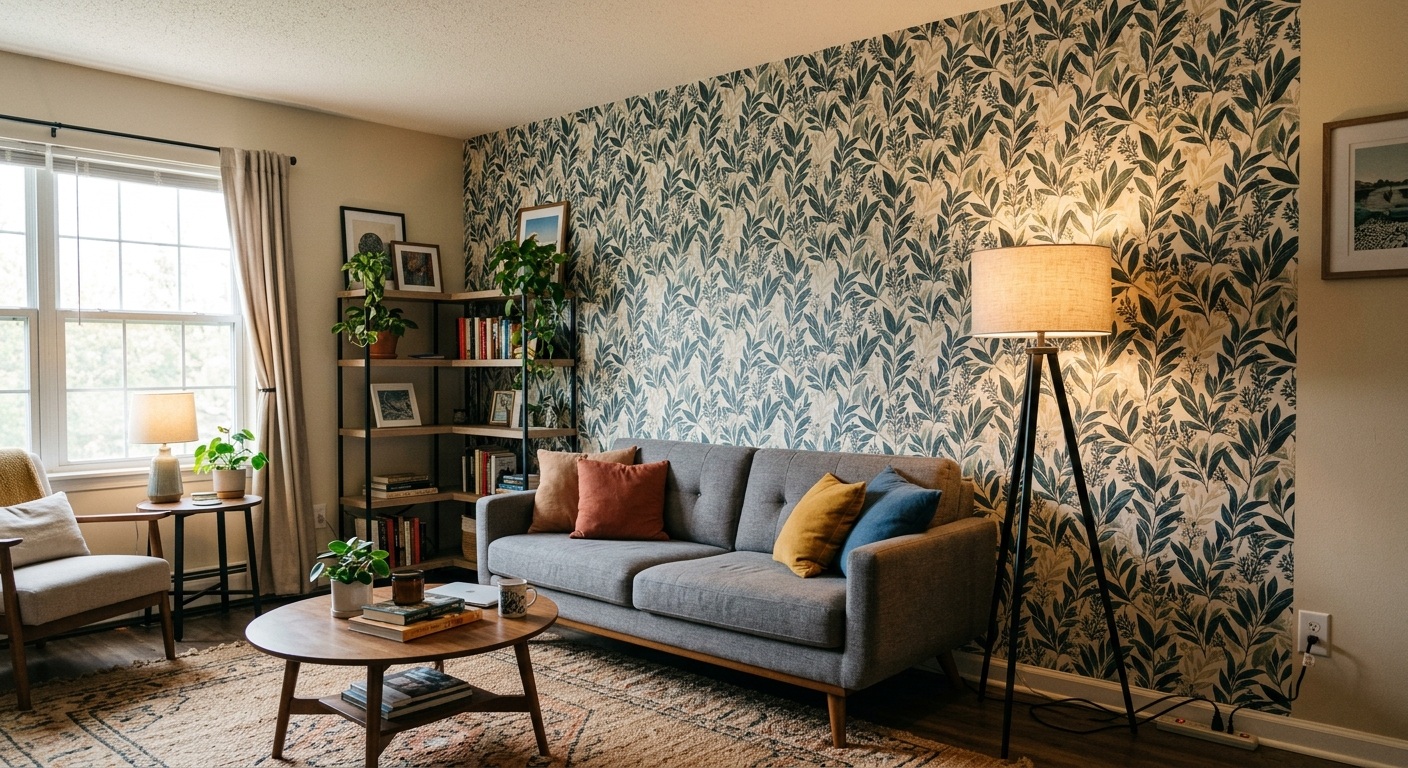
- Peel-and-stick removable wallpaper on one wall only, chosen in a pattern you actually like rather than a “safe” neutral — since it comes off cleanly, there’s less reason to play it safe.
- A large area rug over rental-grade flooring you don’t control — this does double duty of covering worn floors and defining a distinct living area, especially in a studio.
- Plug-in floor and table lamps with dimmer-capable bulbs in place of overhead lighting you can’t rewire — layered lamp light almost always looks better than a single center fixture anyway.
- Furniture that can define zones without built-ins — a bookcase, console table, or slim sideboard positioned as a room divider does the job permanent walls would.
The honest trade-off: renter-safe methods cost a bit more upfront per square foot of impact (adhesive products, portable furniture) than a $10 can of paint would. You’re paying for reversibility, not avoiding cost altogether.
If your living room is small or doing double duty
A living room that’s also your home office, guest room, or dining space needs decor decisions a bigger dedicated room never has to make.
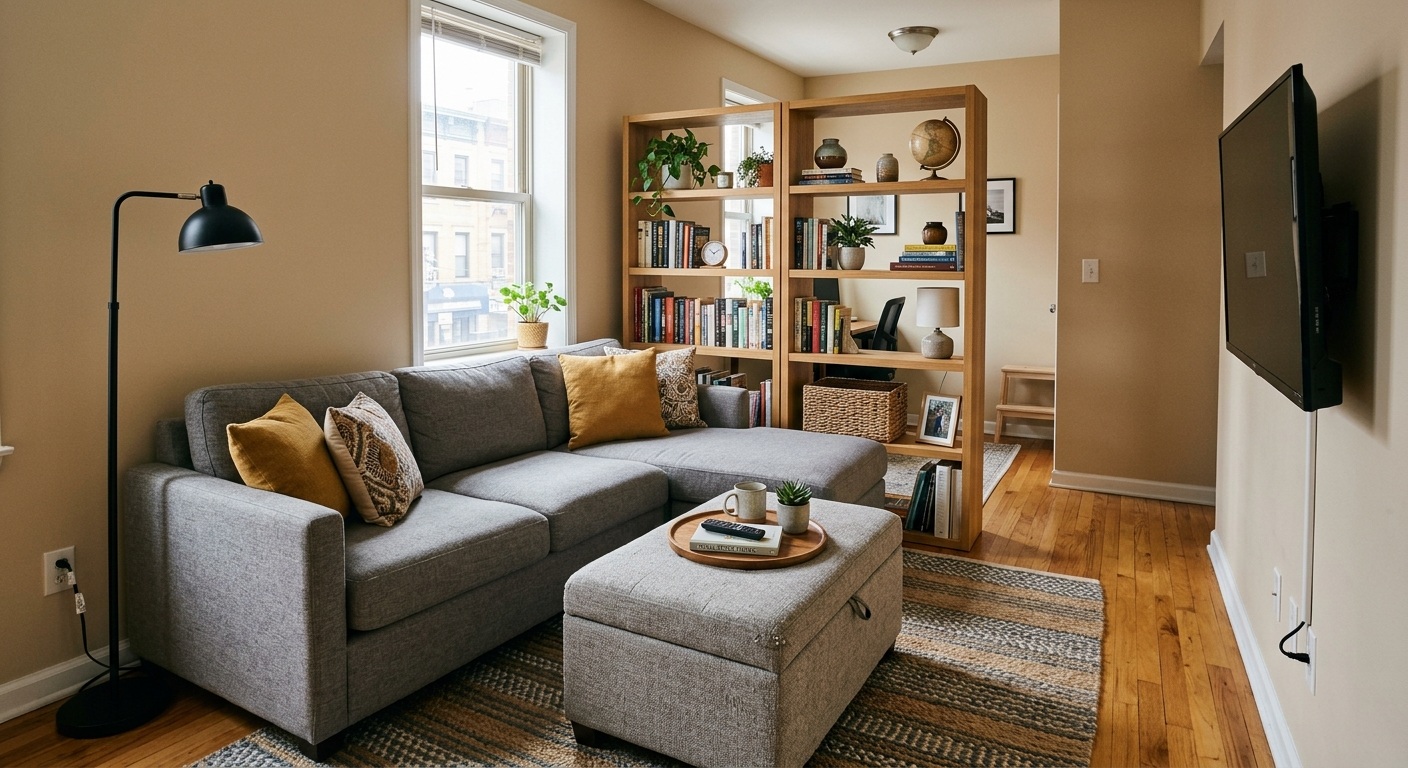
- Multi-functional furniture first, decor second — a storage ottoman that serves as a coffee table and hidden storage, or a daybed that works as both a sofa and guest bed, solves a space problem that no amount of styling fixes afterward.
- One rug size mistake to actually avoid: sizing it too small. Designers generally recommend leaving somewhere in the range of roughly 12 to 24 inches of bare floor around a rug’s edge (sources vary on the exact number), with at least the front furniture legs resting on it — a too-small rug is the single most common reason a small living room photographs and feels cluttered rather than cozy.
- Vertical storage over floor storage — wall-mounted shelving frees up walking paths, which matters more in a small footprint than in a large one.
- A room divider that does two jobs — an open bookshelf used to separate a living area from a workspace both zones the room and adds storage, instead of adding a decorative screen that does neither.
- Light, undyed or pale rugs and curtains to bounce light around a room that’s also absorbing furniture from two functions.
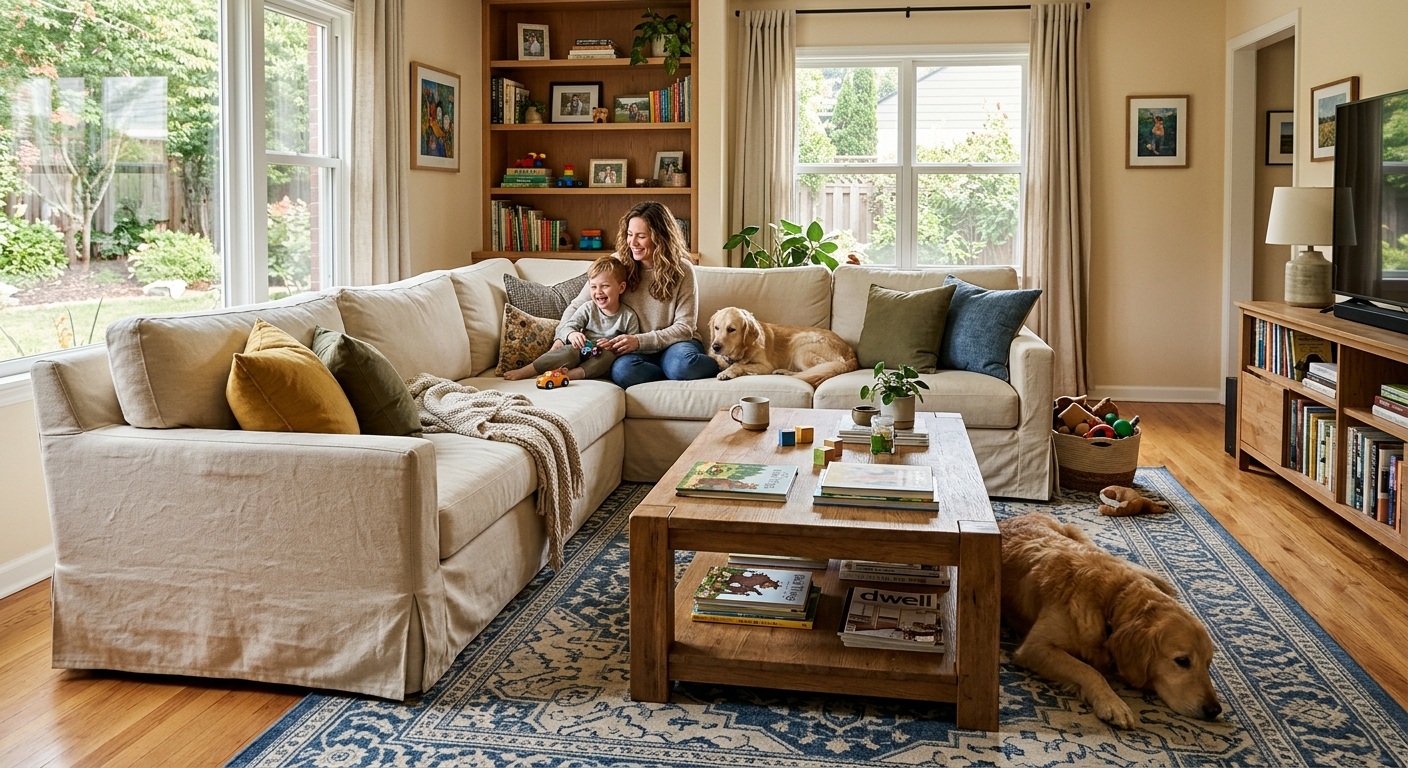
If kids or pets share the room
This constraint gets a single throwaway line (“choose a durable coffee table”) on most lists, then never comes up again — even though it should shape almost every material choice in the room.
- Solid wood or metal coffee tables over glass — the most repeated piece of advice across design sources for households with kids, and worth taking seriously rather than treating it as optional.
- Washable slipcovers on sofas and washable rugs in high-traffic zones — this single decision saves more stress long-term than any styling choice.
- Rounded furniture edges in the main walking paths, particularly around coffee tables.
- Durable, low-pile rugs instead of shag or loop styles that snag claws or trap crumbs.
- Closed storage (baskets, ottomans with lids, low cabinets) instead of open shelving at floor level, so toys and pet gear have a home that isn’t the sofa.
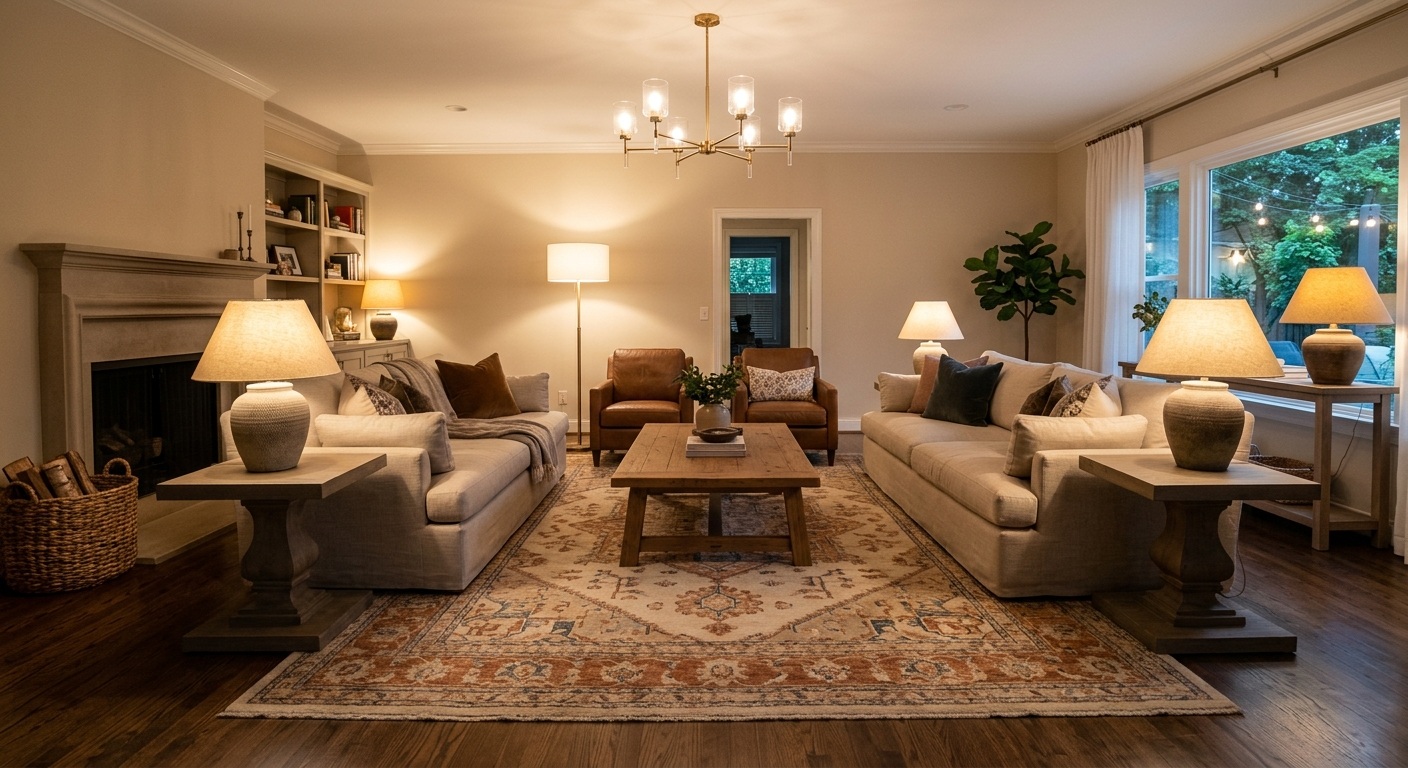
If you have a dedicated, full-sized living room
This is the one situation where the classic “idea list” content genuinely applies without much adaptation — you have room to commit to a look.
- A rug sized to your full seating group, with all furniture legs on it if the room is large enough — this is the “go big” scenario where oversized almost always beats undersized.
- A defined focal point (fireplace, large window, statement art) that furniture is arranged around, rather than furniture arranged around the TV by default.
- Layered lighting — overhead, table, and floor lamps at three different heights, rather than one central fixture doing all the work.
- A gallery wall or full bookcase styling, since you’re not limited by lease restrictions on nails or nooks.
Ideas that work no matter your situation
A handful of moves show up across every genuinely useful source and don’t depend on your constraints:
- Add real or realistic plants — texture and life at a low cost, and one of the few ideas with zero downside regardless of space, lease, or household.
- Swap harsh overhead light for warm-toned bulbs — a same-day, low-cost change with an outsized effect on how “finished” a room feels.
- Arrange seating to face each other, not just the TV — encourages conversation and reads as more intentional in photos and in person.
- Edit before you add — removing three mismatched objects usually improves a room more than adding one new one does.
Quick decision summary
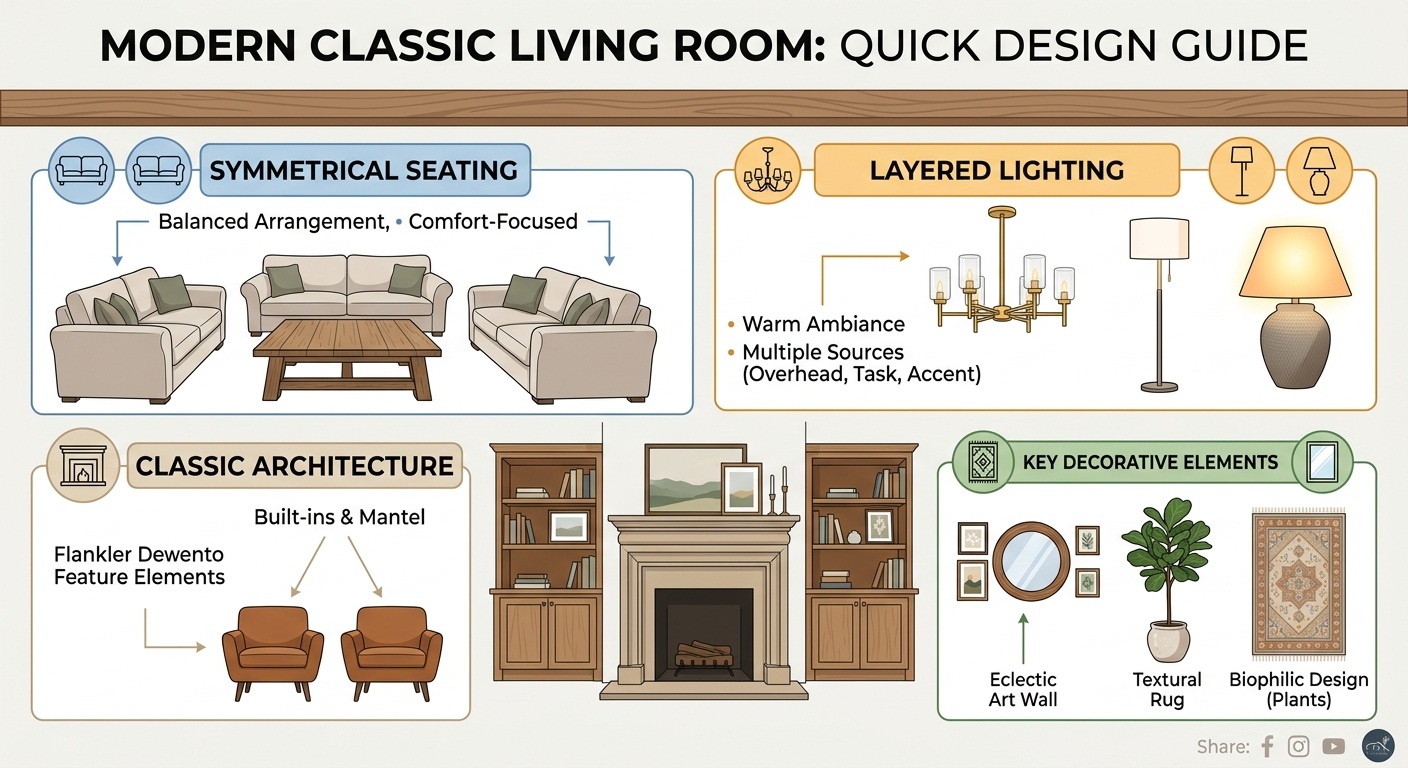
| Your situation | Priority move | Skip |
|---|---|---|
| Renting | Peel-and-stick wallpaper, plug-in lighting, freestanding dividers | Paint, drilled shelving, permanent fixtures |
| Small/multi-purpose | Multi-functional furniture, vertical storage, correctly sized rug | Oversized statement furniture |
| Kids or pets | Washable textiles, solid coffee tables, closed storage | Glass tables, high-pile rugs, all-open shelving |
| Dedicated full room | Full-size rug under all furniture, layered lighting, gallery wall | Undersized rug, single overhead light |
If you only take one thing from this: match the idea to your constraint before you match it to your style. Style is easy to change later. A rug that’s too small for a pet, or a shelf you can’t legally drill into, isn’t.