A Pink Princess philodendron does best in bright, indirect light: a few feet back from an east window, or at a west window softened by a sheer curtain. That one choice decides how much pink you keep, so pick the spot before you pick the pot. Below you’ll find where to put it by window direction, how to style it so it looks intentional, and how to keep new leaves pink.
Why placement matters more than usual
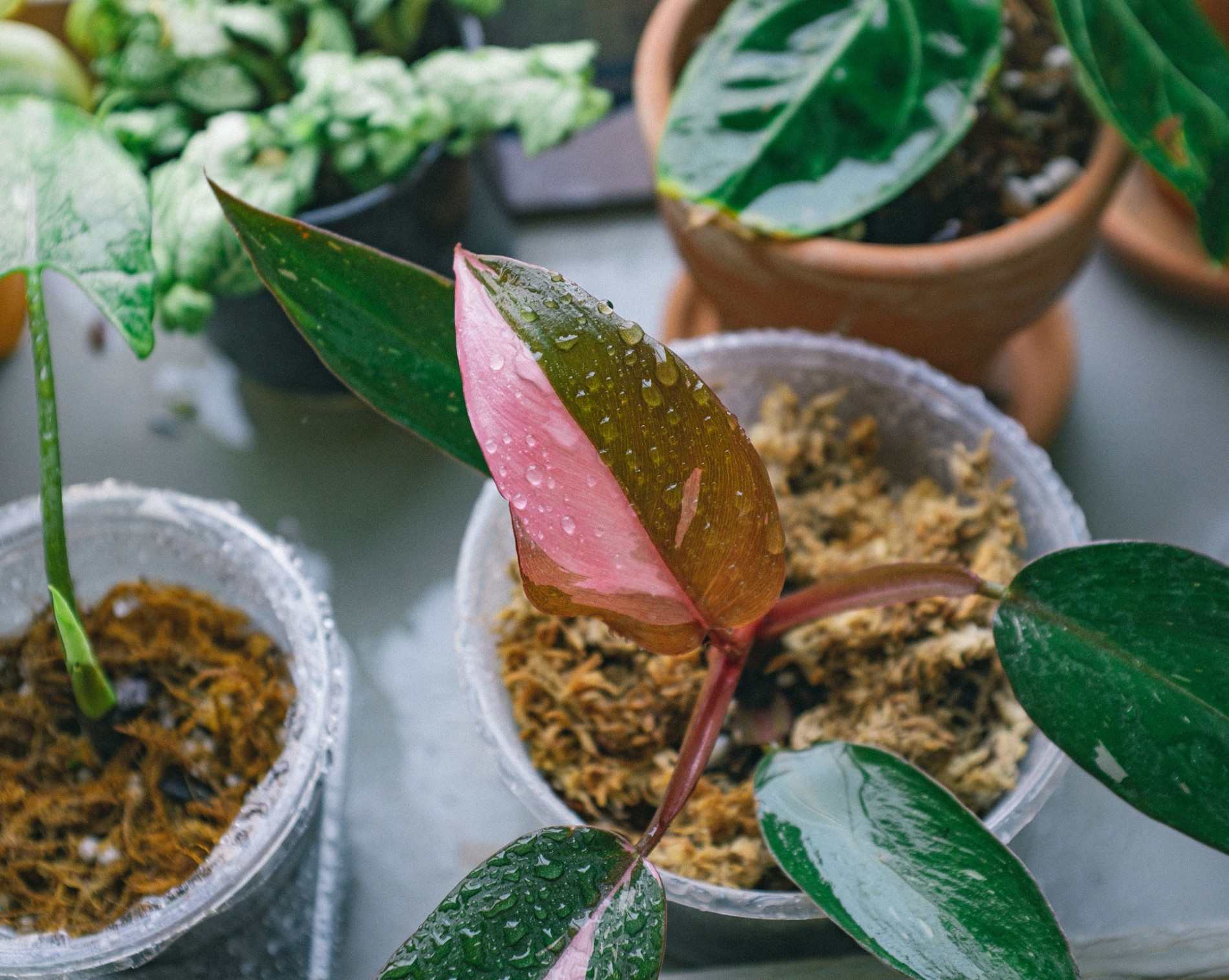
The pink patches on a Pink Princess are leaf tissue with no chlorophyll, according to Epic Gardening. That tissue can’t make energy for the plant, and it burns easily in strong sun. In dim rooms, the plant tends to push out greener leaves instead. Each new leaf is also a gamble: Costa Farms notes that some leaves carry a few pink dots while others are mostly pink.
Size depends on who you ask. Garden Betty says up to about 4 feet, often around 2 feet in a pot. Costa Farms says it can pass 6 feet with support. Expect a slow-growing climbing vine rather than a compact bush.
Pick the spot by window direction
| Window | What to expect | What to do |
|---|---|---|
| East | Gentle morning sun. Epic Gardening calls this a good fit. | Place it within a few feet of the glass. Usually the easiest spot. |
| West | Hot afternoon sun can scorch the pink areas. | Filter with a sheer curtain or move it back from the glass. |
| South | The RHS lists south as an acceptable aspect. In the US, it is usually the brightest exposure (my judgment). | Pull it back or filter it. Watch for bleached or crispy pink patches. |
| North or a dim room | Costa Farms says it survives, but growth slows and pink fades. | Add a full-spectrum grow light, or choose a different plant for that spot. |
Read the leaves. New growth coming in too green means you need more light. Pink patches turning brown or crispy means you need less.
Keep it away from heating vents, air conditioners, and drafty windows. Epic Gardening puts the comfortable range at about 65–80°F. Garden Betty says it survives down to 55°F, but not for long.
Rooms that work
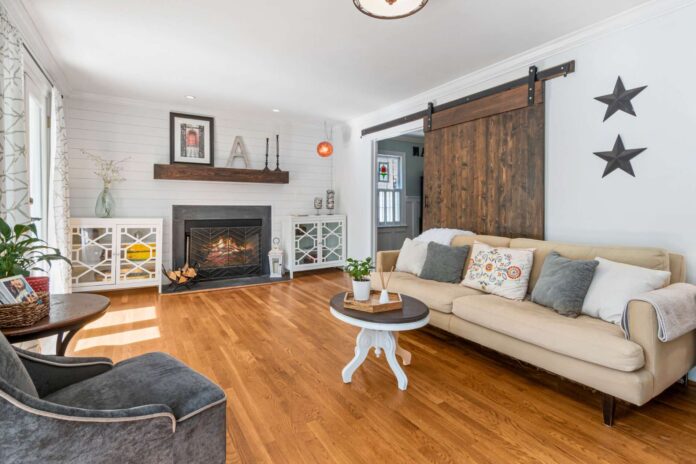
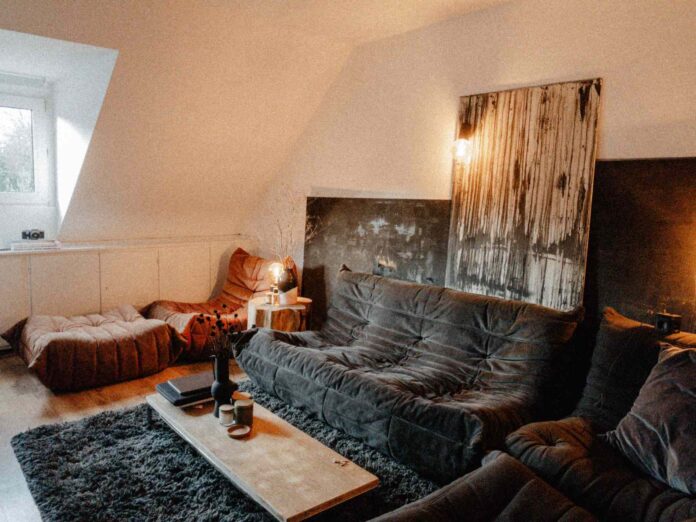
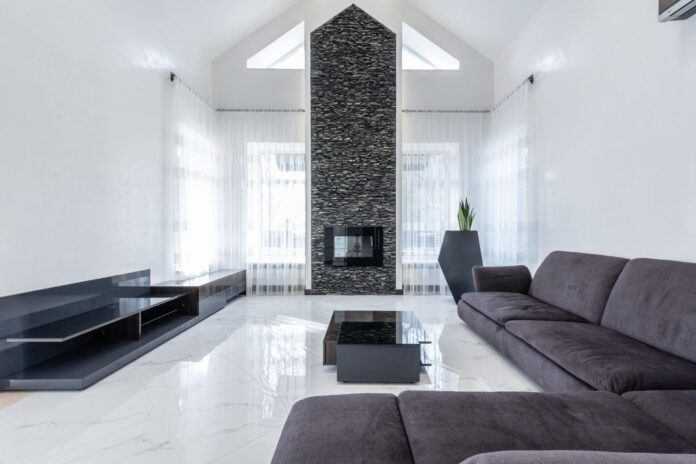
Living room. The bright window zone is often where the sofa or a tall cabinet already sits. Plan the plant like any other piece: tape its footprint on the floor and keep walkways clear. Our living room furniture guide covers the tape method and clearances.
Bathroom. Garden Betty notes a naturally humid bathroom with filtered window light can suit it. A bathroom with no window won’t.
Bedroom or home office. Only with a bright window or a grow light. A nightstand across the room is usually too dim (my judgment).
Style it so it looks intentional
- Pot setup. Keep the plant in a nursery pot with drainage holes and set it inside a decorative cover pot, as Garden Betty suggests. Empty the cover after watering so roots never sit in water.
- Pot size. When repotting, go about 2 inches wider, per Garden Betty.
- Pot color. My suggestion: a solid neutral such as white, black, terracotta, or matte ceramic lets the leaves carry the color. A busy pattern competes with the variegation.
- Support. It climbs. Costa Farms recommends a moss pole, totem, or trellis. Epic Gardening says climbing growth tends to give larger leaves. Treat the pole as part of the look and pick one that matches your pot.
- Pairings. Costa Farms suggests a pink-variegated Aglaonema, a purple-black ZZ plant, or a cream-striped Xanthosoma. Grouping plants also raises humidity around them, as Garden Betty notes.
- Backdrop. My suggestion: dark green and pink read best against a quiet wall such as warm white or soft gray. Against a busy pattern, the plant gets lost.
- Height. If the sill is too narrow, use a plant stand so the vines clear furniture.
Keep it pink
- Light first. Move it closer to the window when growth comes in green. Pull it back or filter the light when pink scorches.
- Prune to protect variegation. Both Epic Gardening and Garden Betty advise cutting all-green growth back to just above a node on a well-variegated section. Completely pink leaves can’t sustain themselves, so cut those back too.
- Water by touch. Water when the top 2 inches of soil are dry, let it drain, and never leave it standing in water. Epic Gardening and Costa Farms both flag overwatering as the main risk.
- Feed lightly. Use diluted houseplant fertilizer in the growing season. Epic Gardening warns that too much nitrogen can favor green growth.
- Humidity. More helps growth, but sources disagree on how much it needs (see above).
Buying: price and traps
In the retail listings I checked on October 20, 2026, most 4–6 inch plants cost about $16–$40, with some sellers asking $60–$70. Prices were far higher in earlier years, and they change often, so compare the delivered total and the return policy, not just the listing price. Variegation varies from plant to plant, so ask for a photo of the exact plant. Two lookalike traps (Pink Congo and “Pink Princess seeds”) are covered in the FAQ below.
Pets and kids
The ASPCA lists philodendrons as toxic to dogs and cats. The ASPCA entry I found is for variegated philodendron in general, and I found none named for Pink Princess. Signs include mouth irritation, drooling, vomiting, and trouble swallowing. The RHS also flags the sap as a skin irritant, so wear gloves when pruning. Place it where pets and small children can’t reach it. If a pet eats some, call your vet or the ASPCA Animal Poison Control Center at (888) 426-4435.
Before you bring it home
- A spot gets bright, indirect light for most of the day, or you have a grow light ready.
- It’s away from vents, AC, and drafts.
- It sits in a drainage-hole pot with a decorative cover.
- There’s room for a moss pole as it grows.
- Pets and kids can’t reach it.
- You’ve compared the delivered price and seen a photo of the actual plant.
FAQ
Is Pink Congo the same plant? No. Garden Betty says Pink Congo has fully pink leaves that are chemically treated and later turn green. A Pink Princess has mixed pink and green leaves.
Can I grow one from seed? Not reliably. Garden Betty says seed-grown plants come out plain green because the variegation comes from cuttings of a mother plant.
Does it need a moss pole? It isn’t required, but it climbs, and Costa Farms says it appreciates support. Epic Gardening links climbing to larger leaves.
How big will it get? Sources vary: roughly 2–4 feet in a pot to 6+ feet with support. It grows slowly, so plan for years, not months.