Fire safety is not a decor topic until your pretty kitchen is the one on fire. The kitchen is where heat, oil, cords, and fabric all meet, and styling choices change how that mix behaves.
Why Kitchens and Cords Are the Usual Suspects
In the US, cooking is the leading cause of home fires, and unattended cooking is by far the biggest factor. Most cooking fires begin with the cooking materials themselves: food, fat, and grease. That is why small habits matter more than gadgets.
Electrical fires follow a different pattern. They tend to start of sight, in an overloaded outlet, a pinched cord behind a fridge, or a frayed lead under a rug. The hazard is invisible until it isn’t.
Stove Zone Rules (Pick Your Cooking Style)
If you fry or use hot oil often
- Stay in the room. If you have to leave, turn the burner off.
- Keep a lid or baking tray within arm’s reach before you start.
- Keep the hob clean, because grease build-up feeds fires.
If you cook in short bursts (weeknight cooking)
- Use a timer every time. Kitchens are chaotic, and it’s easy to lose track.
- Turn pan handles inward so they can’t be knocked.
- Skip loose, dangling sleeves near burners.
If you host big meals (holidays, parties)
- Your stove and oven are working hardest, and your attention is most divided. In US data, Thanksgiving and Christmas are peak days for cooking fires. I couldn’t find equivalent UK or Australian peak-day data.
- Agree who is watching the stove, and don’t let a conversation pull you out of the room.
Honest take: A timer is the cheapest and most effective tool on this list, and almost nobody uses one consistently.
When Your Decor Becomes Fuel
This is the part most fire-safety lists skip. A kitchen isn’t just appliances. It’s textiles, wood, and paper arranged around a heat source.
Appliance manuals tell owners to keep combustible wall coverings, curtains, and drapes a safe distance from the cooktop. Check your own manual for the exact clearance, because it varies by model.
| Style | Common items near the stove | Fire-smart swap |
|---|---|---|
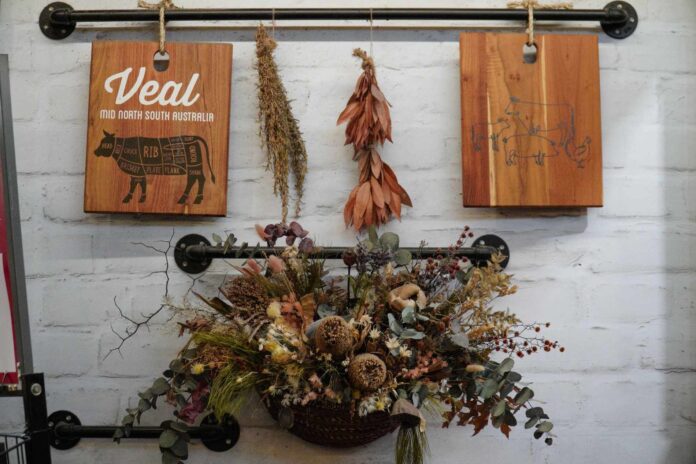
| Farmhouse | Wooden signs, linen towels, dried herb bundles | Move signs and herbs away from burners; hang towels on a rail by the sink |
| Boho | Macramé, dried pampas, trailing plants | Keep fibres and dried stems on the far side of the room |
| Rustic | Open wood shelves, cutting boards | Fine on non-cooking walls; keep paper, wooden utensils and packaging off the range |
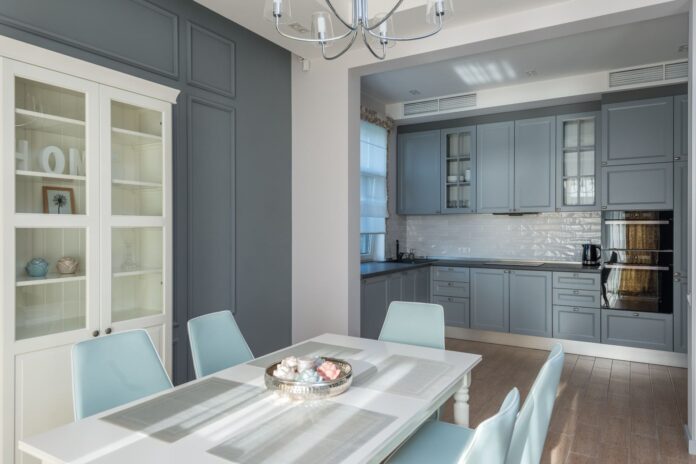
| Coastal | Rope baskets, jute, cotton curtains | Short, tie-back curtains, or a window blind beside the hob |
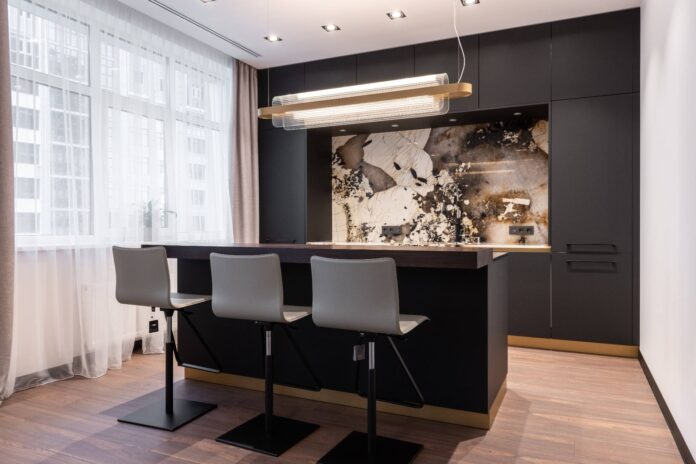
| Modern / Minimalist | Few items | Keep the clear counter habit; don’t pile mail or packaging by the cooktop |
Before and after: Before, a pretty linen towel hangs from the oven door handle and a scented candle sits beside the hob. After, the towel moves to a rail near the sink and the candle becomes a flameless LED on a shelf away from cooking. The kitchen looks identical in photos.
Wall art above the stove: steam and heat can damage art, and the Hauslane range-hood guide advises against flammable seasonal decor there. Consider metal, tile, or glass pieces, or move the art to a non-cooking wall. For more on what suits the space above cabinets, see our guide to kitchen decor ideas for above cabinets.
Buying decor: shopping for wall pieces at a craft retailer? Think about material and location before you buy. Our breakdown of farmhouse kitchen wall decor from Hobby Lobby covers what to buy and what to skip.
Honest take: The stove wall is the one place where “it looks great” and “it’s a good idea” can disagree. Put the display on a different wall.
Electrical Safety Without Rewiring
If you rent or have a small kitchen with few outlets
- Plug heat-producing appliances like microwaves and coffee makers directly into a wall outlet, not an extension cord.
- Never plug one power board into another.
- Treat extension cords as temporary, not as permanent wiring.
If you own your home
- Ask a licensed electrician about adding outlets so you don’t depend on cords.
- Ask about circuit protection for your region. In the US, that means GFCI and AFCI protection; UK and Australian homes use different devices, so ask your electrician. This is not something to DIY.
For everyone, every few months
- Check cords for cracks and frayed ends, especially hidden ones behind furniture or under rugs.
- Replace damaged cords. Don’t repair them with tape.
- Unplug small appliances like toasters when you’re not using them, and keep toasters away from curtains and kitchen rolls.
- Follow the manufacturer’s instructions when charging devices, and be extra careful with lithium-ion batteries.
Decor tie-in: string lights, decorative lamps, and plug-in warmers are all electrical items too. Don’t tuck cords under rugs, and don’t daisy-chain decorative lights into a kitchen power board.
The Safety Kit, by Budget
Prices below are US retail listings (USD). I couldn’t verify UK or Australian prices, so check local retailers before you publish or buy.
| Budget | What to get | Approx. price (US) | Best for |
|---|---|---|---|
| Under $30 | Battery photoelectric smoke alarm for near the kitchen, or a fire blanket | $19–30 | Renters, small kitchens |
| $30–70 | Kitchen-rated or 2.5 lb ABC extinguisher; 10-year sealed smoke alarm | $21–68 | Family kitchens |
| $45–70 | 3-in-1 kit (extinguisher, blanket, escape hood) | about $45–60 | Best value for a full setup |
| $45–70+ | Hardwired smoke alarm with battery backup | $45–70 | Homeowners during a refit |
Honest take: A fire blanket is the cheapest tool for a pan fire, but only if it’s mounted where you can reach it without leaning over the flames.
If a Grease Fire Starts
- Turn off the heat if it’s safe to do so.
- Cover the pan with a metal lid or baking tray, or lower a fire blanket over it carefully. Don’t throw the blanket, and don’t use a glass lid.
- For a small fire, a large amount of baking soda or salt can smother it.
- Never use water, flour, or baking powder.
- Don’t carry a burning pan.
- If it doesn’t go out immediately, get everyone out and call emergency services (911 in the US, 999 in the UK, 000 in Australia).
Frequently Asked Questions
What is the number one cause of kitchen fires?
Unattended cooking is the leading factor in home cooking fires, according to US National Fire Protection Association data. Walking away from a pan of oil, even briefly, is the classic trigger. Staying in the kitchen, using a timer, and turning the burner off whenever you leave the room removes the biggest risk.
How do you put out a grease fire?
Turn off the heat and smother the flames with a metal lid, baking tray, or fire blanket. Never use water, flour or baking powder. For small fires, plenty of baking soda or salt can also smother the flames. If the fire doesn’t go out immediately, leave the home and call emergency services.
What are the most common causes of electrical fires at home?
Overloaded outlets, daisy-chained power boards, extension cords used as permanent wiring, and damaged or frayed cords are among the most commonly cited causes. Old wiring and faulty appliances also contribute. Many hazards are hidden, such as cords under rugs or behind furniture, so check them regularly.
Can I use an extension cord for kitchen appliances?
Fire services advise plugging heat-producing appliances like microwaves and coffee makers directly into a wall outlet. Extension cords are for temporary use only, and you should never plug one power board into another. If you lack outlets, ask a licensed electrician about adding more.
Where should I keep a fire blanket in the kitchen?
Mount it near a door out of the kitchen, so you aren’t reaching across a fire to grab it. Practise pulling the tabs once, before you ever need it. If you use it on a real fire, replace it afterwards.
Your Quick-Reference Checklist
Do these once, then repeat the cord check every few months.
- Smoke alarm near the kitchen, tested monthly
- Timer habit every time the hob is on
- Lid or baking tray handy when cooking with oil
- Fire blanket mounted near a kitchen exit
- Towels, signs, herbs and candles moved off the stove wall
- Heat-producing appliances plugged directly into wall outlets
- No daisy-chained power boards
- Cords inspected for cracks, especially hidden ones
- Kitchen is ready for a new setup? Our kitchen decor ideas for house warming guide is a good moment to add these basics, and a fire blanket also makes a practical housewarming gift.