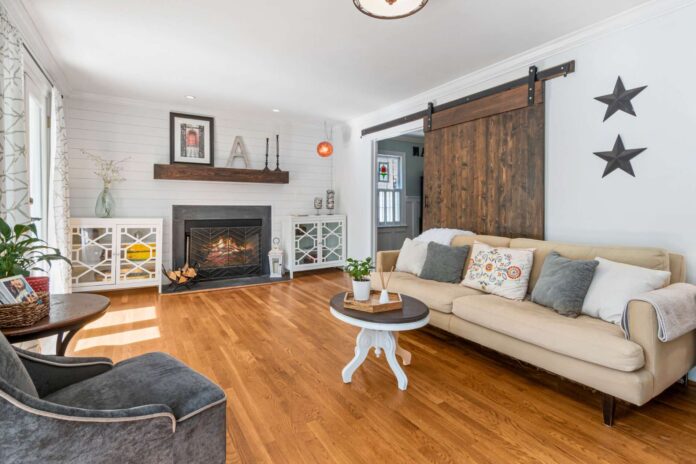
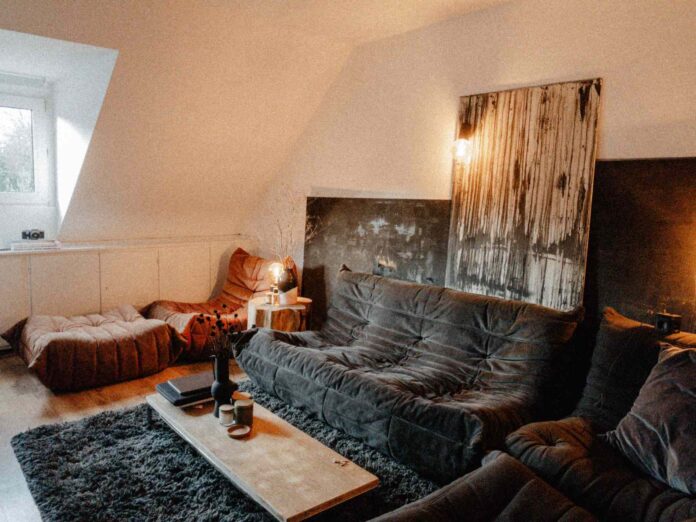
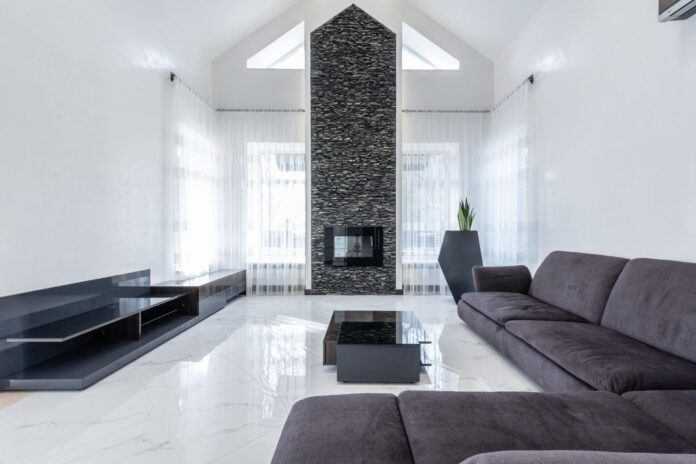
Most “living room decor ideas with fireplace” lists work the same way: fifty-plus photos of pretty rooms, each with a caption about tile color or mantel styling. What they skip is the part that actually determines which ideas will work in your room — what kind of fireplace you have, and whether a TV is fighting it for wall space.
A working wood-burning fireplace has legal clearance rules a decorative one doesn’t. A fireplace with a TV mounted above it has ergonomic problems a fireplace without one never runs into. Style is the layer you add last, once those two things are settled — not the first decision.
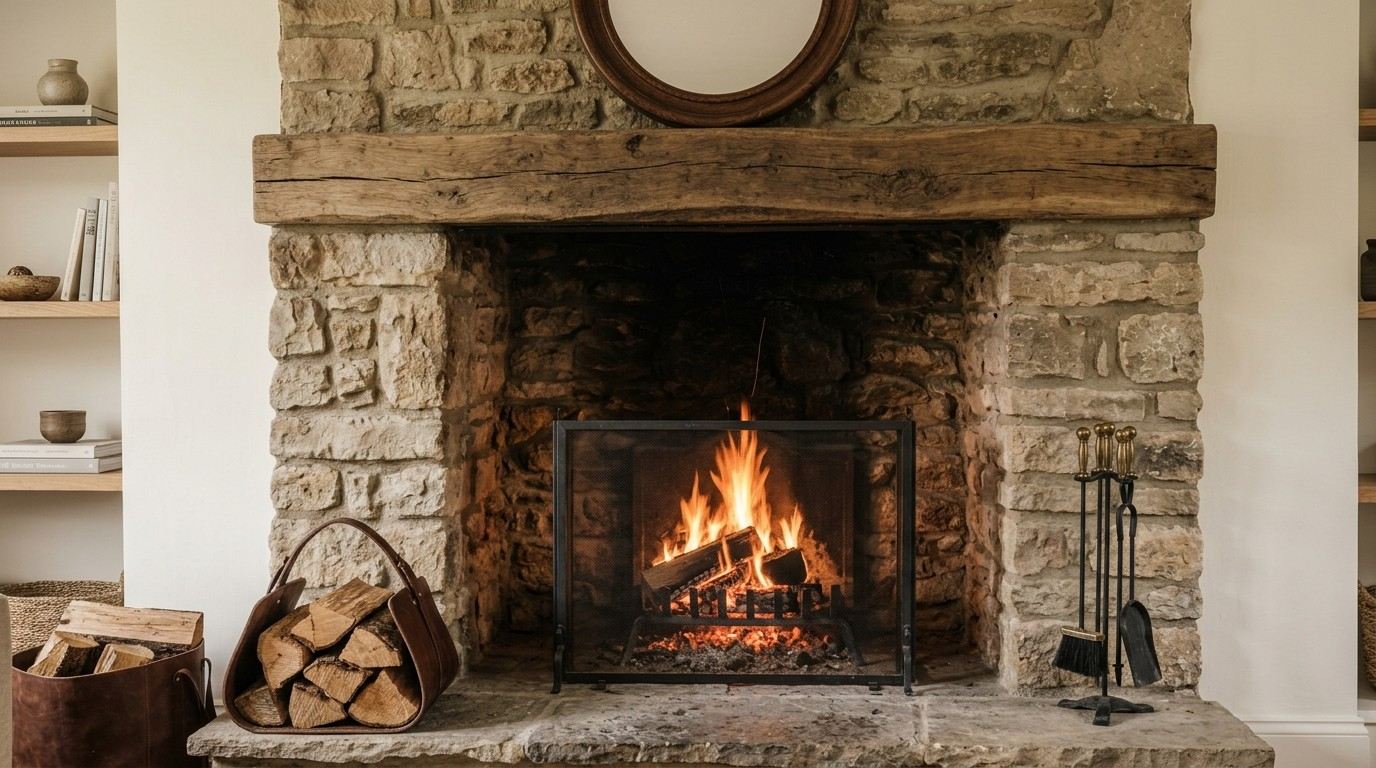
If your fireplace burns wood or gas: decorate around the heat, not just the shape
A working firebox puts real limits on what can go near it, and this is the piece almost every styling list leaves out. Building codes (drawn from the International Residential Code and echoed in NFPA fire standards) generally require combustible material — wood trim, fabric, dried greenery — to stay at least 6 inches from the fireplace opening, with roughly 12 inches of clearance above it before anything combustible can hang or sit. Local code and your specific fireplace’s manufacturer instructions can be stricter, so treat this as a floor, not a guarantee, and check before you install anything permanent.
What that means for decorating:
- Stone, tile, or metal surrounds can run closer to the opening than a wood mantel ever should — if you’re choosing a surround material, this is a legitimate reason to lean toward stone or tile rather than pure aesthetics.
- Stockings, garlands, and dried florals draped directly on or over the mantel are the most common way this rule gets broken, especially seasonally. Hang them from hooks a few inches out from the opening, or on a separate mantel shelf set back further than the minimum, rather than right at the edge.
- A mantel heat shield is worth adding if your mantel sits close to code minimums — it protects the wood from discoloring or drying out over years of use, which is a maintenance problem as much as a safety one.
- Rugs and upholstery near the hearth should be far enough forward that stray embers or radiant heat from an open flame aren’t a factor — this is one case where “pull the furniture in tight for coziness” needs to lose to “leave the hearth apron clear.”
None of this limits your styling much once you know it’s going in — it just changes which materials you reach for near the opening itself.
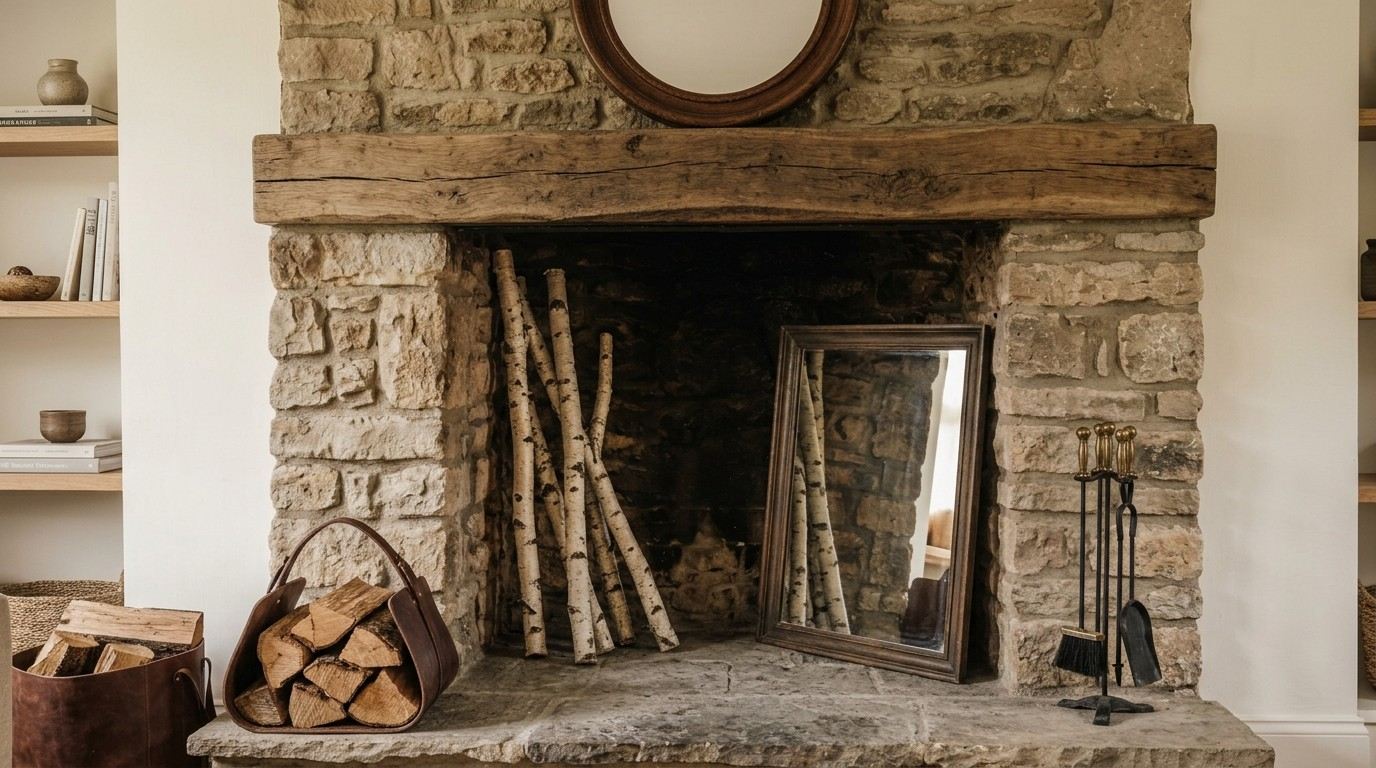
If your fireplace is decorative or non-working: you have more freedom than the “rules” suggest
A huge share of fireplaces in older homes, rentals, and even new builds are decorative, bricked-off, or simply disconnected — and almost every decor list assumes a working hearth, which makes their advice not quite fit.
If yours doesn’t burn anything:
- The clearance rules above don’t apply — you can style right up to and inside the opening. A stack of oversized candles, a curated collection of vases, or a small potted plant set inside the firebox itself are all fair game.
- Faux logs, a bundle of birch branches, or a folded ladder of firewood placed inside an empty firebox give it visual weight without needing function — this is the single most common fix for a decorative fireplace that otherwise reads as a dark, empty hole in the wall.
- Fill the opening with something at eye level when seated, not just floor level — a piece of art propped inside, or a mirror leaned against the back wall, catches light and makes the empty box feel intentional rather than unfinished.
- If the fireplace is purely cosmetic and you dislike its footprint entirely, painting the surround to match the wall color (rather than making it a contrast feature) is a legitimate way to let it recede, especially in a small room where you’d rather the eye go elsewhere.
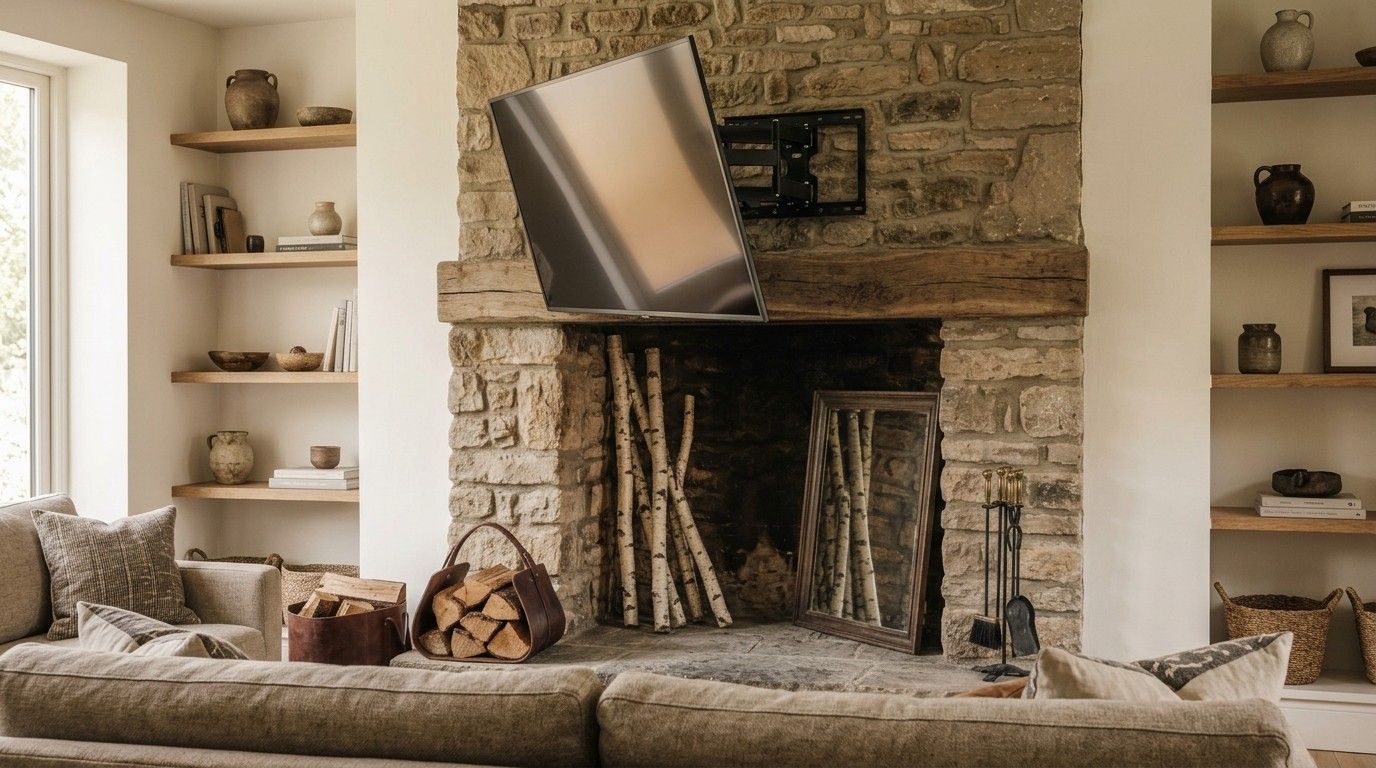
If you want a TV above or near the fireplace: know the actual trade-off before you commit
This is the decision most decor articles either skip or handle in one throwaway sentence — and it’s arguably the single most consequential choice in a fireplace living room, because it affects daily comfort, not just looks.
Mounting a TV above a fireplace is genuinely popular for good reasons: it consolidates two focal points into one, and it saves floor and wall space in rooms where that’s tight. But it comes with real costs that are worth weighing honestly rather than glossing over:
- Neck strain is the most common complaint. A screen mounted at typical mantel-plus-clearance height sits well above the eye level you’d want for comfortable seated viewing, especially during long movie or sports sessions. A tilt or pull-down mount (rather than a fixed one) is the standard fix, letting you angle or lower the screen toward eye level when it’s in use.
- Heat exposure can shorten a TV’s lifespan over years of use, particularly with wood-burning or non-insulated gas units where warm air rises directly into the space above the opening. Electric fireplaces run cooler and are the most TV-friendly option if you’re choosing a unit with this pairing already in mind.
- Glare is a real, if underrated, problem — a TV mounted higher on a wall often catches more window light throughout the day than one placed lower, which matters more in bright, window-heavy living rooms than dim ones.
If you’d rather avoid the trade-off entirely, the alternatives worth considering are placing the TV on an adjacent wall so it and the fireplace are two separate, lower-key zones, or using a swivel/pop-up console that keeps the TV out of sight until you want it — both sidestep the height problem completely instead of trying to manage it.
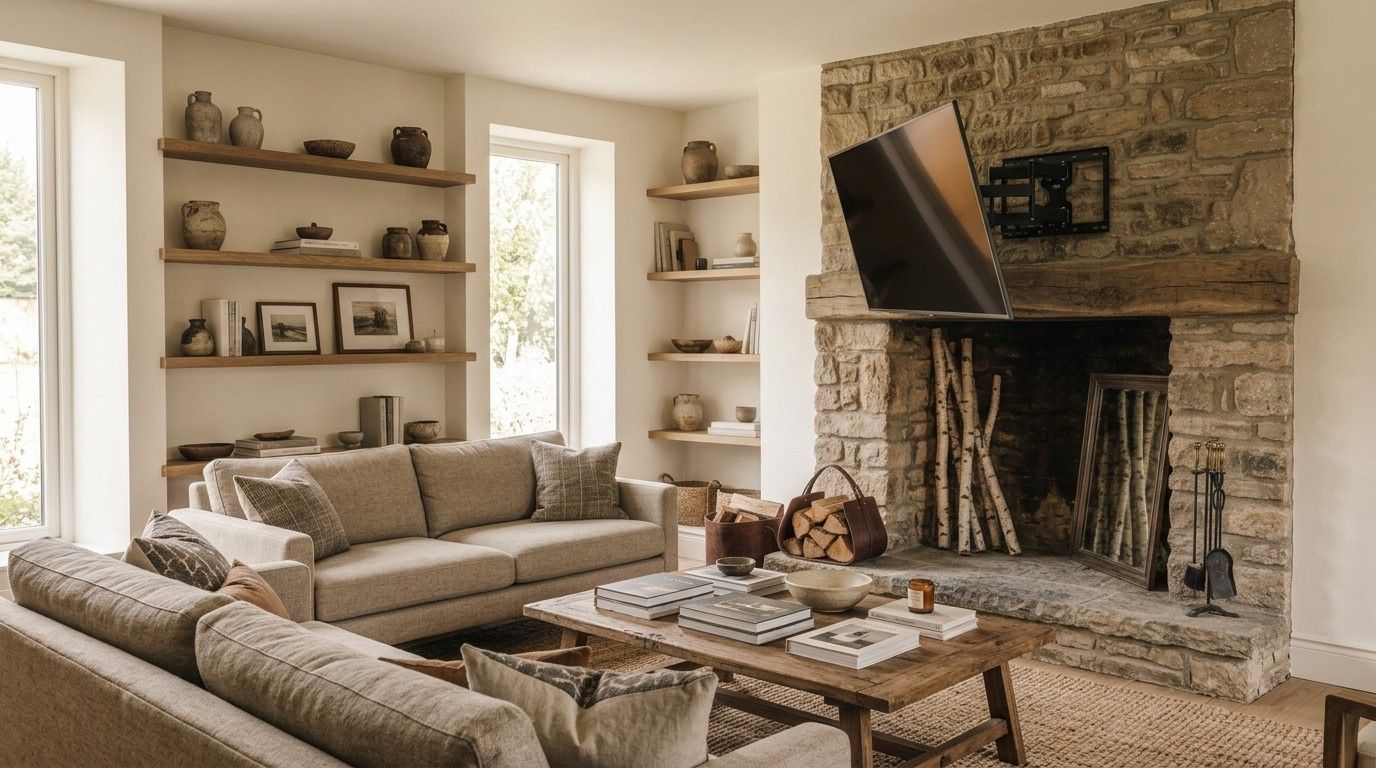
If your living room is small, or the fireplace isn’t centered
An off-center or awkwardly placed fireplace is common in older homes with asymmetric floor plans, and it doesn’t need to be “fixed” by forcing symmetry.
- Let a coffee table, not a sofa, frame the fireplace if it’s off to one side — this keeps the fireplace present without dictating the whole room’s furniture layout around an asymmetric anchor point.
- Use built-in or floating shelving on just one side of an off-center fireplace to visually balance the wall, rather than trying to add a matching shelf on both sides where only one side has room.
- In a small room, treat the fireplace and the seating as one combined zone, not two competing ones — pull chairs in close enough that the fireplace reads as part of the conversation area rather than a separate feature you’re admiring from across the room.
- Scale down mantel styling in a small room — a few taller pieces (one mirror, one pair of candlesticks) read as intentional; the same collection of a dozen small objects that works in a large room reads as clutter in a tight one.
Ideas that work no matter your fireplace situation
A handful of moves apply regardless of whether your fireplace works, where it sits, or whether a TV is involved:
- Layer the mantel at varying heights — one taller anchor piece (mirror, art, or vertical vase), then one or two shorter items in front — rather than lining everything up at the same height.
- Use the fireplace wall’s natural symmetry for lighting, even if the fireplace itself is off-center — a sconce on each side of the opening reads as intentional regardless of what’s happening elsewhere on the wall.
- Keep the hearth apron genuinely clear, even on a decorative fireplace — an empty strip of floor in front of it reads as a design choice; a plant or basket parked there reads as storage overflow.
- Change what’s on the mantel seasonally — since it’s usually the smallest, easiest-to-refresh surface in the room, it’s a low-cost way to update the whole space without touching furniture or paint.
Quick decision summary
| Your situation | Priority move | Skip |
|---|---|---|
| Working wood or gas fireplace | Stone/tile near opening, mantel heat shield, keep combustibles 6″+ from firebox | Draping fabric or garland directly on the mantel edge |
| Decorative/non-working | Style inside the firebox itself (candles, branches, mirror) | Leaving the opening dark and empty |
| TV above the fireplace | Tilt/pull-down mount, electric fireplace if choosing new | Fixed mount at height without checking seated eye level |
| Small or off-center fireplace | Coffee-table framing, one-sided shelving, combined seating zone | Forcing symmetrical furniture around an asymmetric wall |
If you only take one thing from this: check what your fireplace actually is — working, decorative, TV-adjacent, off-center — before you pick a single photo to copy. The idea that looks best on Pinterest isn’t always the one your fireplace can safely or comfortably support.