The most reliable way to choose living room furniture is to work from the room outward. Measure the space and the path into it, decide what the room has to do, then buy the biggest seating first and size everything else around it. Style comes last. It is the easiest thing to fix with a pillow or a lamp, while a sofa that doesn’t fit is not.
Step 1: Measure the room and the path into it
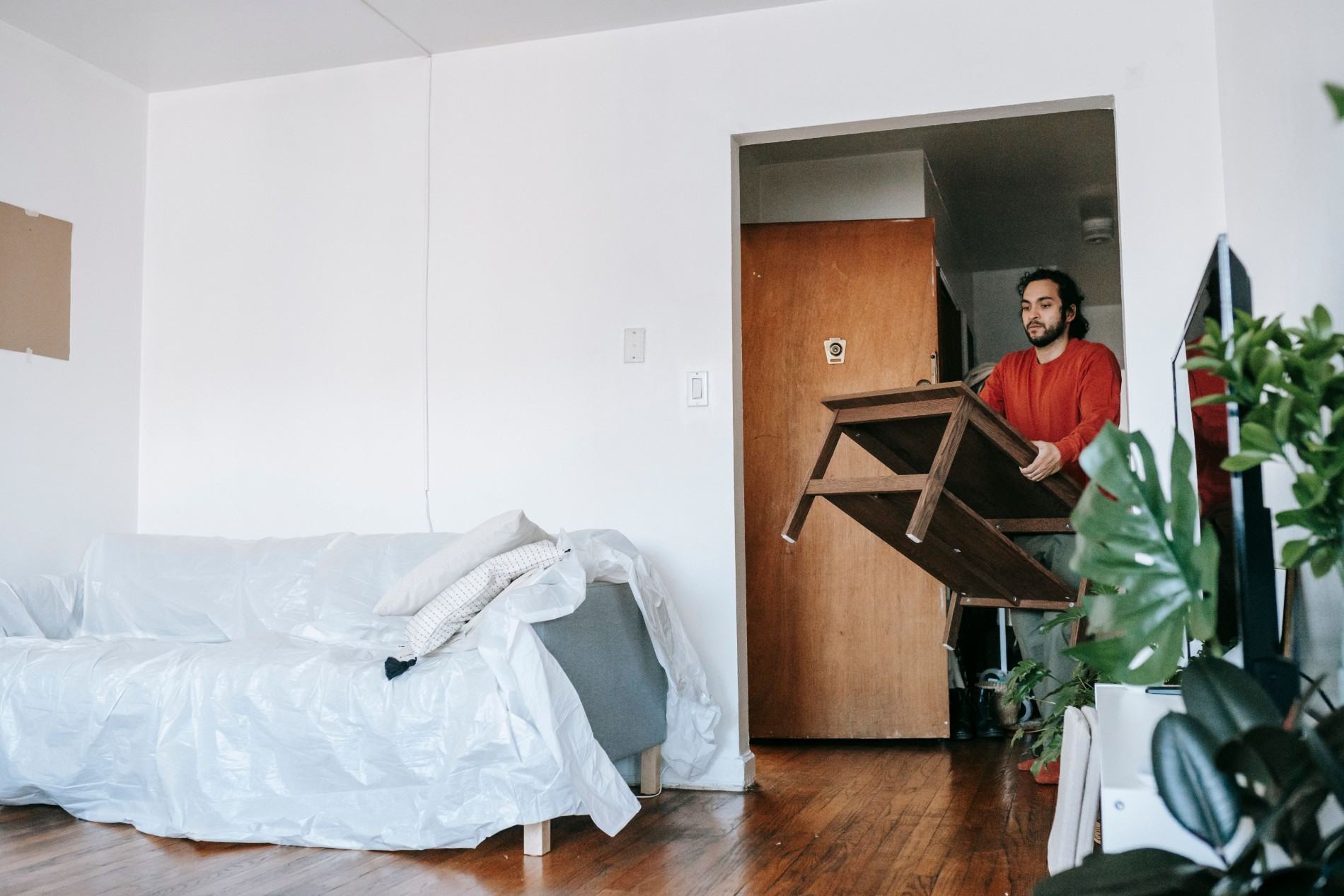
Measure the floor, then note windows, doors, vents, and outlets. Then measure everything the furniture must travel through. Furniture retailers advise checking hallways, doorways, corners, and stairs before you order, because a piece that fits the room can still fail at the front door.
A useful trick is to mark each piece’s footprint on the floor with painter’s tape and walk around it for a day.
Designers use rules of thumb for the gaps between pieces. They are guidelines, not building codes, and Homes & Gardens’ clearance guide is the source for these figures:
| Gap | Typical guidance |
|---|---|
| Main walkway / between large pieces | 30–36 in (24 in as a tight-room minimum) |
| Sofa to coffee table | 14–18 in |
| Side table to sofa | 2–4 in; height within 2 in of the sofa arm |
| Sofa to wall (if not flush) | 3–5 in |
| Rug edge to wall | 12–18 in of exposed floor |
| Sofa to TV | 1.5–2.5× the screen diagonal (7–9 ft for a 55-in TV) |
| TV center height | 42–48 in (seated eye level) |
If your numbers fall outside these ranges, the room is telling you to choose a smaller piece, not squeeze the clearance.

Step 2: Decide what the room has to do
Furniture should follow your habits, not a showroom photo. Here is how common uses change what you buy:
| If the room is mainly for… | Prioritize |
|---|---|
| Watching TV | Seating with a clear view; check sofa-to-screen distance and window glare |
| Hosting | Two sofas at a right angle or facing each other, plus movable extra seats |
| Overnight guests | A sofa bed |
| Working from home | A desk that echoes the room’s lines, or an armoire-style desk that closes up |
| Eating in the room | A coffee table that adjusts in height, or a lift-top |
| Kids and pets | Tight-weave, durable fabric and easy-to-clean covers |
These ideas come from Real Homes and similar guides. If the same room changes with the seasons, our Christmas living room decorating guide shows how to plan around the space you have.
Step 3: Buy in order, with seating first
My recommended order is an editorial judgment, not a rule: seating → coffee and side tables → rug check → storage and media → lamps and accessories. Seating is usually the largest item, so everything else is sized to it.
Sofa vs. sectional vs. two sofas. A sectional gives the most seats in one footprint. A sofa plus armchairs makes a more conversational layout. Two sofas facing each other feel formal and suit entertaining, while two at a right angle are more relaxed (Real Homes).
Size. Retailer averages put sofas at 6–8 feet long and 32–40 inches deep. Those are averages, not a target for your room. Use your tape outline and the clearance table.
Seat depth. Deeper seats suit lounging, while shallower ones support upright sitting more comfortably (FCI London).
Coffee table. Retailer guides commonly suggest a table that is about half to two-thirds the sofa’s length and level with or slightly below the seat cushions. Choose drawers or a storage ottoman with a tray if the surface tends to collect clutter.
Step 4: Frame, filling and fabric
You can’t see the frame, but it decides how long the sofa lasts. Real Homes advises looking for hardwood and joints that are dowelled and screwed as well as glued.
Filling:
- Feather is plush but needs frequent plumping.
- Fiber is cheaper and more supportive than feather, and it also needs plumping.
- Foam suits a firm seat. Avoid very cheap foam, which flattens with use.
Fabric. Match it to your household:
| Material | Good for | Watch out for |
|---|---|---|
| Leather | Durability | Can stretch and crease; semi-aniline is soft but needs more care |
| Cotton blends | Hard-wearing everyday use | Check the weave |
| Linen (good quality) | Natural look, resists fading | Wrinkles |
| Wool | Year-round comfort, dirt-resistant | Cost |
| Silk | Formal rooms | Sun damage |
Strong sunlight, kids and pets all change which of these makes sense.
Double rubs. Ask for the Wyzenbeek double-rub count. Sources disagree on what counts as heavy-duty. American Leather treats 15,000 as a safe threshold for daily use, while Furniture Concepts says typical residential fabrics sit at 3,000–9,000 and calls 15,000 a commercial minimum. Martindale cycles are a different scale, so don’t compare numbers across tests. For a daily-use family sofa, aim higher than the minimum and ask the seller which test they used.
Step 5: Fit furniture to your layout
- Open-plan rooms: A sofa can divide living and dining zones. If its back faces the room, make sure the back looks finished (URDesignMag).
- Small rooms: Prioritize one right-sized sofa over several small pieces. A loveseat plus a chair or two can beat a full sofa.
- Wall-mounted shelves or a TV: Check the fastener before you buy. Our guide to hanging things on Sheetrock walls explains what each wall type can hold.
- Tall furniture: Anchor bookcases and similar pieces following the manufacturer’s instructions.
Step 6: Match without a matching set, and budget sensibly
You don’t need a matching suite. Real Homes suggests repeating one wood tone, a leg shape, or a color across mixed pieces so the room reads as cohesive.
For budget, spend where wear is hardest: the sofa’s frame and cushions. Tables and shelves can often come from lower-priced or secondhand sources. If you’re weighing used against new, our US sustainable furniture buyer’s guide compares keep, buy used, and buy new.
Before you buy: a quick checklist
- Have you measured the room, the doorways, the stairs, and the corners?
- Have you mapped the footprint with painter’s tape?
- Do the clearances (30–36 in walkways, 14–18 in to the coffee table) still hold?
- Does the sofa suit how you use the room?
- Do you know the fabric’s double-rub count and the test used?
- Have you checked the frame (hardwood, joinery) and the filling?
- Are the walls ready for anything you plan to mount?
Frequently asked questions
What should I buy first for a living room? Start with the main seating, because it’s usually the largest piece and sets the scale for the tables, rug, and storage.
How far should a coffee table be from the sofa? About 14–18 inches is the common designer guidance. It leaves legroom while keeping drinks within reach.
Does living room furniture have to match? No. Repeating a wood tone, color, or leg shape across different pieces creates cohesion without a set.
How do I know a sofa will fit through my door? Measure doorways, hallways, stairs, and corners, and compare them to the sofa’s listed dimensions. Check the seller’s delivery notes too.