Every gallery of dark living rooms looks the same: a moody photo, a paint name, a promise it won’t feel like a cave. What none of them tell you is whether your room — your light, your lease, your budget — can actually pull it off before you buy a gallon of Hale Navy you can’t return.
Check Your Light First
Before you choose a color, look at where your light actually comes from. A room with strong afternoon sun can handle near-black walls and still feel warm. A room that only gets weak, indirect light most of the day will read as genuinely dim, not moody, if you go too dark — the fix there is a mid-tone (deep green, warm charcoal) rather than true black.
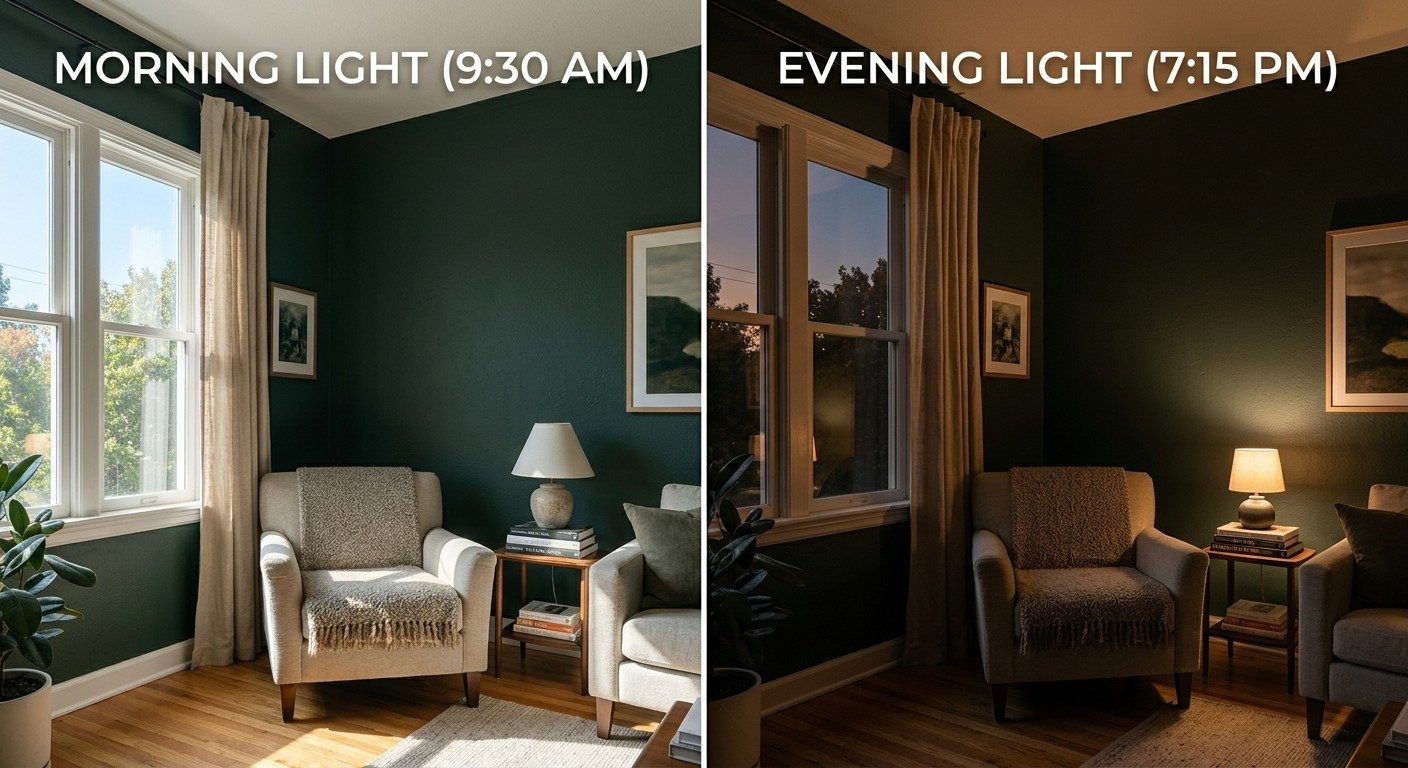
If you’re in the USA or UK, south-facing living rooms get the most consistent daylight; north-facing rooms are cooler and dimmer. In Australia, that’s reversed — north-facing rooms get the strong light, south-facing rooms are the dim ones. Stand in your room at 3 p.m. and 7 p.m. before you decide: a color that looks rich at 3 can look flat and muddy by 7 without help from lighting (more on that below).
Image suggestion: a split-frame photo showing the same living room in morning vs. evening light. Alt text: “dark living room paint color looking different in morning versus evening light.”
Three Commitment Levels
This is the question the idea-galleries skip entirely: how much are you actually willing to spend and risk before you know it works?
- Under $50 — Small Room (Minimalist, Modern): A few paint samples ($4–$9 each, painted onto large poster-board sheets so you can move them around the room and check them at different times of day) plus one dark accent — a charcoal ceramic vase or a set of black picture frames ($10–$20). Low risk, fully reversible.
- $150–$400 — Medium Room (Farmhouse, Coastal-dark): An accent wall in a tested color ($40–$70 in paint), a dark area rug ($100–$250 at this size), and 2–3 velvet or boucle throw pillows ($15–$60 each depending on retailer). Enough to actually feel the shift without committing the whole room.
- $500+ — Full Room (Art Deco, Industrial, Gothic-glam): Full paint job (walls, and consider trim or ceiling too for a cocoon effect), a substantial dark sofa or sectional, and a real lighting plan (see below). This is the tier where you should be confident, not hopeful.
If you want a version of this same commitment-tiered thinking specifically for a fully black room, this breakdown, sorted by how ready you are to commit, goes deeper on that particular color choice.
Renter-Friendly Dark Decor (No Paint Required)
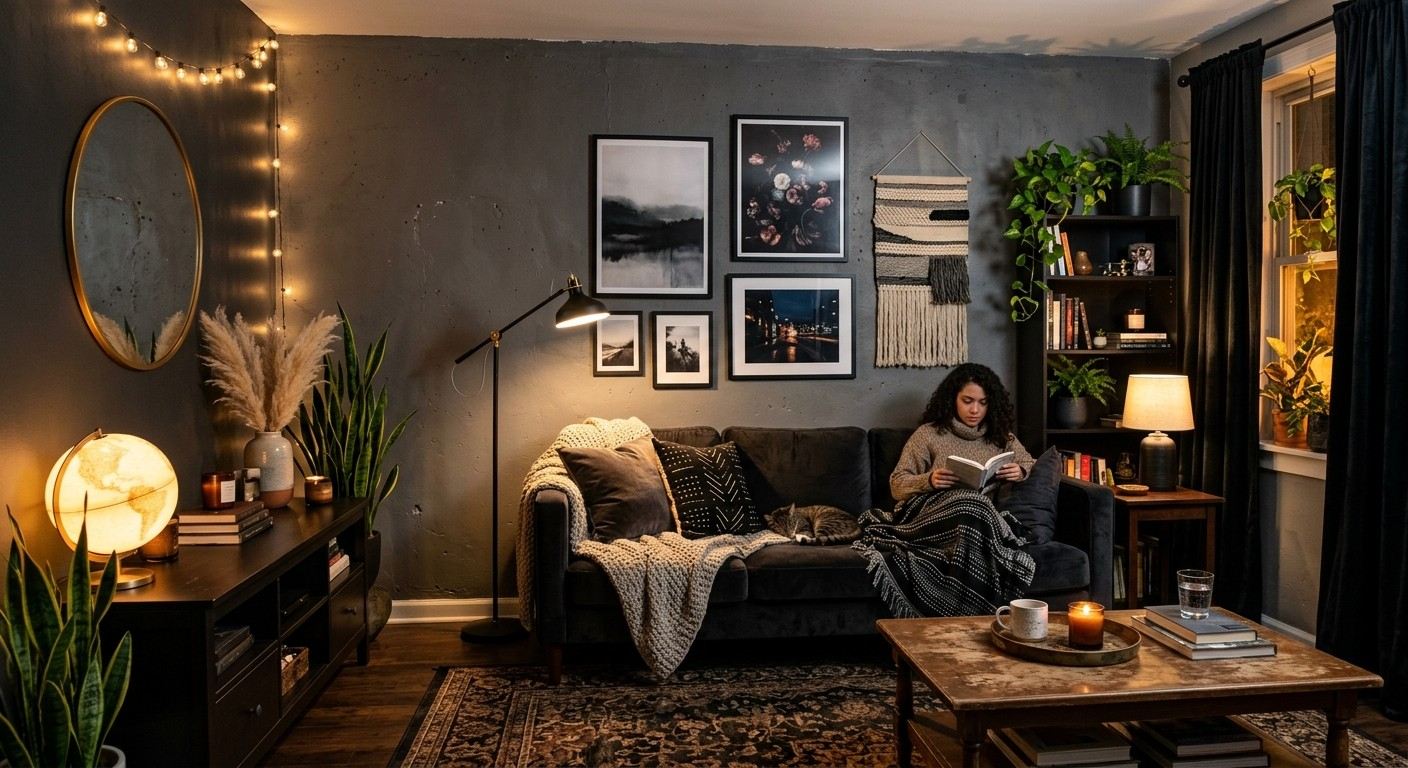
This is the piece almost every competitor article misses. If you can’t paint — or don’t want to risk it on a lease — you can still get 80% of the “dark, moody” effect through furniture and textiles alone:
- A dark sofa or sectional (charcoal, espresso, or navy) as the anchor piece — this does more visual work than any wall color
- A large dark area rug, which reads as “dark room” even against white walls
- Black or dark-bronze floor lamps and table lamps ($40–$120 at most mainstream retailers) instead of white or brass fixtures
- Dark curtains floor-to-ceiling — these also make the ceiling read taller, a nice side effect in a small rental
- Removable, peel-and-stick wallpaper panels in a dark pattern for one wall, which come off cleanly at move-out
Image suggestion: a rental living room styled dark using only furniture and textiles, white walls untouched. Alt text: “dark living room decor ideas for renters without painting walls.”
Style-Tagged Palette Ideas (If You Can Paint)
Once you know your light level and your budget tier, pick a palette that matches an actual style rather than a random “on-trend” color:
- Minimalist: single dark neutral (charcoal, deep taupe) on all walls, no accent wall, let the furniture silhouette do the work
- Modern/Art Deco: near-black or deep emerald with brass or gold hardware and geometric accents
- Farmhouse: dark walnut-brown or deep sage, paired with natural wood and linen
- Industrial: matte black or dark slate, paired with exposed materials and metal
- Coastal-dark: navy or deep teal instead of black, kept lighter with white trim and natural fiber textures
- Gothic/glam: burgundy or aubergine, velvet upholstery, layered ornate lighting
Whichever style you land on, get the furniture scale right before the paint — a dark wall behind undersized furniture just looks like a mistake. Sorting out your room’s proportions before you commit to a style will save you from repainting twice.
The Lighting Plan That Actually Matters
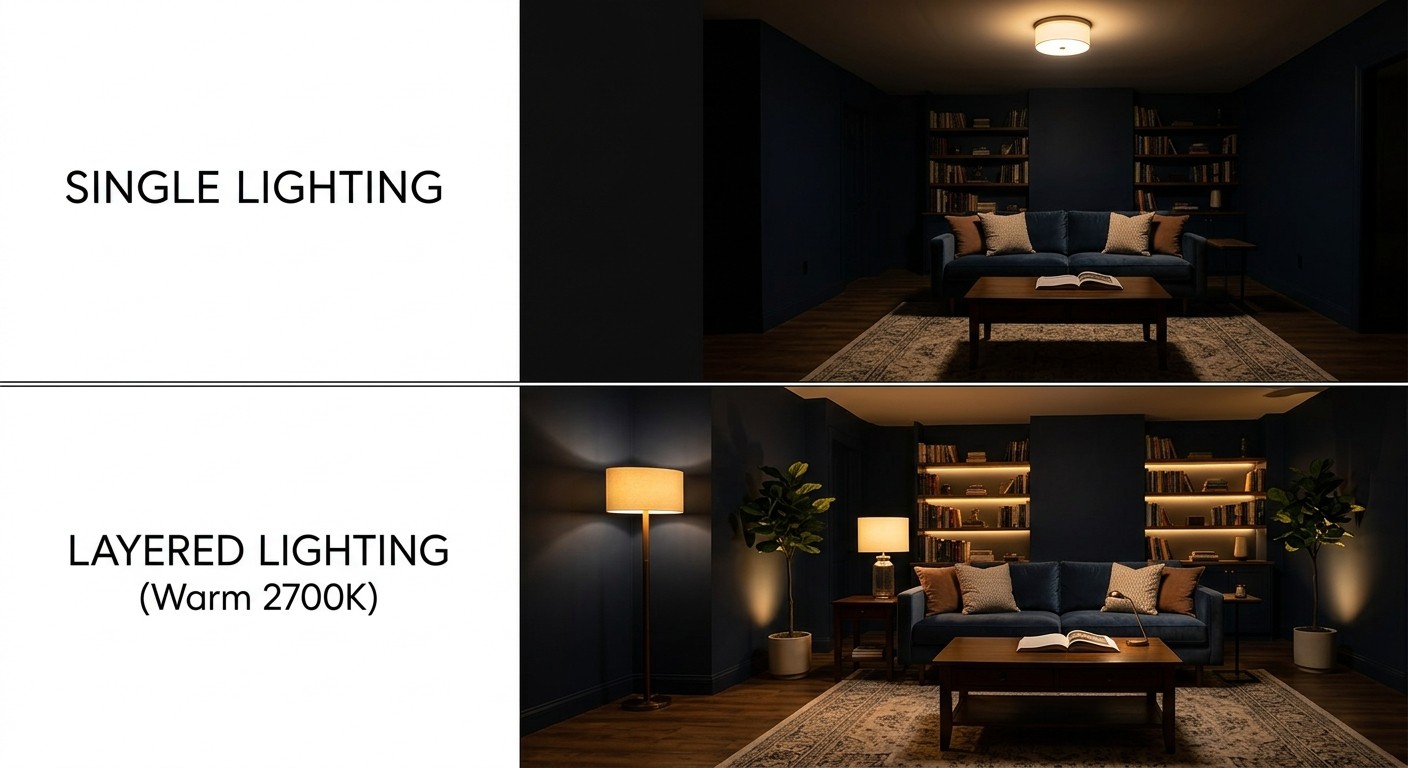
Every competitor article says “add warm lighting” without specifics. Here’s the specific version: use bulbs rated 2700K (warm white, close to old incandescent bulbs) rather than daylight-rated bulbs (5000K+), which will make a dark room look institutional instead of cozy. Layer three light sources minimum — overhead, a floor lamp, and a table lamp — rather than relying on one central fixture, since dark walls absorb light instead of bouncing it around the room. A large mirror opposite your main light source will noticeably help a smaller dark room feel less closed-in.
Image suggestion: the same dark living room lit with a single overhead fixture vs. three layered warm-toned lamps. Alt text: “warm 2700K layered lighting in a dark living room.”
The Honest Trade-Offs
- Dark walls and dark upholstery show dust, pet hair, and water spots more visibly than light ones — factor in a bit more upkeep, not less.
- Dark rooms photograph beautifully but can feel genuinely smaller in person if your light-check (above) showed weak natural light and you skip the lighting plan.
- A fully dark room is a harder sell if you’re renting out or reselling soon — the furniture-and-textile approach protects your flexibility; a full repaint doesn’t.
- It’s easy to over-buy trend pieces at the $500+ tier before confirming the color works in your actual light — always test at the under-$50 tier first, even if you can afford more.
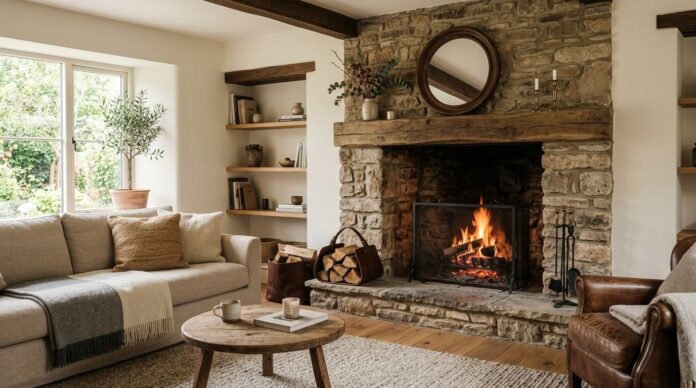
If your room is actually built around a fireplace as the focal point, matching the dark scheme to that feature specifically (rather than the walls generally) tends to work better — this guide on matching the idea to your fireplace, not just your style, covers that case directly.
Quick-Reference: Which Path Fits You
| Situation | Best Starting Move | Rough Budget |
|---|---|---|
| Renting, can’t paint | Dark sofa + rug + lamps | $150–$400 |
| Low natural light | Mid-tone (charcoal/sage), skip true black | $50–$400 |
| Strong natural light, ready to commit | Full paint + layered lighting | $500+ |
| Just testing the idea | Paint samples + one accent piece | Under $50 |