Brushed nickel is easy to buy and surprisingly easy to get wrong. Two fixtures sold as “brushed nickel” can look like different metals side by side. Once you add brass, black, or chrome, a room can read as planned or as a mismatch. This guide covers what should match, what can mix, how to test a finish before you commit, and how to clean it without damaging it.
What Brushed Nickel Actually Looks Like
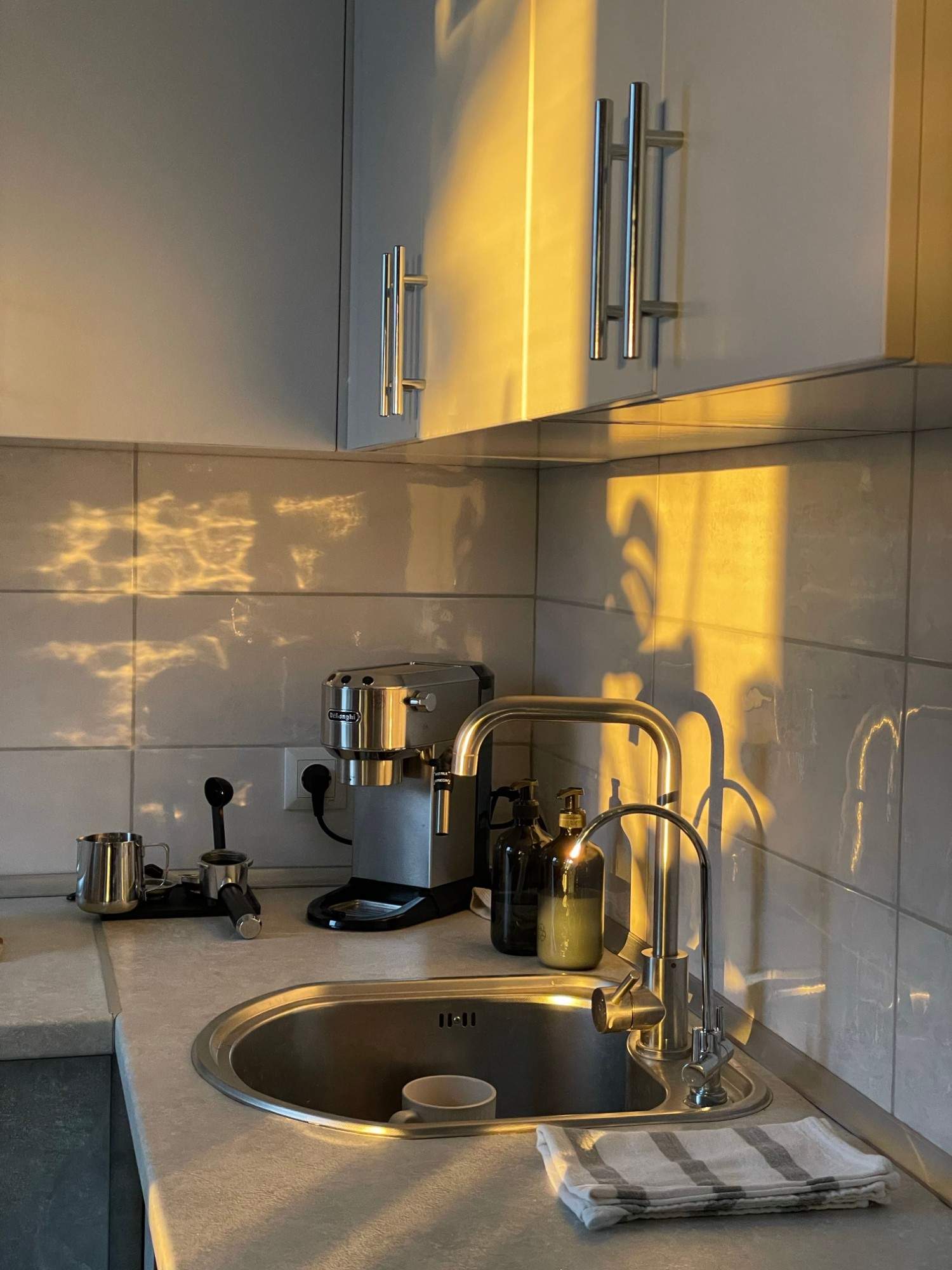
Brushed nickel is a nickel-plated finish with fine parallel lines from brushing, which gives it a soft, low-sheen look. On faucets, Angi describes a zinc base with nickel plating and a slightly yellowish-gold tone, compared with the cooler look of stainless steel.
Two caveats:
- There is no single standard shade. Angi notes that finishes vary by manufacturer and suggests viewing fixtures in person where you can.
- “Satin nickel” is a muddy term. Some sources treat it as the same finish, and others say it is smoother and glossier. Treat the name as a hint, not a guarantee, and compare actual samples.
Where Brushed Nickel Works (and Where It Disappears)
It tends to suit traditional and transitional rooms, and it can work in modern ones. It also hides fingerprints and water spots better than polished finishes, which helps in busy kitchens and kids’ bathrooms (Love Our Real Life).
The trade-off is that it can fade into the background. Angi points out that in a room with no other focal point, a nickel faucet may not add much, and a remodeling contractor’s guide says it can blend into a kitchen full of stainless steel. If you want the hardware to be noticed, plan a contrasting second metal.
Is it still in style? The evidence points to “holding steady.” A 2026 designer roundup on The Spruce says nickel is making a quiet comeback, especially in mixed-metal rooms. A UK outlet, Ideal Home, also calls brushed nickel influential in 2026 kitchens. Older US coverage called it classic rather than trending. Choose it because it suits your room, not to follow a year.
What Should Match, by Room
This table is a rule of thumb, not a standard. The idea is to match whatever shares a sightline or is touched together, and let the rest vary.
| Item | Match the finish? | Why |
|---|---|---|
| Faucet, drain, sink accessories | Yes, buy as a set where possible | They sit within inches of each other, so any shade gap shows |
| Cabinet pulls and knobs | Match each other; may differ from the faucet | Repeated across many doors, so consistency matters more than matching the faucet |
| Light fixtures | Optional | A second metal here is an easy way to add contrast |
| Towel bars, hooks, paper holders | Match the faucet if they share a wall | Same sightline as the vanity |
| Door hardware | Match the nearest fixtures, or stay consistent through the house | Door hardware is seen room to room |
Angi’s advice for faucets is to buy matching pieces from one manufacturer when you want an exact match. Across brands, expect small differences in tone.
Mixing Brushed Nickel With Other Metals
Mixing metals is widely accepted now. A designer quoted by Builder calls the old rule against it outdated. Designers still give structure for doing it:
- Limit the count. Builder’s sources suggest starting with no more than two metals in a room. Angi says two to three metal types is a sensible ceiling.
- Repeat each metal. A single brass lamp among nickel fixtures can look like a leftover. Echo each finish somewhere else in the room. Our luxury room decor guide makes the same point: one dominant finish plus a second, each repeated, looks planned.
| Pairing | What designers say | Watch for |
|---|---|---|
| Brushed nickel + soft brass | One designer in Builder calls it a go-to upscale pairing: contrast with subtle richness | Choose brushed or unlacquered-looking brass, not high-shine brass |
| Brushed nickel + matte black | Builder reports buyers like black mixed with brushed brass or nickel | Black needs a repeat (pulls plus a light, for example) so it doesn’t look like a single accent |
| Brushed nickel + chrome | Both are cool-leaning silvers; Cottage Industries notes chrome has a bluer cast than nickel | The undertone gap can show in the same sightline, so keep them in different zones |
| Brushed nickel + stainless | Looks similar at a distance | Angi says stainless reads cooler and shinier; in kitchens the nickel can disappear |
| Brushed nickel + polished nickel | Sources disagree | One designer blog says avoid them in the same room because they look too close; a designer quoted by AOL says brushed and satin pair well with polished |
Because experts disagree on the last row, test it. Put the two pieces next to each other in the room’s light before you buy a whole set.
Warm metals can fight with cool ones. Angi notes that gold and copper tones can clash with stainless. If your room leans warm (wood cabinets, earthy paint), nickel’s warm undertone tends to sit comfortably there. In a cool gray-and-white room, chrome may blend more cleanly.
In a kitchen, swapping pulls and a faucet are the usual ways to shift the metal mix. Our kitchen decor ideas for 2026 post sorts which updates are decor-only and which need a plumber. For bathrooms attached to a bedroom, our bedroom bath layout ideas cover the room as a whole.
How to Test a Match Before You Buy
- Order or pick up samples. Photos shift tone, so use physical pieces when you can.
- Check in your own light. Compare in daylight and again at night under your actual bulbs. Warm bulbs push nickel warmer.
- Hold pieces together. Set the new item against the existing fixture, not against a store display.
- Keep a brand list. Write down the maker and finish name of each fixture you install, so replacements match.
- Plan for one stand-out. If you want contrast, choose the second metal first and let nickel fill in around it.
Cleaning Without Damaging the Finish
The plating can wear down, and Angi links that to harsh cleaners. The safest routine:
- Wipe with a soft microfiber cloth and mild soap and water, then dry the fixture. Drying prevents water spots and mineral deposits. A designer quoted by AOL suggests wiping in the direction of the brush marks.
- Avoid scouring pads, bleach, and alcohol- or ammonia-based glass cleaners. Cleaning-product makers and fixture retailers warn these can leave marks or strip the finish.
- Be careful with vinegar. Sources disagree. One fixture retailer says to avoid it on brushed nickel. A decor blog says to dilute it and follow the manufacturer’s instructions. A home-care guide uses a diluted solution only for stubborn rust, with a thorough rinse. Check your fixture’s care sheet or warranty first, and treat vinegar as a last step, not a weekly one.
- If plating has worn through, the fixture usually needs replacing, not polishing, per Angi.
What It Costs
Prices vary with brand, size, and features. Angi’s current ranges are about $100 to $1,100 for brushed nickel faucets and $100 to $600 for stainless steel ones. I did not find reliable current prices for pulls or lighting, so check retailer listings. Installation costs vary by region, so get local quotes.
Frequently Asked Questions
Is brushed nickel the same as satin nickel?
Not reliably. Some manufacturers use the names interchangeably, and some sources describe satin as smoother and glossier. Compare physical samples from the same brand.
Does brushed nickel match stainless steel?
They look alike at a distance and often work together. Nickel tends to look warmer, and stainless cooler and shinier, so keep them in the same room only if the difference doesn’t bother you.
Can I mix brushed nickel with brass?
Yes. Designers cited above favor soft or brushed brass with nickel, limited to two or three metals and repeated in more than one spot.
Is it still a good choice for a remodel?
Yes. Recent trend coverage describes nickel as steady and returning in mixed-metal rooms, and it is practical for everyday use.
Quick Reference: Match or Mix?
| Situation | Do this |
|---|---|
| Replacing one faucet in a nickel bathroom | Match the existing finish from the same maker, or replace the nearby accessories too |
| Nickel faucet, want warmth | Add soft brass in lighting or a mirror frame, and repeat it once |
| Nickel plus black pulls | Add black in a second spot (a light or towel bar) |
| Kitchen full of stainless | Choose a second metal for contrast, or accept a quiet, blended look |
| Unsure about polished plus brushed nickel | Test the two pieces side by side in the room first |