Sheetrock is a brand of drywall, and the hanging rules are the same for either. The wall itself is weak: gypsum sandwiched between two layers of paper. What actually holds your mirror, shelf, or frame is whatever you attach it to, which is a wood stud, a rated anchor, or an adhesive strip. Weigh the item first, then choose. This guide shows you how.
What’s behind your wall
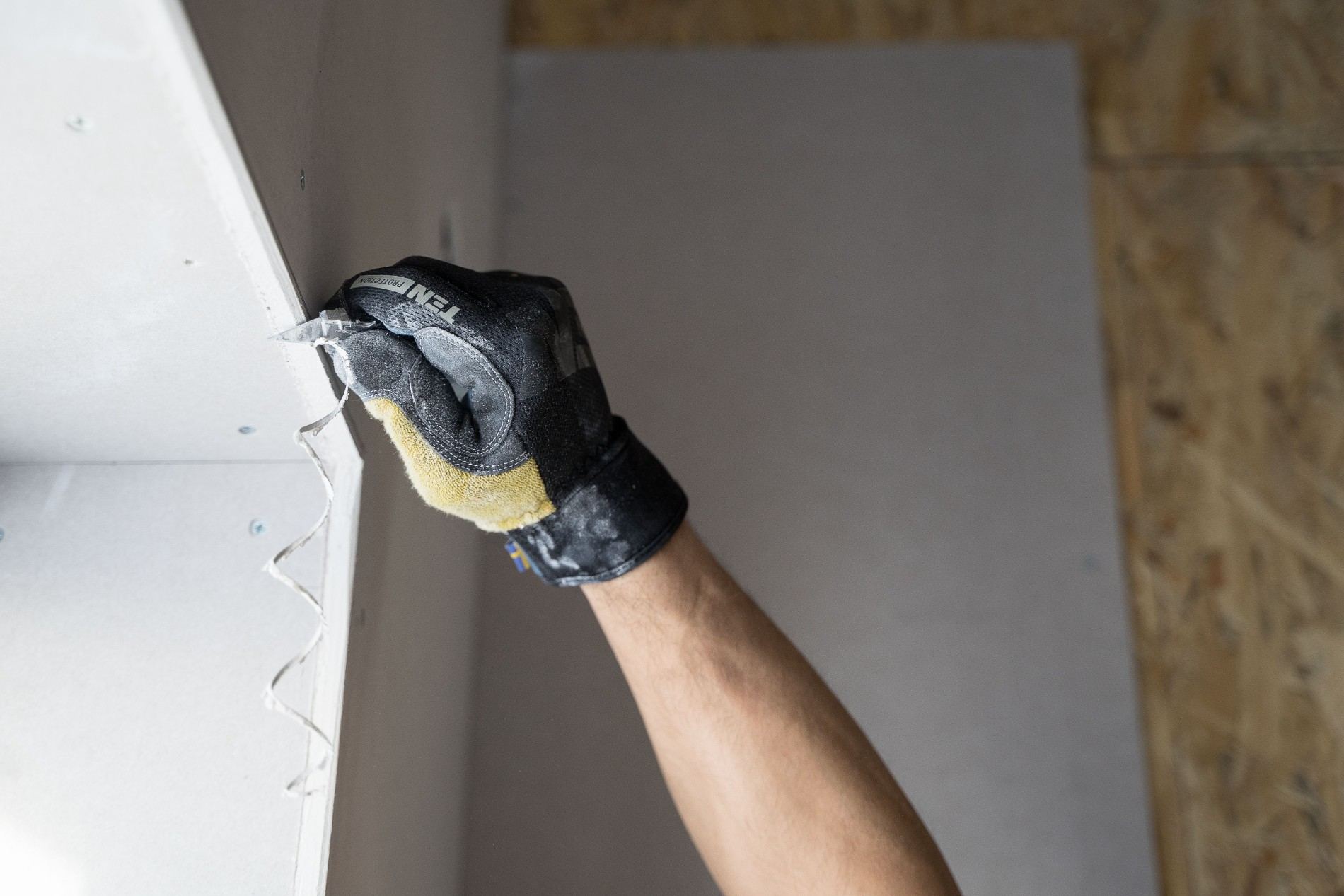
Most interior walls in US homes are ½-inch drywall screwed to wood studs, with studs commonly 16 inches apart center to center. Ceilings often use thicker ⅝-inch board. Anchor ratings generally assume ordinary ½-inch drywall, so check the package if your wall is different. A stud finder (or a magnet that finds the screws) tells you where the strongest spots are.
Match the load to the fastener
Weigh the item first. For a mirror, weigh yourself holding it, then subtract your own weight. Capacities below come from Bob Vila’s anchor guide and 3M’s product page. Use them as guides and always follow the rating printed on your own package.
| Load | Fastener | Noted capacity | Trade-off |
|---|---|---|---|
| Light frames and decor | Picture hook with nail, or adhesive strips | Four large Command pairs: about 15–16 lb depending on pack | Strips need smooth, cured paint |
| Up to about 25 lb | Plastic expansion or winged anchor | About 25 lb | Cheap, but at its limit quickly |
| Up to about 75 lb | Threaded self-drilling anchor | Some rated to 75 lb | Over-tightening strips the hole |
| 80–100+ lb | Strap toggle, molly, or toggle bolt | 80 to 100+ lb | Fiddly, and removal leaves a large hole |
| Any weight, if it lines up | Screw into a stud | Not capacity-rated here | Studs rarely sit where you want |
Many guides suggest picking hardware rated for roughly double the item’s weight. Treat that as a cautious rule of thumb, not a standard.
Pull-out loads: shelves, curtain rods, towel bars
Weight rating is only half the story. A picture pulls straight down, but a shelf or towel bar also pulls outward, and that is what drags anchors out of the wall. For anything people will lean on, tug, or load with books, choose a stud or a toggle-style anchor and stay well under the rating.
Hanging a heavy mirror
A 40-lb framed mirror is too heavy for picture hooks alone. Here is the approach:
- Weigh it and check the frame hardware.
- Find studs. If one lines up with a hanging point, drive a 2½-inch wood screw through ½-inch drywall into it.
- If not, use an anchor rated well above the weight, such as a toggle, molly, or strap toggle.
- For wide pieces, hang from two points at the same height and put an anchor at each point that misses a stud.
- Get a second person to lift it and check that it sits level.
Frames and gallery walls
Each frame is a separate small load, so most can go on picture hooks or strips. Bigger frames earn a stud or an anchor. For layout, spacing, and which photos go together, see our family-photo wall layouts. Sort the hardware first, then step back and arrange.
Renters and no-drill options
Adhesive strips are the usual no-hole choice, with some limits:
- 3M says to wait seven days after painting and to avoid hanging over beds or on wallpaper.
- Pack ratings differ between versions. I found 15 lb and 16 lb listings for four large pairs, so read your own package.
- Check your lease. A small nail hole is often easier to fix than a fallen frame, but that is a lease and landlord decision.
Bathrooms and kitchens
Standard drywall is not water-resistant, and bathrooms and kitchens often use moisture-resistant board. Pick rust-resistant hardware, such as the zinc-plated or stainless toggles Bob Vila describes. If you’re planning a bathroom wall, our bedroom bath layout ideas may help with the bigger picture.
Before you drill, and planning for removal
Avoid drilling directly above or beside outlets and switches, and avoid walls with plumbing behind them, especially in bathrooms and kitchens. If you’re unsure what’s inside a wall, ask a qualified electrician or plumber. TV mounts and anything a child could climb or pull down are outside this guide, so follow the maker’s instructions and use studs.
Removal differs by type. Plastic expansion and threaded anchors back out fairly easily, but molly bolts, winged anchors, and toggles usually have to be cut off or pushed into the wall. That leaves a bigger hole to patch.
Quick checklist
- Weigh the item (with anything it will hold).
- Mark studs. If one lines up, use it.
- Pick the fastener from the table, with a safety margin.
- For shelves, rods, and towel bars, upgrade the fastener.
- Test the hold before you load it.
Frequently asked questions
Is Sheetrock different from drywall for hanging?
No. Sheetrock is a brand of drywall, so the same stud, anchor, and strip rules apply to both.
How much can Sheetrock hold without a stud?
It depends on the anchor. Plastic expansion anchors top out around 25 lb, threaded ones around 75, and toggles and mollies around 100 or more, per Bob Vila’s guide. Always check your package’s rating.
Can I hang a heavy mirror without a stud?
Yes. Use two properly rated toggle, molly, or strap-toggle anchors, spread across two hanging points.
Are Command strips safe on sheetrock?
For light frames, yes. Follow the weight rating on your package and wait seven days after painting. Don’t hang them over beds or on wallpaper.