Most winter-prep advice assumes you own a detached house, a ladder, and a free Saturday. If you rent a flat, share a house, or only have a couple of hours, half of it doesn’t apply. This guide sorts the jobs by what you’re actually allowed and able to do, with USD prices. One spelling note: Americans say “draft,” and readers in the UK and Australia say “draught.” They mean the same thing.
Step one for everyone: the 30-minute draft hunt
Pick a cold, breezy day. Run the back of your hand along the bottom of exterior doors, around window frames, behind outlets on outside walls, and around the attic hatch if you have one. Anywhere you feel moving air is a leak, and fixing leaks is the cheapest heat you’ll ever buy.
Style: any. Room size: all. Cost: $0 to find them, about $6–7 for a door draft stopper.
- Renter-safe: a door draft stopper or a rolled towel. Heavier fabric ones in linen or wool suit Scandi and Farmhouse rooms, and plastic strips cost less but look cheap.
- Ask your landlord first: caulk and adhesive weatherstripping.
- Before and after: before, the hallway is a place you hurry through. After, the entry rug and a stopper make it somewhere you can take your coat off in comfort.
Windows: curtains, film, or both
Windows are the next big leak, and you have three routes.
Window insulation film (removable, $6–17 per window). Clear film seals a window to stop air movement. It suits Minimalist and Modern rooms because it’s nearly invisible. The honest downside is that it looks like plastic wrap up close, and you can’t open that window while it’s on. Use it on a bedroom window you never open in winter. Check your lease before sticking tape to the frame.
Thermal or lined curtains ($13–45 for a budget pair, about $110 for a premium one). These are the best mix of warmth and looks. Linen-look lined panels suit Farmhouse and Cottage rooms, and solid heavy fabrics suit Modern. Hang them long enough to pass the windowsill, close them at dusk, and open them in daylight to let free sunlight in. If your curtains are decent but thin, clip-on thermal liners are a cheaper upgrade. Readers in the UK can often find second-hand curtains for about £5–10.
Storm windows or double glazing (owners). These are the permanent answer for single-pane glass, but prices vary too much by region to quote here. Get at least two quotes.
Floors: the cheapest “renovation” you can do
Bare wood, tile, and laminate feel cold underfoot and pull heat from the room. A rug fixes both. A 5×7 ft rug mostly costs $45–140, with premium designs reaching about $320. Washable polyester rugs sit at the low end and suit Boho and Modern rooms, and wool or flat-weave rugs suit Farmhouse and Scandi.
Best for: living rooms, bedrooms, and a studio’s main zone. Tip: add a rug pad so it stays put and feels thicker.
Room by room: make winter look intentional
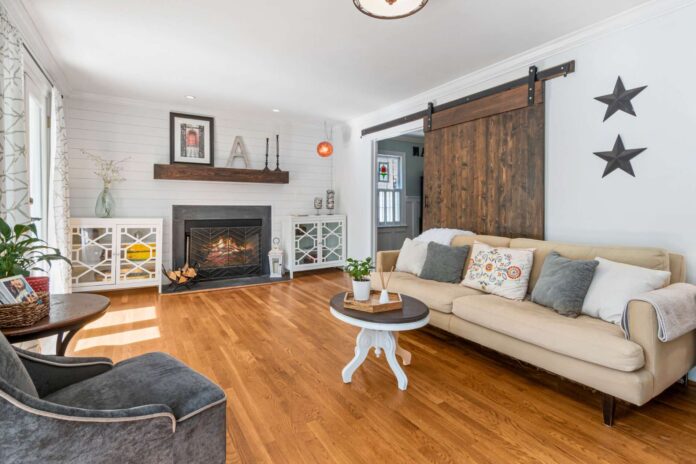
Living room (small to medium): pull the sofa off the radiator if it’s blocking it, because furniture in front of a heat source absorbs the warmth meant for the room. Keep a basket of throws within reach. Add warm lamps at different heights, because evenings get dark early and one overhead bulb feels cold. If you’re weighing options, these room decor ideas with LED lights help you pick what fits your space.
Bedroom (any size): lined curtains, a heavier duvet layer and a bedside rug matter more than a new heater. Which of these you can do depends on your lease, your budget and how long you’ll stay, so use this guide to bedroom decor ideas sorted by the constraint that actually decides.
Kitchen (small apartment or large): the kitchen is your warmest room when you cook. Some UK landlord guidance suggests leaving the oven door ajar after cooking to share the leftover heat. Do this only when no children or pets are near, and never use an oven as a heater. If the room still feels half-finished, this guide to kitchen decor ideas for a housewarming, sorted by how finished your kitchen is, can help you decide what to add.

The part most guides skip: sealing versus moisture
Here is the honest trade-off. Every draft you block also blocks fresh air, and a warm, sealed room fills with moisture from showers, cooking, and drying laundry. Australian tenant research puts the healthy indoor humidity range at about 40–60%, with levels above about 70% encouraging condensation and mould, especially without good ventilation.
So seal the gaps, but do these too:
- Run extractor fans while you cook and shower.
- Crack a window briefly each day, even when it’s cold.
- Wipe condensation off glass and sills each morning.
- Don’t dry washing on radiators, since it adds moisture and reduces how well the radiator heats the room.
- Consider a dehumidifier for rooms that stay damp.
A target temperature is worth a mention too. One source cites 18°C as a safe indoor minimum, and a UK tenant guide suggests setting heating to 19°C when you’re home and awake. Pick the one that suits your household and watch for mould, because a room that’s cold and humid is the problem case.
Owner-only jobs that actually matter
These aren’t decor, but they protect the home you’re decorating.
- Service your heating system (furnace or boiler), change filters, and bleed radiators if you have them.
- Insulate exposed pipes with foam sleeves, especially in garages, basements, and crawlspaces.
- Clear gutters so melting ice and rain don’t back up.
- Have the chimney inspected each year before the first fire.
- Add attic insulation if you can see the ceiling joists. Even coverage matters more than lumpy piles.
- Reverse your ceiling fan with the switch on the housing. It’s free.
- Check your alarms. Fire and carbon monoxide risk rises in cold weather, so test every smoke and CO alarm and replace dead batteries.
Southern Hemisphere note
Australian winter runs June to August, so October is the start of spring there. Use this guide as a plan for April or May, not a to-do for this month. Australian renters report cold, damp homes, so the moisture section matters most for you.
Frequently Asked Questions
What should I do first to prepare my home for winter?
Start by finding drafts, because they’re the cheapest fix with the fastest payback. Check door bottoms, window edges, and outlets on a cold, breezy day. Seal gaps with weatherstripping or caulk, add a door draft stopper, then service heating, clear gutters, and test smoke and carbon monoxide alarms before temperatures drop.
How can I keep heat in if I rent?
Stick to removable fixes: door draft stoppers, clip-on or lined thermal curtains, peel-off window insulation film, and rugs over bare floors. None need drilling, and most start under $20 each. Check your lease before using adhesive tape on frames, and ask your landlord before making anything permanent.
Does sealing drafts cause mould?
It can if moisture has nowhere to go. Tight rooms trap steam from cooking, showers, and drying laundry, and indoor humidity above roughly 70 percent encourages condensation and mould. Seal gaps, but run extractor fans, wipe condensation off windows, and air rooms briefly each day. A dehumidifier helps stubborn damp spots.
When should I winterize my home?
Do it in early autumn, before the first frost, so outdoor jobs like gutters and hoses happen in mild weather. In the US and UK, that means roughly September to early November. In Australia, winter runs June to August, so start in April or May rather than now.
Quick reference: pick your plan
| Your situation | Do first | Typical cost (USD) | Best for |
|---|---|---|---|
| Renter, tiny budget | Door stopper, rolled towel, close curtains at dusk | $0–10 | Studio, small apartment |
| Renter, some budget | Thermal curtains, window film, 5×7 rug | $60–200 | Bedroom, living room |
| Owner, one weekend | Draft hunt, caulk, fan reversal, alarm test | $20–60 | Any size |
| Owner, full prep | Service heating, insulate pipes, clear gutters, chimney check | Get quotes | Whole house |
| Damp-prone home | Fans, daily airing, wipe condensation, dehumidifier | Varies | Bedrooms, bathrooms |
One-weekend checklist:
- Do the draft hunt on a breezy day.
- Add a door draft stopper.
- Hang lined curtains and close them at dusk.
- Put a rug on the coldest floor.
- Move furniture off radiators.
- Test smoke and CO alarms.
- Set up a fan and ventilation habits.