Most “fall kitchen decor” lists hand you 20–25 items- pumpkins, wreaths, tea towels- with no logic for which ones fit your kitchen, or what happens to them after three weeks next to a stove. This guide is sorted around the decisions that actually matter: your style, your budget, your space, and whether your kitchen is a display piece or one you cook in every night.
Fall Styles for the Kitchen
- Farmhouse: woven baskets ($15–$35) holding onions or gourds, enamelware pitchers ($20–$40), a stack of wooden cutting boards as a centerpiece.
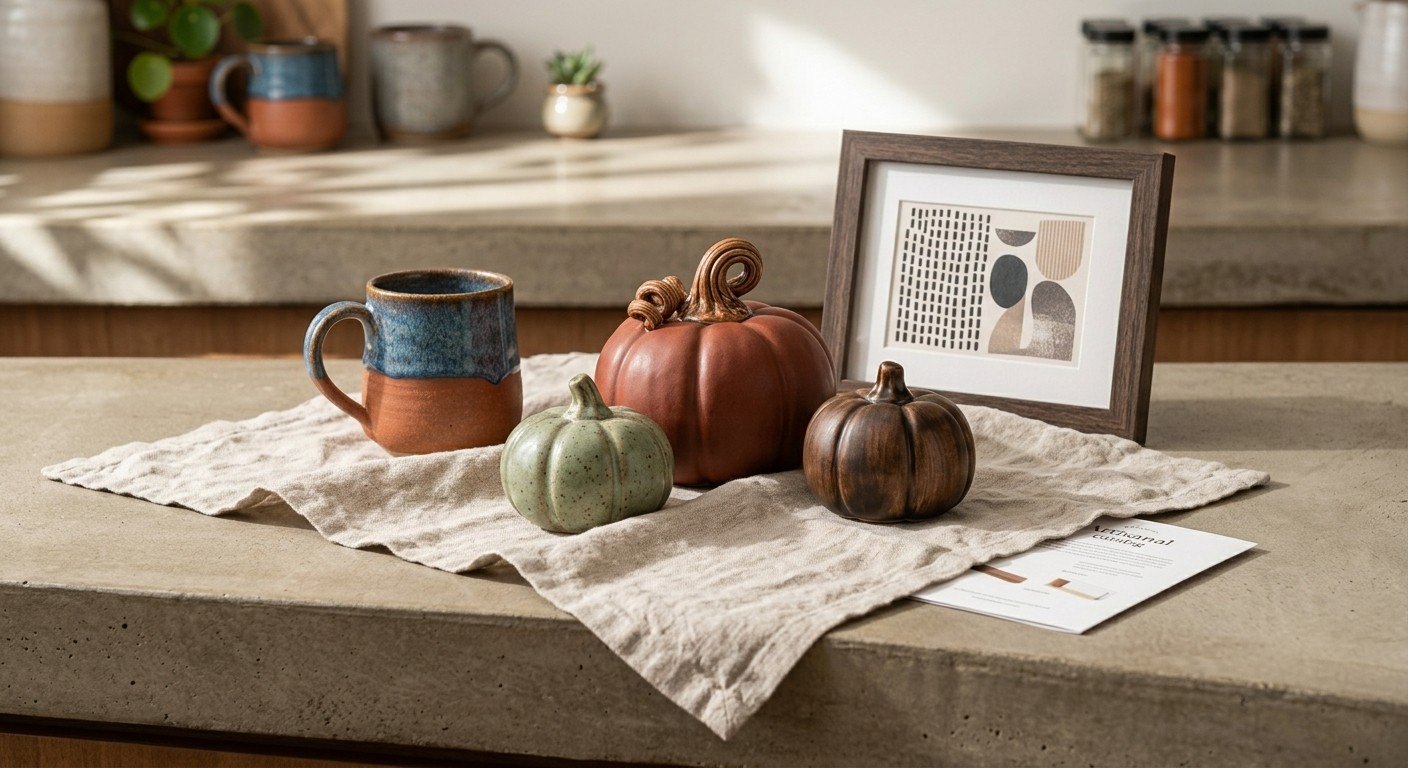
- Minimalist: two or three neutral ceramic pumpkins ($15–$30), a linen table runner ($20–$35), one muted floral stem in a plain vase — nothing else.
- Boho: dried wheat bundles ($10–$20), a woven wall hanging kept away from the stove, warm rust-and-mustard cloth napkins ($15–$25 for a set).
- Modern: a single oversized ceramic vase with dried branches ($30–$60), matte black or stainless accents, no more than two colors total.
- Rustic: vintage-look wooden trays ($20–$45), stacked cutting boards, real or faux gourds grouped by size.
- Coastal: keep fall subtle — driftwood-toned bowls, muted sage and cream linens instead of the usual burnt orange, since heavy autumnal color can fight a coastal palette.
Before/after: a bare white countertop with nothing on it reads unfinished; a single wooden tray with three ceramic pumpkins and a linen runner reads intentional, without covering your prep space.
Real vs. Faux: What Actually Survives a Working Kitchen
This is the part every other “fall kitchen decor” guide skips, because most of them are written as if a kitchen is a mantel or a porch. A kitchen has heat, grease, humidity, and food — and that changes what actually holds up.
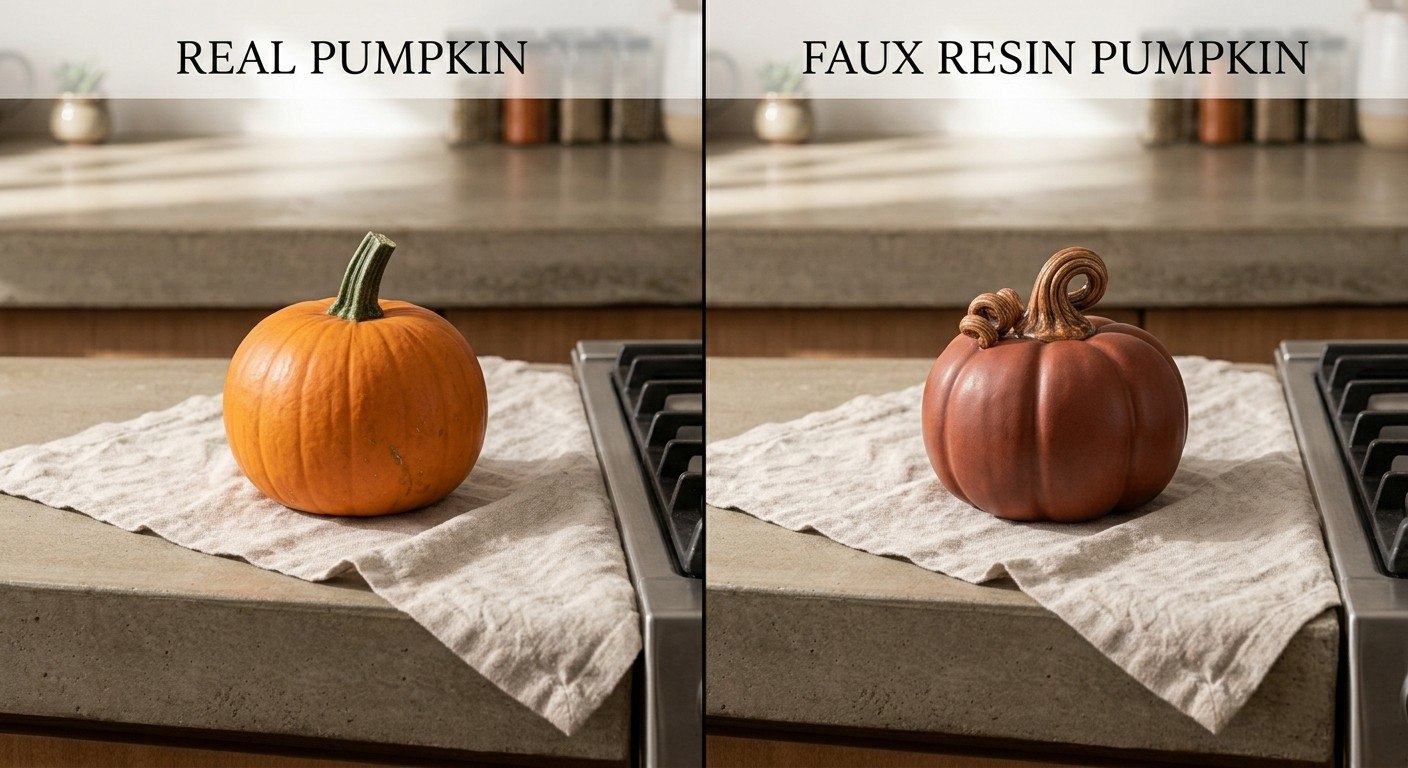
- Near the stove or sink (splatter/humidity zone): skip real pumpkins, dried wheat, and unsealed wood here. Real produce sitting in a warm, humid spot for weeks softens fast, and once you see mold on the underside, it’s already left a mark on wood or stone underneath. Go with sealed ceramic, enamelware, or faux resin pumpkins instead ($15–$45).
- On open countertops used daily for prep: if you want real gourds here, rotate them weekly and check the base for soft spots — this is also where fruit flies show up first if produce lingers too long. A faux version ($20–$45) removes the maintenance entirely and looks nearly identical from a few feet away.
- Away from cooking (a dining nook, open shelf, or far counter): this is the one spot where real pumpkins, dried florals, and natural wheat genuinely make sense — lower heat, lower humidity, and you’ll actually notice if something starts to spoil before it becomes a bigger mess.
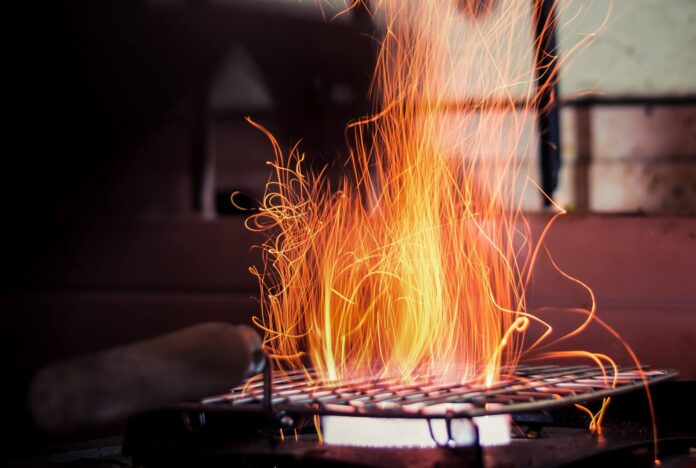
- Candles: never place lit candles directly beside an active stovetop or under cabinets — it’s an unnecessary fire risk in a room that already has an open flame source. Battery-operated flameless candles ($10–$20 for a set) give the same warm look without the risk.
Honest trade-off: real produce and dried natural materials look and smell better, but in a kitchen — as opposed to a living room — they carry a genuine mold, pest, and surface-damage risk that faux versions don’t. If you cook often, faux in the high-traffic zones and real only on the far counter is the more realistic split, not a compromise.
Budget Tiers
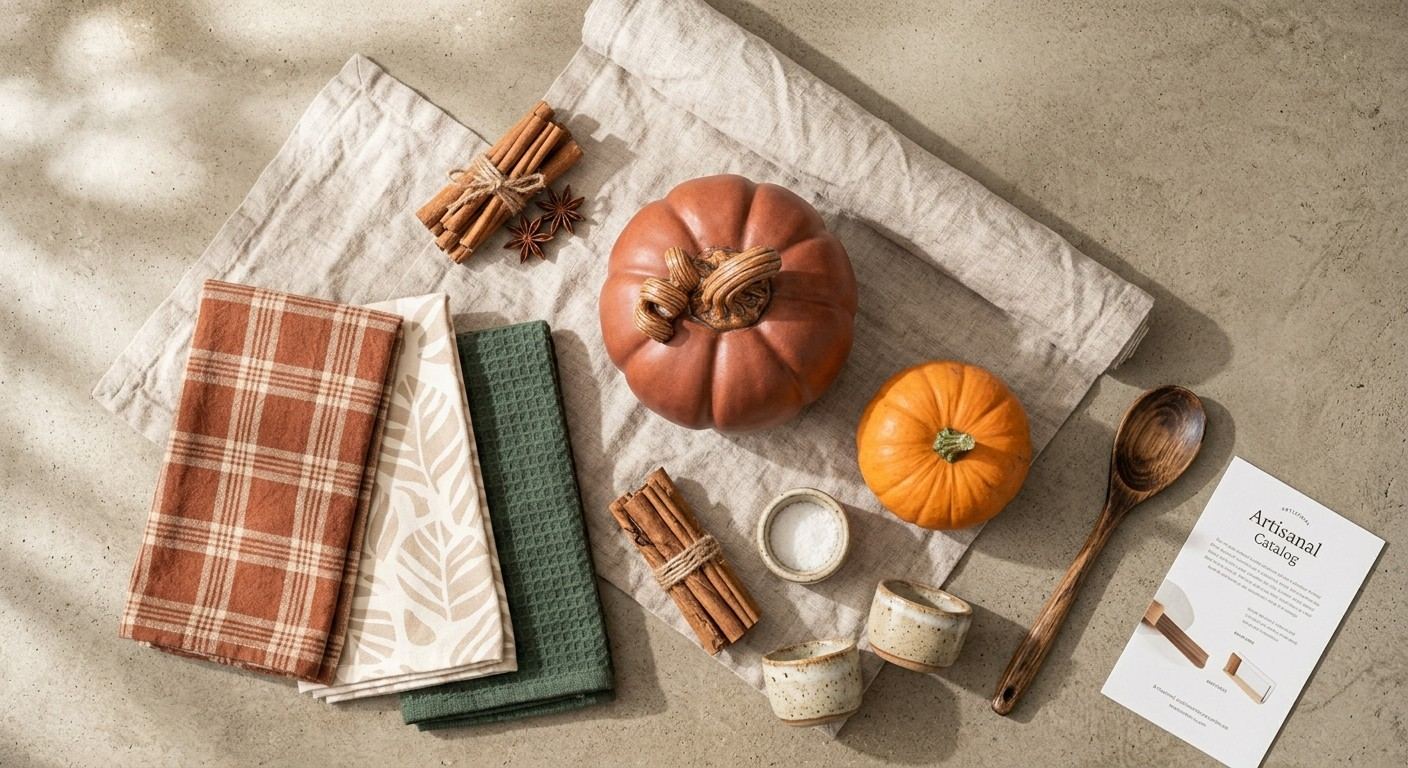
- Under $25: a few faux ceramic-look pumpkins, a linen or cotton table runner, fall-colored dish towels, one wall clock or small print.
- $25–$75: a wooden tray plus a small pumpkin cluster, a 2-pack of floating shelves styled with mugs and a plant, fall-toned placemats and napkins for four.
- $75–$200: a full table-runner-and-napkin set with matching dinnerware accents, a larger ceramic or ceramic-look statement centerpiece, a small wreath for a kitchen window.
- $200+: a full dinnerware swap for the season, solid-wood serving pieces, a professionally arranged floral centerpiece refreshed monthly.
Small Kitchens, Apartments, and Galley Layouts
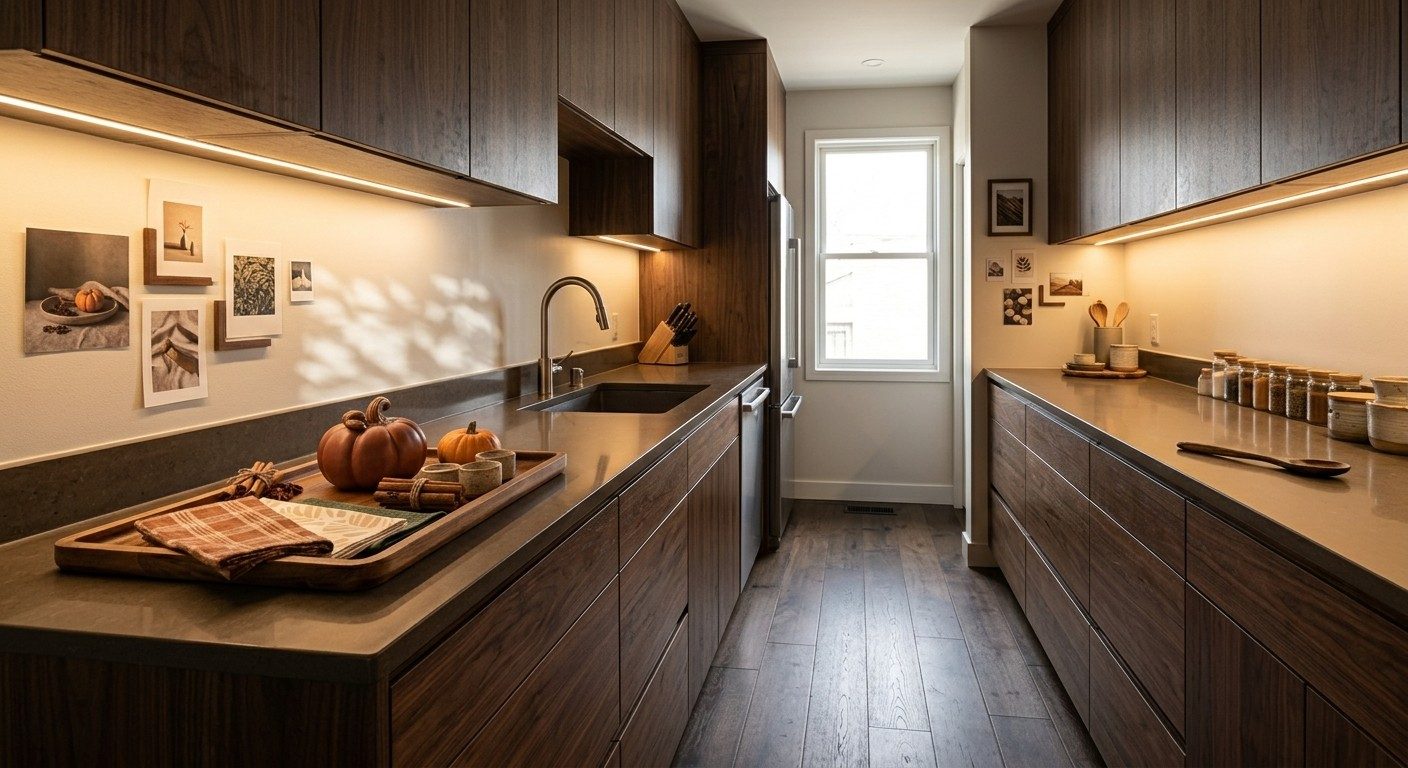
- Pick one focal spot — the counter beside the stove, or a small open shelf — rather than styling every surface.
- A single larger item (one wooden tray with a grouped centerpiece) reads cleaner in a narrow kitchen than several small scattered pieces.
- Swap dish towels and a vase of stems only — the lowest-effort, lowest-clutter way to signal the season in under 5 minutes and under $25.
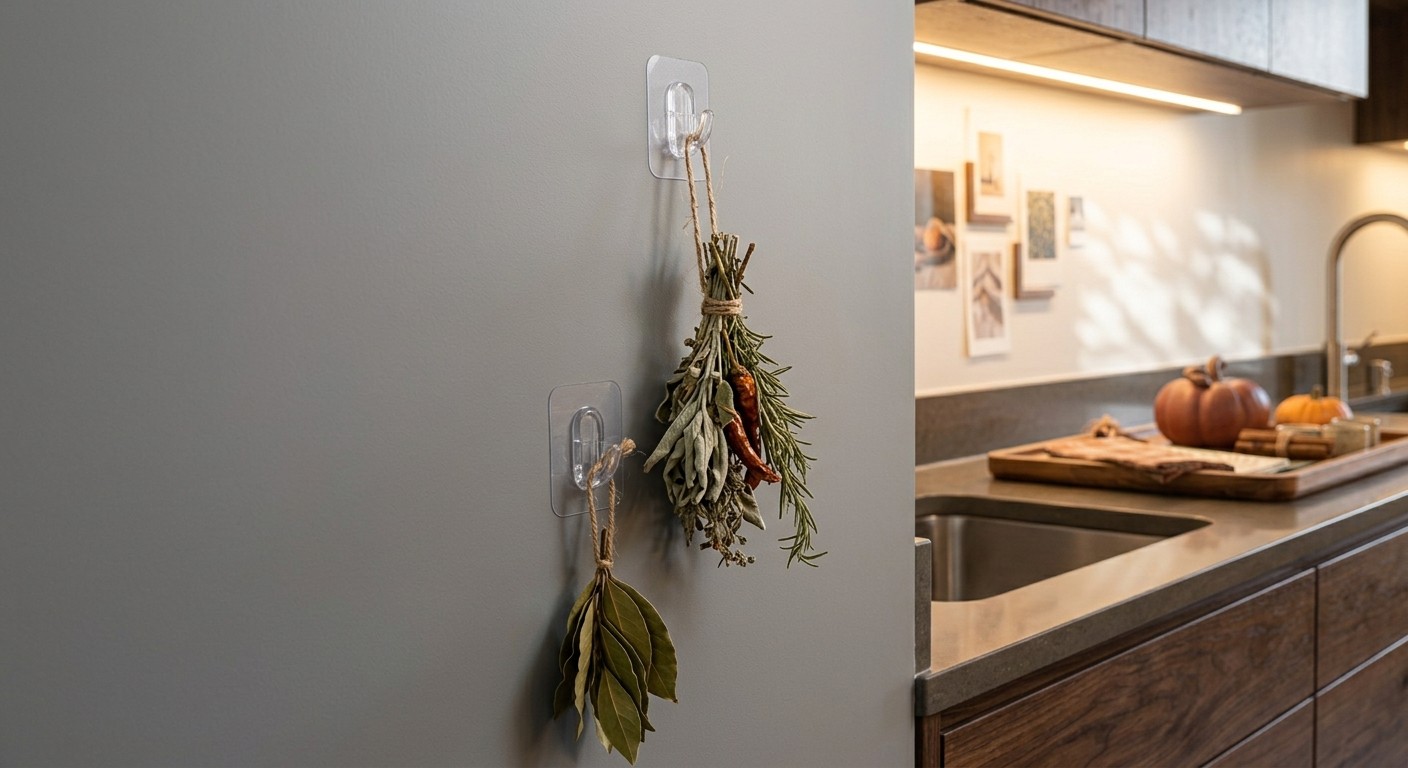
Renter-Friendly Fall Decor
- Command hooks ($8–$15) for a small hanging herb bundle or seasonal towel.
- Removable table runners and swappable dinnerware — zero commitment, zero damage.
- A tension-mounted or leaning print on a shelf ledge instead of anything wall-mounted. (If you’re decorating your kitchen walls more broadly and want the full damage-free breakdown by wall zone, that’s covered in our kitchen wall decor guide.)
A Timing Note for Different Hemispheres
In the US and UK, fall runs roughly September through November, so kitchen styling typically starts in early-to-mid September. In Australia, autumn falls March through May — if you’re decorating for fall in Melbourne or Sydney, you’re working against the opposite calendar from a US or UK reader, so match the timing (and the color intensity you reach for) to your actual season rather than the northern-hemisphere one.
Quick-Reference Table
| Zone in the Kitchen | Best Materials | Style Fit | Budget |
|---|---|---|---|
| Near stove/sink | Ceramic, enamel, faux resin | Farmhouse, Rustic | $15–$45 |
| Daily-use countertop | Faux pumpkins, sealed wood trays | Modern, Minimalist | $20–$75 |
| Far counter/dining nook | Real produce, dried florals, wheat | Boho, Rustic | $10–$60 |
| Any zone, rental-safe | Command hooks, removable linens | Any | $8–$35 |
Checklist Before You Decorate
- Decide real vs. faux based on distance from the stove, not just looks
- Set a per-zone budget instead of one lump sum
- Skip lit candles directly beside the stovetop
- Rotate or check real produce weekly for soft spots
- Confirm your hemisphere’s actual fall season before timing your refresh