Most “bedroom decor ideas” lists hand you 30–70 photo captions and let you sort out which ones apply to your actual room. That’s the wrong starting point. A rented studio, a shared bedroom where two people disagree on style, and a small bedroom on a tight budget all need different decisions — even before style enters the conversation.
If your bedroom is small or doing double duty
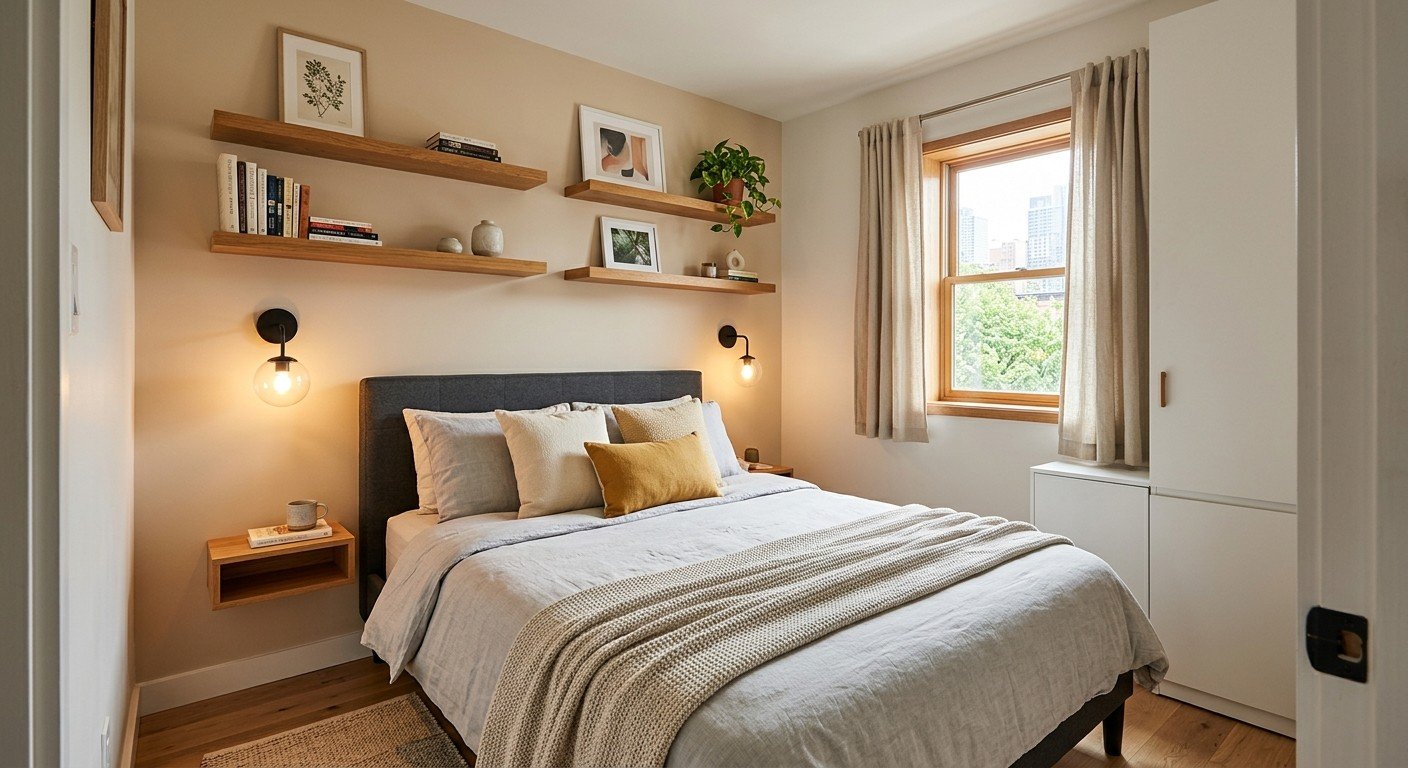
A small bedroom, or one that also functions as a home office or nursery corner, fails for different reasons than a large one does — usually clutter and poor light, not lack of style ideas.
- Floating wood shelves (Rustic, Minimalist) instead of a floor bookcase — free up walking space. Approx. Rs. 1,500–4,000 per shelf depending on size and material; check local pricing before buying.
- Wall-mounted sconces instead of table lamps (Modern, Minimalist) on a nightstand that’s already too small — this alone can make a cramped nightstand usable again.
- A mirror opposite the window (Coastal, Modern) — bounces daylight into the room, which matters more in a small space than a large one, and costs far less than adding a light fixture.
- Under-bed storage boxes or an ottoman bed frame (any style) instead of a dresser, if floor space is genuinely tight. Approx. Rs. 3,000–8,000 for fabric under-bed bins; ottoman frames cost significantly more and are a furniture decision, not a decor one.
- Best for: studio apartments, shared kids’ rooms, single-room flats.
If you’re renting and can’t paint or drill
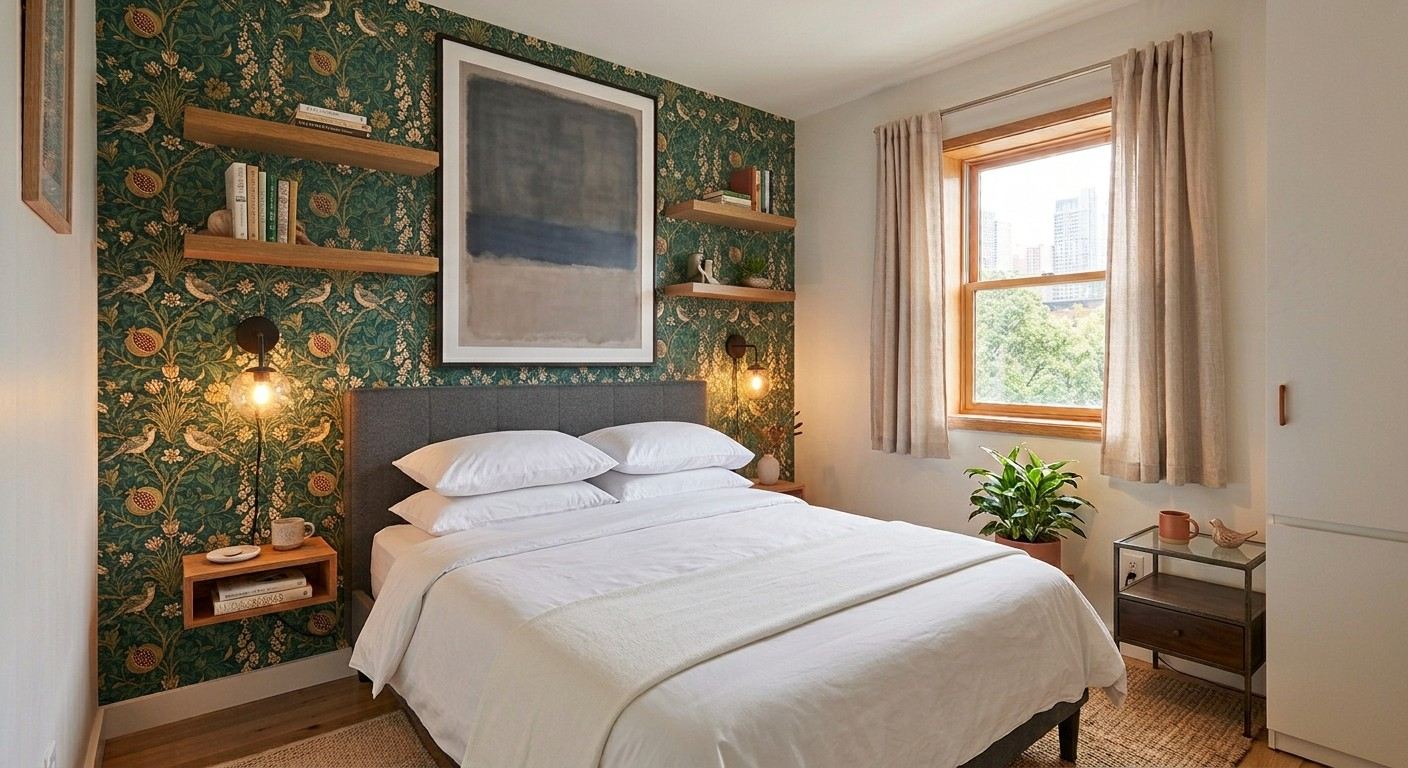
Bedroom decor lists lean hard on paint and permanent fixtures, which renters should skip.
- Peel-and-stick removable wallpaper on one wall (Boho, Modern) rather than a full repaint — comes off cleanly at move-out.
- Command-strip picture ledges (Minimalist, Farmhouse) instead of drilled shelving for displaying books or frames.
- Plug-in wall sconces with dimmer-capable bulbs instead of hardwired lighting — layered light without an electrician.
- A large area rug over rental flooring you don’t like — doubles as warmth underfoot and a style anchor. Approx. Rs. 4,000–12,000 depending on size and material.
- The honest trade-off: renter-safe products (adhesive wallpaper, plug-in fixtures) usually cost more per square foot of visual impact than paint would. You’re paying for reversibility, not avoiding cost.
If you’re working with a tight budget regardless of room size
Budget bedroom advice online tends to say “affordable” without a number attached — here’s what that actually looks like.
- New pillowcases and a duvet cover (any style) — the single cheapest visual reset for a bedroom. Approx. Rs. 1,500–4,000 for a decent cotton set.
- Repositioning existing furniture before buying anything — pulling the bed off a cramped wall or angling it can change how the whole room reads, at zero cost.
- A single large piece of art above the headboard (Modern, Boho) instead of several small frames — one focal point reads as more intentional and is often cheaper than framing five smaller prints. Approx. Rs. 2,000–6,000 for a large printed canvas.
- Battery-powered warm LED puck lights under a shelf or behind a headboard (Modern) — mimics built-in lighting without an electrician. Approx. Rs. 1,000–3,000 for a basic set.
- Honest trade-off: cheap accent pieces (thin throw pillows, unlined curtains) often look flat in photos and up close — spend the slightly larger amount on the one or two items you touch or see most (bedding, curtains) and go cheap on the rest.
If you share the room with a partner or roommate
Most bedroom lists skip this constraint entirely, even though mismatched taste is one of the most common real-life bedroom problems.
- Agree on a neutral base (walls, bedding, rug), then split personal accents 50/50 — nightstands, reading lamps, or a small gallery on “their side” and “your side” lets both people express taste without a full compromise on everything.
- Two nightstands that don’t have to match exactly (eclectic-friendly) as long as they’re the same height — solves the “his style vs. her style” problem without forcing one person’s taste to win.
- A shared neutral rug with one person’s preferred texture (e.g., jute for one, plush for the other) as the meeting point, since flooring is the hardest thing to split visually.
- Honest trade-off: full compromise (a style neither person actually likes) often satisfies no one — splitting decisions by category (you pick the art, they pick the lighting) tends to work better than negotiating every item.
Trendy vs. sleep-friendly: where decor and sleep science disagree
This is the part most bedroom decor guides skip entirely — they’ll tell you what looks good, or separately what helps you sleep, but rarely both at once.
- String lights and warm fairy lights (Boho) look great in photos but often run cooler and brighter than sleep guidance recommends; if you want the look, choose warm-white (not white or multicolor) bulbs and put them on a timer that shuts off before bed.
- A TV mounted across from the bed (Modern) is one of the most common bedroom “upgrades,” and also one sleep guidance most consistently advises against — screens close to bedtime work against the wind-down effect the rest of the room is trying to create.
- A bold, saturated accent wall behind the headboard (Modern, Maximalist-adjacent) photographs well but sits in the most visually stimulating position in the room; if you want color, a muted or dusty version of the same shade gets a similar look with less overstimulation.
- Overhead lighting as the main source is still what most bedrooms default to, despite nearly every design and sleep source agreeing that layered lamp light works better — this is less a trend and more an easy habit to fix.
- Honest take: none of this means skip the trend entirely — it means know which version of it (color saturation, bulb temperature, timing) you’re choosing, rather than assuming “bedroom decor” and “sleep-friendly” are always the same list.
Ideas that work no matter your situation
- Warm-temperature bulbs everywhere (roughly under 3000K) — one of the few changes with near-universal agreement across both design and sleep sources.
- Layered lighting — a lamp, a secondary light source, and only optional overhead — rather than one fixture doing all the work.
- Real or realistic plants (Boho, Coastal, Minimalist) — low cost, low downside, works in any style.
- Edit before you add — removing three items that don’t belong usually improves a bedroom more than buying one new item does.
Quick decision summary
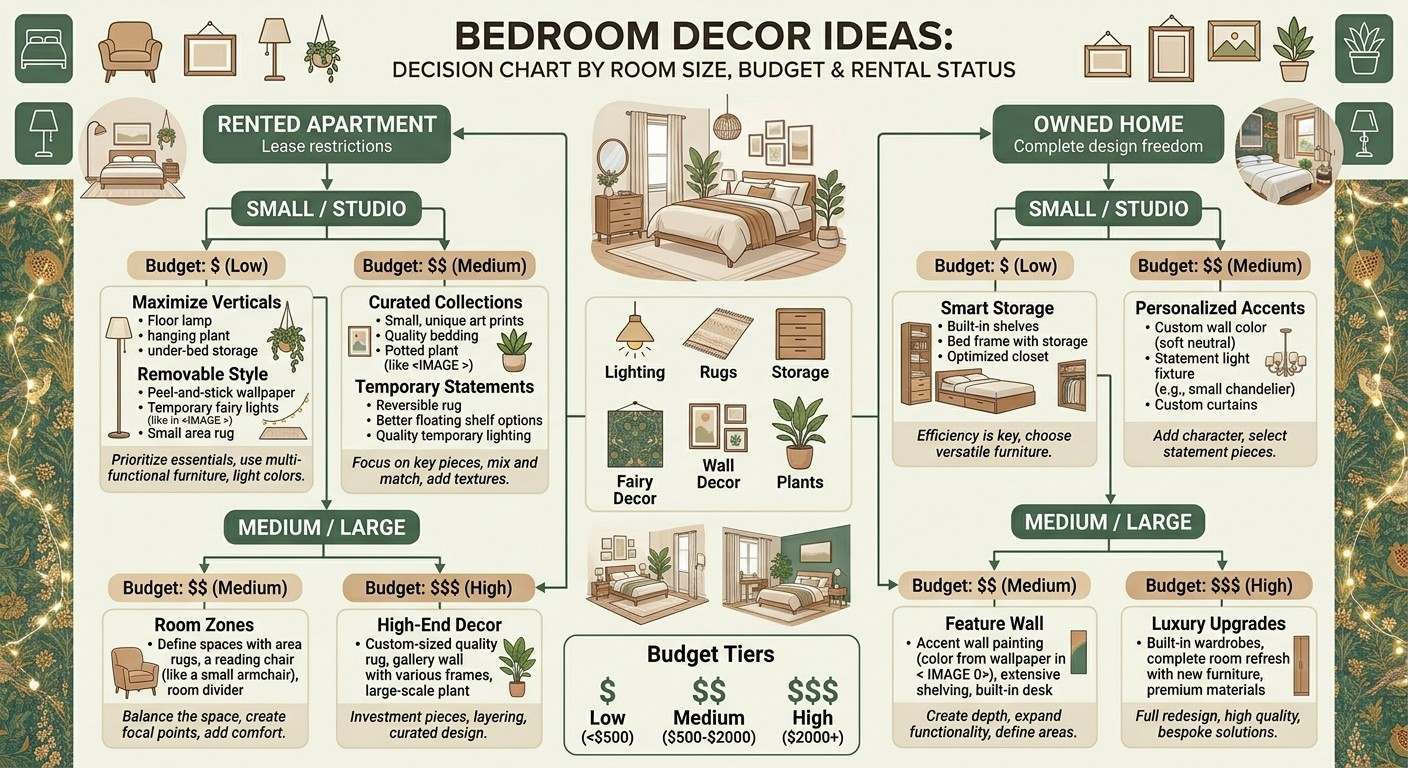
| Your situation | Priority move | Skip |
|---|---|---|
| Small/multi-purpose | Floating shelves, wall sconces, under-bed storage | Floor bookcases, table lamps, eating nightstand space |
| Renting | Peel-and-stick wallpaper, plug-in lighting, command-strip ledges | Paint, drilled shelving |
| Tight budget | New bedding, rearranged furniture, one large art piece | Multiple small cheap accent pieces |
| Shared room | Neutral shared base + split personal accents | Full-compromise styling nobody likes |
| Any bedroom | Warm bulbs, layered lighting, real plants | Overhead-only lighting, cool-white string lights near the bed |
If you take one thing from this: match the idea to your actual constraint (space, lease, budget, or who shares the room) before you match it to a style — and check whether the trend you’re chasing works against your sleep before you commit to it.

