A TV wall has to look good twice a day: once with the screen glowing, and once switched off as a large black rectangle. Most advice (a gallery wall here, an accent color there) only solves one of those. This guide sorts your options by what actually limits you, such as whether you can drill, what you want to spend, and how big the wall is, so you can pick a route and get on with it.
Measure Three Things Before You Buy Anything
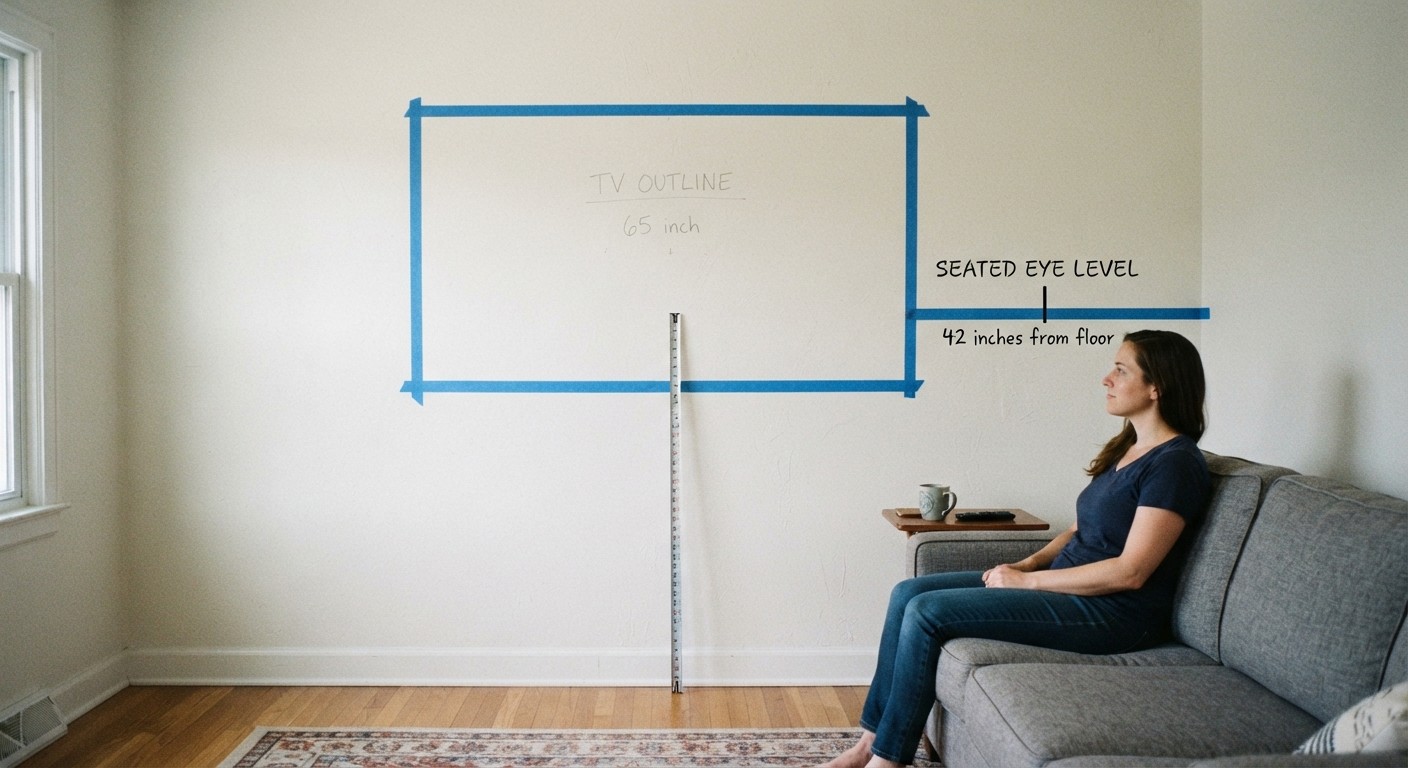
Height. The center of the screen should sit at seated eye level, typically about 40 to 42 inches (102 to 107 cm) from the floor with a standard sofa. Outline the TV on the wall with painter’s tape, sit down, and check. A TV mounted much higher, such as above a fireplace, calls for a tilting mount.
Scale. A 65-inch TV is about 57 inches (145 cm) wide, nearly half of a 10-foot (3 m) wall. Anything you hang near it needs comparable visual weight. A small clock above a big screen looks like an afterthought, not a design choice.
Light. Check glare from windows and lamps at the time of day you actually watch. Fixing it after mounting is the expensive way to learn.
Suits: every room size. This is the free step that makes every later idea work.
Pick Your Route by What You’re Allowed to Change
| Your situation | Safe moves | Rough cost (USD) |
|---|---|---|
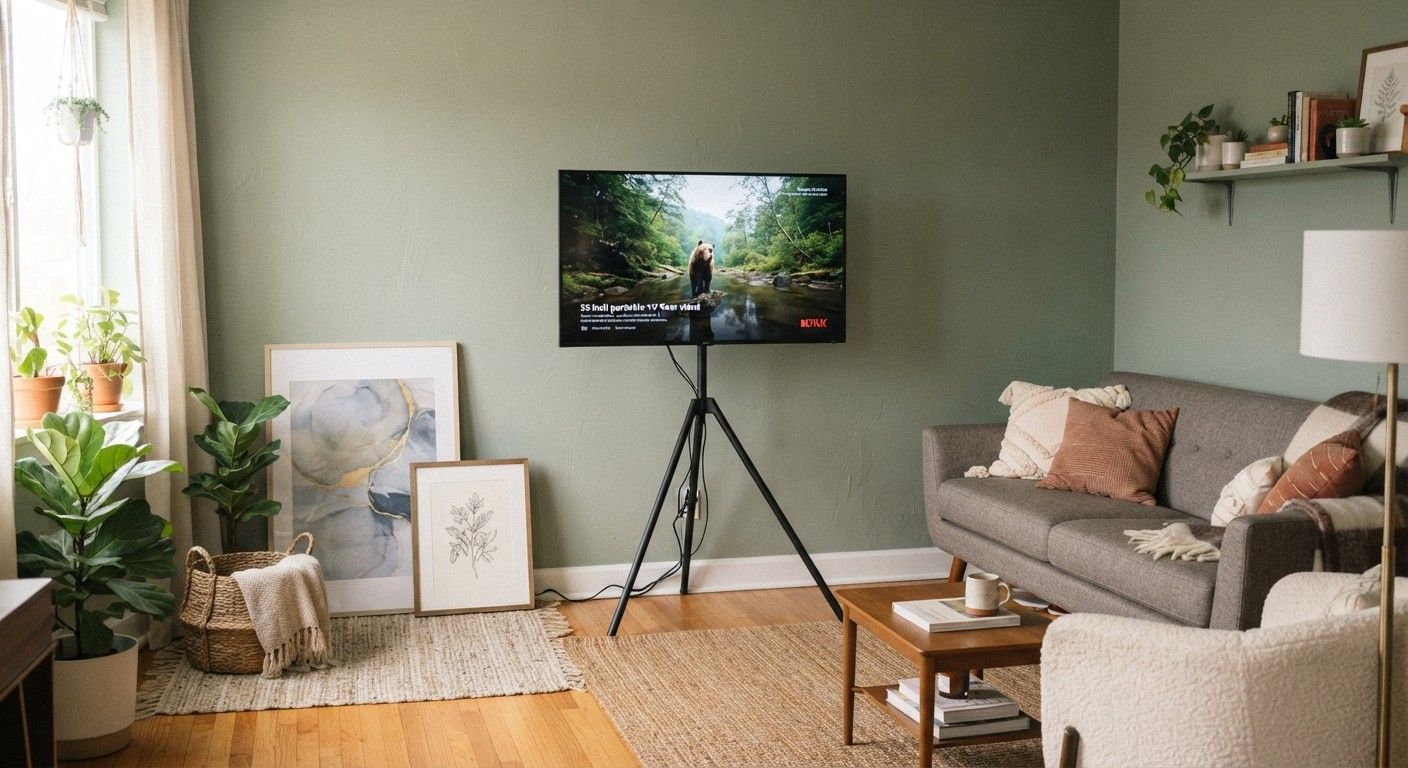
| Renting, no drilling | Portable floor stand or console, leaning art, bias lighting, adhesive cord covers, peel-and-stick slat panels | $5–$85 per item |
| Renting, landlord says yes | Stud-mounted bracket, one painted wall, shelves | $25–$90 for paint |
| Owning | Everything above, plus in-wall cables and built-ins | Varies widely |
For renters, a floor stand with a VESA bracket gives proper viewing height without making the wall carry the weight. If you can’t identify your wall type, that’s a signal not to wall-mount.
Route 1: Make the TV Disappear
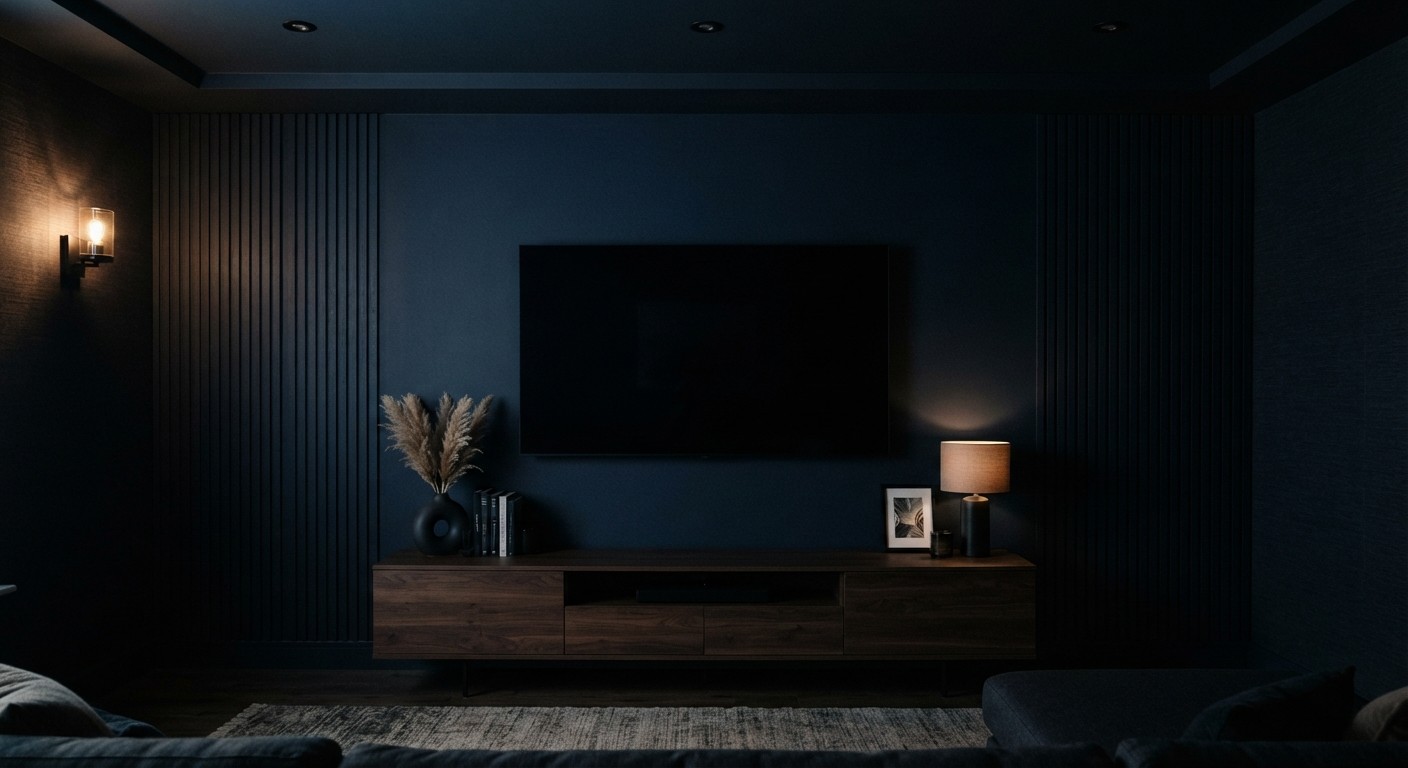
Dark matte paint (Style: Moody, Modern). Charcoal, navy, or deep green makes a switched-off screen merge into the wall, and a matte finish cuts reflections. Paint runs about $20–$70 a gallon, and one gallon covers roughly 350 sq ft (32 sq m), enough for most single walls. With tape and a roller, budget $25–$90 all-in. Before: a black rectangle on a pale wall. After: a calm, deep backdrop where the screen barely shows.
Honest take: it’s the best value here, but a dark wall can make a small, dim room feel tighter. Test a sample patch first. Suits: medium to large rooms with decent daylight. If you’re painting yourself, our living room decor DIY guide on what’s worth making versus buying helps you decide how far to go.
Gallery wall around the TV (Style: Eclectic, Traditional). Treat the screen as one piece in the collection. Use a few large frames to echo its size, then layer smaller ones. Keep the art black and white to blend the TV in, or go colorful to pull the eye away from it. Cost is mostly frames you already own. Suits: any room with an open wall on at least two sides of the TV.
Art-mode TV (Style: Modern, Minimalist). Displays like Samsung’s The Frame show artwork when switched off. A 2026 report lists the 55-inch at about $1,200 in the US, with larger sizes costing more, so check current local pricing. Honest take: you’re paying a premium for a trick that dark paint plus a good print gets you most of the way to. Suits: owners with open-plan spaces.

Route 2: Make the Wall the Feature
Slat or fluted wood panels (Style: Modern, Japandi, Rustic). US listings run about $73–$230 per 2–4 panel pack, with premium veneer costing more. UK panels around 2.4 m × 0.6 m start near £62 each. Cost scales with coverage, so measure the wall first. Panels are marketed as sound-softening, but don’t expect studio results. Peel-and-stick versions (about $82 for four) suit renters. Test a hidden spot first, since adhesive can mark paint. Suits: large living rooms and open plans.
Floating shelves beside the TV (Style: Minimalist, Scandi). A 43-inch (110 cm) shelf like IKEA’s LACK costs about $20–$30 each in US listings. It’s rated around 22 lb (10 kg), and some reviewers report sagging, so screw into studs and skip heavy books. Keep to a few objects per shelf, since cluttered shelves compete with the screen. Suits: studios and small apartments. If the TV sits on a console, size the console and styling pieces with our living room decor table guide.
Built-in cabinetry (Style: Traditional, Coastal). This is the polished option, with hidden storage and a custom look. Costs vary too widely to quote, so get local quotes. Suits: owners with large rooms.

The Unglamorous Part: Cords and Light
Cords. Paintable surface raceway kits cost about $5–$22 in US listings. Paint them to match the wall, and the dangling black cable disappears. In-wall kits (around $90 for one US option) hide power and cables fully, but check your local electrical rules and use a licensed electrician if unsure. Before: cords dangling down the wall. After: a painted channel you stop noticing.
Bias lighting. A USB LED strip behind the TV costs roughly $8–$40. Makers claim it softens the contrast between a bright screen and a dark room, which eases eye strain. Treat that as a comfort feature, not a medical one. Suits: any room where you watch at night.
What to Skip
- A mirror above the TV. It’s likely to bounce window and lamp light straight into the screen.
- A TV in a corner, unless the room leaves you no choice. It tends to disrupt the flow of the room.
- Tiny decor above a big screen. Go bigger or go without.
Frequently Asked Questions
What do you put on the wall behind a TV?
Choose based on what the wall needs most. For a quiet look, paint it a dark matte color so the screen blends in. For a feature, use slat panels or flanking shelves. For personality, surround the TV with a gallery of frames. Keep anything above the TV close to the screen’s visual weight.
What color should the wall behind a TV be?
Dark, matte shades such as charcoal, navy, or deep green make a switched-off screen blend into the wall and cut reflections. Lighter walls make the TV stand out as a clean rectangle, which suits bright rooms. In a small, dim living room, a dark wall can make the space feel tighter, so test a sample first.
How high should a TV be mounted?
Aim to put the center of the screen at seated eye level, which is typically around 40 to 42 inches (about 102 to 107 cm) from the floor with a standard sofa. Mark the TV’s outline with painter’s tape first and sit down to check. If it must go higher, such as above a fireplace, use a tilting mount.
How do you hide TV cords without cutting into the wall?
Use a paintable surface raceway, a snap-on channel that sticks to the wall and covers the cords, then paint it to match. Kits cost roughly $5 to $22 in the US. For a fully hidden look, an in-wall power and cable kit exists, but check local electrical rules first.
How can I decorate around a TV in a rental?
Skip the drill. Use a portable floor stand with a VESA bracket to get proper viewing height, or keep the TV on a console. Then dress the wall with leaning art, peel-and-stick slat panels, or paint, if your landlord allows it, and add a USB bias light behind the screen.
Quick Reference and Checklist
| Idea | Style | Cost (USD) | Best for | Renter-friendly? |
|---|---|---|---|---|
| Dark matte paint | Moody, Modern | $25–$90 | Medium–large rooms with daylight | Only with permission |
| Gallery wall | Eclectic, Traditional | Mostly frames | Any room with open wall space | Check lease (nails) |
| Art-mode TV | Modern, Minimalist | ~$1,200+ (55 in, US) | Owners, open plan | Yes (portable) |
| Slat panels | Modern, Japandi, Rustic | ~$73–$230 per pack | Large rooms | Peel-and-stick only |
| Floating shelves | Minimalist, Scandi | ~$20–$30 each | Studios, small apartments | Needs drilling |
| Cord raceway | Any | $5–$22 | Any room | Yes (adhesive) |
| Bias lighting | Any | $8–$40 | Night watching | Yes |
Before you start:
- Tape the TV’s outline at seated eye level and sit down to check.
- Check glare at the time of day you watch.
- Confirm what you’re allowed to change.
- Pick one route, either disappear or feature, not both.
- Plan the cords first.