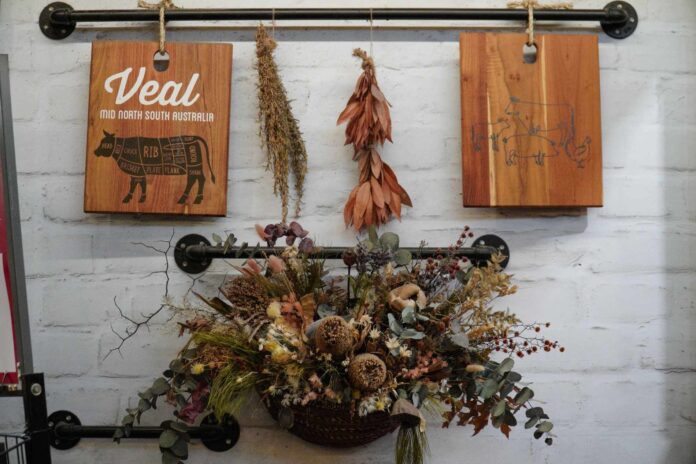
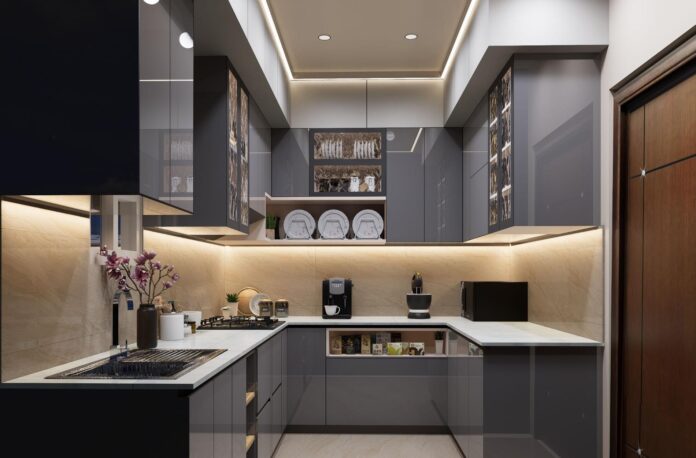
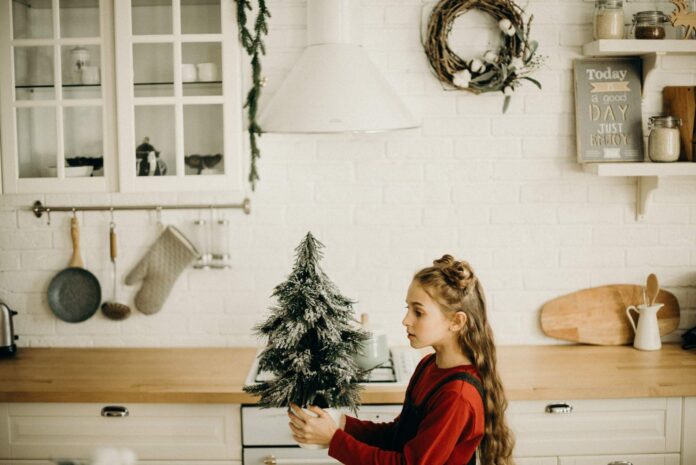
Bare kitchen walls are easy to ignore until the cabinets, tile, and lighting are done and the room still feels like a showroom. Farmhouse style fixes that better than most, because it’s built on worn, useful, collected things. The catch is that the look has been copied so heavily that the wrong pieces now date a kitchen faster than a blank wall would. This guide sorts farmhouse kitchen wall decor by the three things that decide what works: how much heat and grease the wall gets, what you want to spend, and how big the kitchen is.
Check your wall first: heat, steam, and grease
Most farmhouse inspiration photos hang paper art right beside a range. In a kitchen that gets cooked in, that’s where things go wrong. Think of your walls in three zones:
- Cooking zone (above and beside the hob or range): tile, metal, enamel, copper, or nothing. Skip paper, canvas, and cheap frames.
- Splash zone (around the sink): sealed wood, metal, or art behind glass. Unframed prints will warp.
- Dry zone (dining nook, the wall beside the fridge, the entry wall, the stretch up high): the best place for gallery walls and framed botanicals. If that high stretch is your gap, see decorating the gap above your cabinets.
Sources disagree on safe distance. One retailer guide says to keep canvas about 24 inches from direct heat and steam. Another page from the same seller says five feet. A European frame maker suggests roughly 60 cm from steam and 80 cm from grease sources. None of these are independent standards, so if your range has no extractor hood, go with the biggest number. Very pale prints near the hob are also known to yellow over time.
The authenticity test: will it still look right in two years?
Designer roundups for 2026 are split on farmhouse. Several list modern farmhouse as fading, blaming all-white rooms, overused shiplap, and furniture distressed at the factory. Others say the core elements, like a farmhouse sink or a sturdy table, are classic enough to last. One 2025 report even has the style returning in a softer, cottage-leaning form. Both can be true: the architecture lasts, and the themed accessories date.
Run each wall piece through four questions:
- Is the age real? A secondhand enamel colander passes. A new one with a painted-on chip doesn’t.
- Is it useful? Peg rails, shelves and hooks earn their place. A decorative “Gather” sign doesn’t, and word signs are the item designers single out most often as dated.
- Could it have been in a farmhouse before the style had a name? Botanical prints, a scrubbed wooden board, and handmade pottery qualify.
- Is it one of a matched set? A “farmhouse collection” is the quickest route to looking catalog-bought.
Before: three matching signs, a clock and a wreath crowded onto one wall. After: a peg rail holding a real pan, a strainer and a linen towel, with three framed herb prints on the drywall beside it.
Ideas by budget
Under $50
Shaker peg rail · Style: Modern farmhouse / Shaker · $10–$25 for a basic 24–36 inch rail in the US (UK oak rails have been listed around £30–£45). Best for small and galley kitchens, because it takes pans, towels, and baskets off the counter. Before: a bare wall with a crowded drawer. After: daily tools on display and a wall that looks collected.
Vintage enamelware · Style: Vintage farmhouse · $8–$55 secondhand for colanders and pitchers, or about $17–$40 for new vintage-style versions. Hang pieces from a peg rail. Enamel can take the heat that would ruin paper, so it’s the one decorative piece that suits the cooking zone.
Botanical herb prints · Style: Cottage / traditional farmhouse · $30–$40 for a budget set of three, or roughly $80–$150 for name-brand framed sets. Keep them in the dry zone, behind glass.
Floating wood shelves · Style: Rustic/modern farmhouse · roughly $20–$40 for an entry-level pair (based on an AU$33 listing in Australia; US prices not checked). Best for one empty wall in a medium kitchen. Limit yourself to three or four objects, such as a pitcher, a small framed print, and a plant.
$50–$150
Handmade hardwood peg rail · Style: Shaker / modern farmhouse · $55–$120 from handmade marketplaces. Pick a longer span for a large kitchen.
Framed vintage botanical set · Style: Traditional farmhouse · $60–$150. Real age adds the authenticity the “matched set” lacks.
Painted beadboard half wall · Style: Classic farmhouse · PVC beadboard runs about $12–$20 per 4×8 sheet and shiplap $30–$55, according to one price guide (check your local store). Trim, adhesive, and paint cost extra. Best for the dining-side wall of a medium to large kitchen. Paint it sage, soft blue, or deep green rather than defaulting to white. Keep it out of the cooking zone, because the grooves trap grease.
By kitchen size
- Small or galley kitchen: use one vertical element, such as a peg rail plus one shelf, and stick to two or three materials. Save art for the end wall.
- Medium kitchen with a dining nook: put a painted beadboard wall behind the table with a trio of prints above it. If the room is still half-finished, buy the useful pieces first and add decor later; how finished your kitchen really is helps you decide the order.
- Large or open-plan kitchen with an island: scale up. A common guideline says a grouping should fill about two-thirds of the wall space available, so measure first and size the display to match.
No-drill options
Renters can lean framed prints on a shelf or ledge instead of hanging them, and peel-and-stick framed prints are sold as damage-free. Adhesive hooks suit light pieces like a small print or basket, not a cast-iron pan. Check your lease before drilling a peg rail.
An honest take
- Open shelves look good but collect grease and dust, and some 2026 roundups list them as fading. They’re fine if you like them and will wipe them down.
- Real vintage has charm, but check condition. Copper pans, for example, need an intact lining, which is costly to restore.
- Beadboard and shiplap near the hob will trap grease, so keep them on dry walls.
- Pre-distressed decor looks cheap, and the savings aren’t worth it.
- Seasonal swaps are easy on a peg rail or shelf. In the US and UK, dried herbs and greenery suit the cooler months. In Australia, the calendar flips, so December means summer fruit and bright linen.
If a wall zone is off limits, a counter display can carry the look instead. See how much your countertops can hold.
Frequently Asked Questions
Is farmhouse kitchen decor still in style?
Designers disagree. Some 2026 trend roundups call modern farmhouse dated, mainly because of all-white rooms, overused shiplap, and mass-produced “distressed” pieces. Others say its classic elements, like a farmhouse sink or table, will not date. The safest route is authentic, worn-in materials and a few personal pieces rather than a themed set.
Can you hang art above the stove in a farmhouse kitchen?
It’s best avoided. Heat, steam, and grease age paper, canvas, and cheap frames quickly. Sources vary on safe distance, from roughly 24 inches to several feet, and none of these are independent standards, so lean cautious. Put art on a dining-side wall, and use tile, metal, or an enamel piece near the range instead.
What is the 2/3 rule for wall art?
It’s a guideline that your art, or a grouped arrangement, should fill about two-thirds of the wall space available. In a kitchen, measure the gap between countertop and upper cabinets, or the width of the wall section, then size the grouping to roughly that proportion rather than scattering small pieces.
What are common mistakes in farmhouse kitchen decor?
Overcrowding the walls, ignoring scale, and buying a matched “farmhouse” set are the big ones. Pre-distressed pieces and word signs tend to look inauthentic, and pale paper prints near the range can yellow. Choose fewer, better pieces in a warm, cohesive palette and give each one room to breathe.
How do you decorate a small farmhouse kitchen’s walls?
Go vertical and keep it light. A single peg rail, one floating shelf, or a tight trio of framed prints beats a full gallery wall. Use a narrow wall or the stretch above cabinets, keep colors warm and neutral, and let one piece be the focal point so the kitchen doesn’t feel crowded.
Quick reference
| Idea | Style | Budget (USD) | Best for | Safe zone |
|---|---|---|---|---|
| Shaker peg rail | Modern farmhouse | $10–$25 (handmade $55–$120) | Small and galley kitchens | Any, but pans suit cooking zone |
| Vintage enamelware | Vintage farmhouse | $8–$55 | Any size | Cooking zone OK |
| Botanical herb prints | Cottage farmhouse | $30–$40 (branded $80–$150) | Dry walls, nooks | Dry zone only |
| Floating wood shelves | Rustic | ~$20–$40 a pair | Medium kitchens | Dry and splash zones |
| Painted beadboard half wall | Classic farmhouse | ~$12–$55 per 4×8 sheet | Medium to large kitchens | Dry zone |
Checklist before you buy: pick your drywall, measure it, choose one useful piece (rail or shelf) before one decorative piece, and make sure at least one item has real age.