Before you pick a theme, check these three things
- What can’t you change? If you’re renting, permanent paint, wallpaper, and light fixtures are usually off the table. That rules out any theme that leans on a dramatic accent wall as its main move.
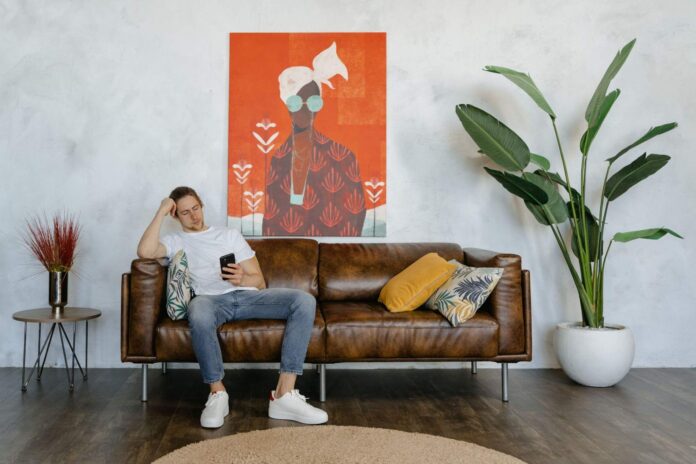
- What are you keeping? A theme only “fits” if it can absorb your current sofa, rug, or shelving — not fight them. If your sofa is a warm honey-brown leather, a cool Scandinavian palette will always look slightly off no matter how many white throws you add.
- Who uses the room daily? Pale boucle and toddlers don’t mix. A theme you love in photos but can’t maintain becomes a theme you resent in six months.
With that in mind, here are eight living room themes, grouped by what they actually demand of your space — not just what they look like.
For renters: themes that don’t require touching the walls
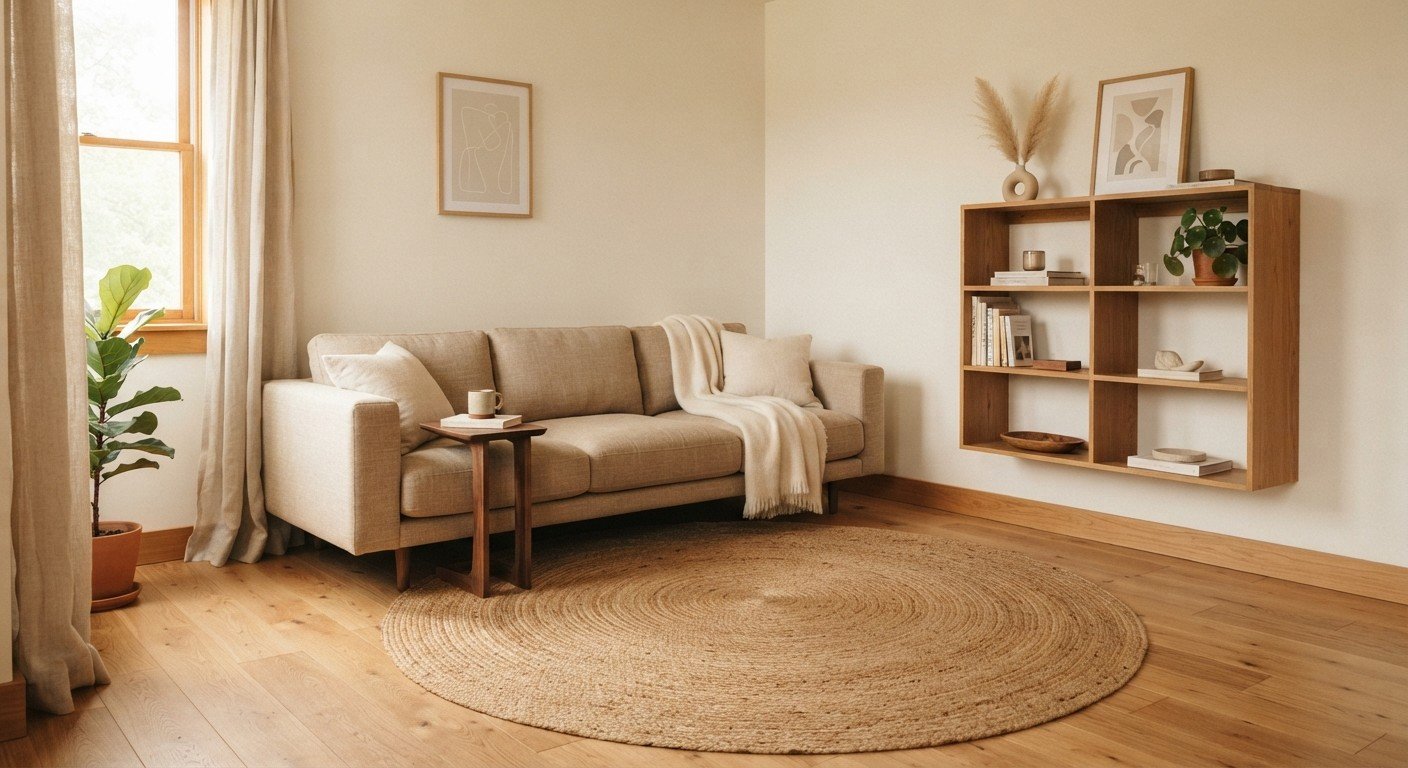
1. Warm Minimalist (Small apartments, studios, rentals)
Fewer pieces, but each one earns its place: a low-profile sofa, one substantial rug, and warm wood tones instead of the colder gray-and-white minimalism of a few years ago. 2026 shift: minimalism now leans warm — think clay, sand, and olive rather than stark white.
- Budget: A jute or wool-blend area rug ($80–200), linen throw pillows ($20–35 each), a floating wood shelf ($30–60)
- Best for: small apartments and studios where visual clutter reads as physical clutter
- Trade-off: it photographs beautifully but can feel cold if you don’t add texture — layer in a chunky throw blanket and at least one plant to avoid a showroom feel
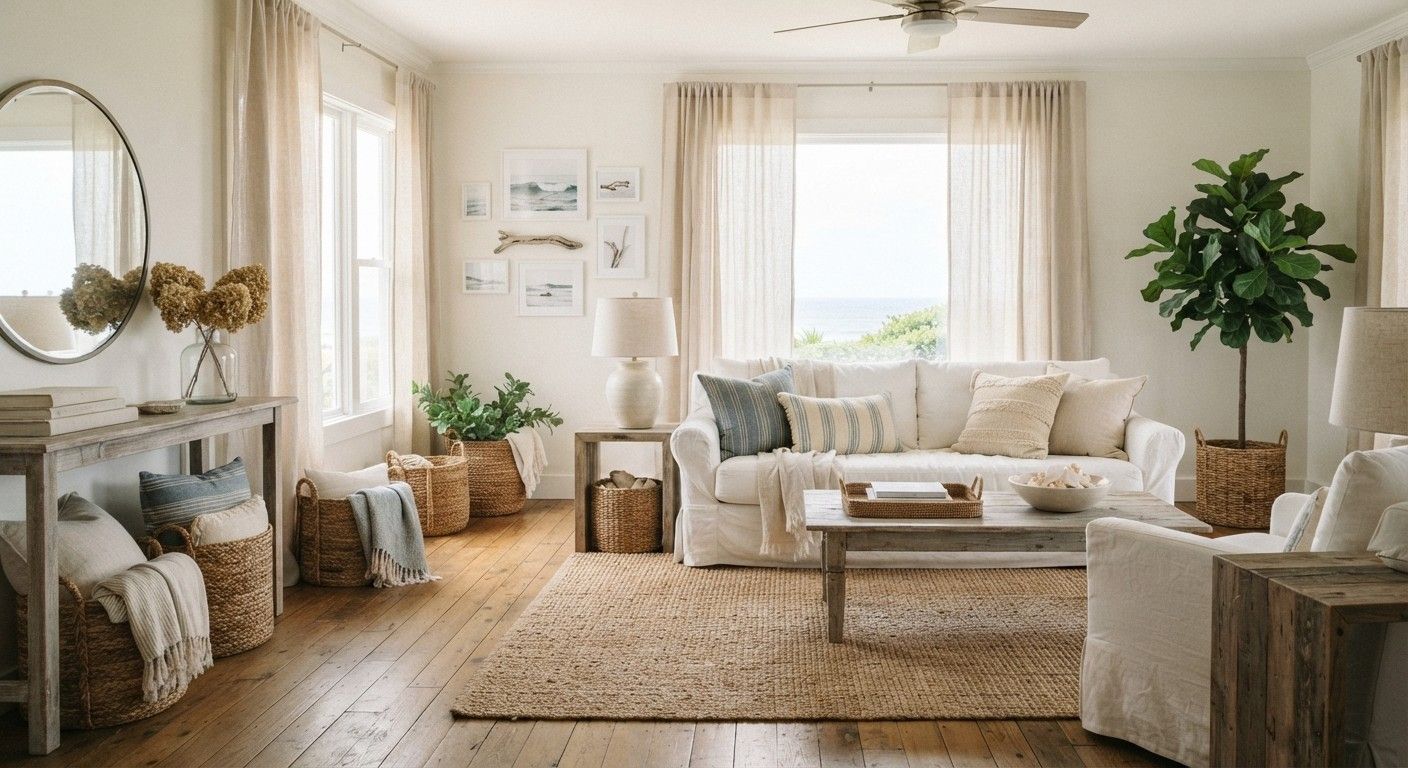
2. Coastal, Without the Beach House
You don’t need proximity to an ocean — this is really about sandy neutrals, soft blues, and breezy, washable fabrics.
- Budget: Slipcovered sofa or washable cover ($150–400), woven seagrass baskets ($15–35), linen curtains ($40–90/panel)
- Best for: rentals, since it’s built almost entirely from swappable soft furnishings rather than paint or built-ins
- Pet/kid note: washable slipcovers make this one of the more forgiving themes on this list if you have kids or pets
- Trade-off: leans casual — if you want a room that reads “formal,” this isn’t it
3. Removable Art Deco (Renters who want drama)
Gold-toned metal accents, velvet textures, and geometric patterns deliver a glamorous look through furniture and accessories alone.
- Budget: Velvet accent pillows ($20–45), a brass or gold-finish floor lamp ($60–150), geometric wall art in removable frames ($25–70)
- Best for: apartments and rental living rooms, since none of the signature elements require paint or permanent fixtures
- Trade-off: velvet shows wear and pet hair fast — skip this one if you have shedding pets and can’t commit to regular cleaning
For working with furniture you already own
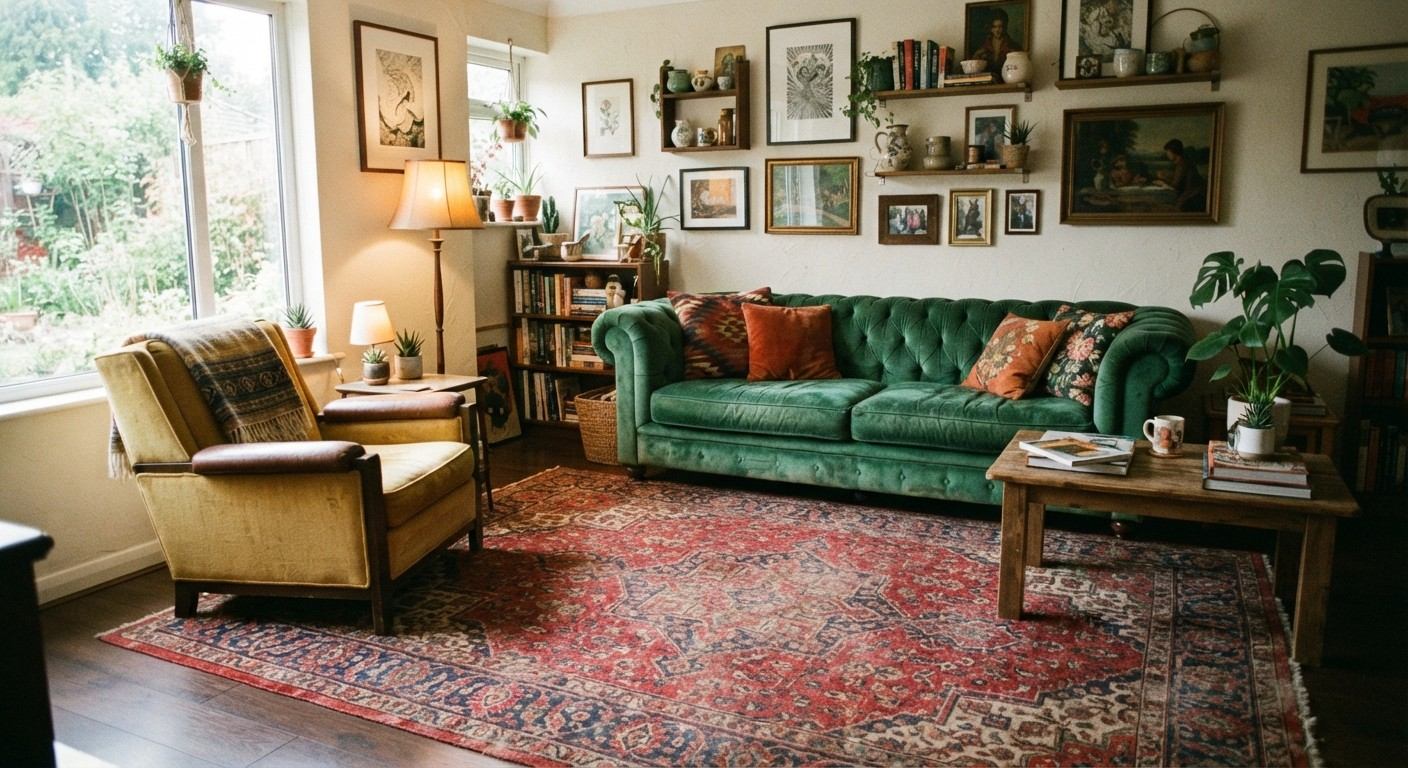
4. Eclectic (“Eclectica”)
This is the defining 2026 living room theme, according to multiple designers: furnishings that harmonize without matching. Instead of a matched three-piece suite, you pair a sofa in one style with mismatched armchairs.
- Budget: One statement vintage or thrifted chair ($50–250 secondhand), a unifying rug to visually tie pieces together ($100–300)
- Best for: anyone who already has odd pieces from different life stages (hand-me-downs, old apartment leftovers) and doesn’t want to replace them
- Before/after: Before — a room that looks unfinished because nothing matches. After — the same furniture, unified by one consistent color thread running through cushions, art, and a rug, so the mismatch reads as curated instead of accidental
- Trade-off: it’s the easiest theme to get wrong — without a repeated color or material tying pieces together, “eclectic” just looks like clutter

5. Rustic/Farmhouse (Large or open-plan living rooms)
Repurposed wood, woven baskets, and simple ceramics — comfort-first, with a lived-in rather than showroom feel.
- Budget: Reclaimed-look wood coffee table ($150–400), woven storage baskets ($20–50), stoneware or ceramic accent pieces ($15–40)
- Best for: larger rooms and family rooms where furniture needs to survive daily use, not just look good in photos
- Trade-off: can tip into “cluttered cottage” fast — this theme needs more restraint than its cozy reputation suggests
Bold or maximalist directions (if you’re starting fresh)
6. Big, Saturated Color
2026’s clearest departure from the neutral-heavy 2020s: deliberate, saturated wall and textile color used as a structural design element, not just an accent.
- Budget: A single saturated-color accent chair ($200–500) is a lower-commitment entry point than painting; full wall paint ($40–70/gallon) if you’re not renting
- Best for medium to large rooms with good natural light — saturated color reads muddy in dim spaces
- Trade-off: hardest theme to resell a home around and hardest to “undo” if you get tired of it — paint is cheap, but matching furniture and textiles to a bold palette usually isn’t

7. Biophilic (Plant-Forward)
Green as the base palette, layered plant sizes, rattan or bamboo furniture, botanical prints.
- Budget: A mix of small-to-large plants (real: $10–60 each; realistic faux: $15–45), rattan accent furniture ($80–250)
- Best for: rooms with decent natural light; faux plants solve this for darker rooms
- Pet/kid note: check plant toxicity before buying if you have pets — this is the one theme where the “look” can conflict with safety
- Trade-off: real plants are genuinely high-maintenance; most “biophilic” rooms in inspiration photos are more plant-styled than plant-lived-with
8. Grandmillennial / Traditional-with-a-twist
Classic silhouettes and heritage patterns (chintz, florals, fringe) mixed with one or two modern pieces so it doesn’t read as a period room.
- Budget: A vintage-style lamp ($40–100), patterned throw pillows ($25–45), fringe-trim curtains ($50–110/panel)
- Best for: living rooms with existing traditional or inherited furniture you want to modernize rather than replace
- Trade-off: easy to tip into “costume” territory — the twist (one clean-lined modern piece) is what keeps it current instead of dated
The honest trade-off nobody puts in these lists
The trendiest themes right now (saturated color, full maximalism) are also the hardest to walk back later — repainting is cheap, but replacing furniture and textiles built around a bold palette isn’t. The “safest” themes (warm minimalist, coastal) are safest specifically because they’re the least architecturally committed — which also means they’re the ones most likely to look like everyone else’s living room. No theme is both maximally distinctive and maximally low-risk; that trade-off is the actual decision, not the color palette.
Quick-reference table
| Theme | Best room size | Renter-friendly? | Kid/pet-friendly? | Starting budget |
|---|---|---|---|---|
| Warm Minimalist | Small–medium | Yes | Moderate | $130–300 |
| Coastal | Any | Yes | High | $200–500 |
| Removable Art Deco | Small–medium | Yes | Low | $100–260 |
| Eclectic | Any | Yes | Moderate | $150–550 |
| Rustic/Farmhouse | Medium–large | Partial | High | $180–500 |
| Saturated Color | Medium–large | No (paint) | Moderate | $200–600+ |
| Biophilic | Any (light-dependent) | Yes | Check pet safety | $100–350 |
| Grandmillennial | Medium–large | Yes | Moderate | $115–260 |
Quick decision checklist:
- Renting? → Cross out Saturated Color unless you’re doing it through furniture only
- Have pets that shed or scratch? → Avoid velvet-heavy Art Deco; lean Coastal or Rustic
- Keeping your current furniture? → Start with Eclectic before anything else
- Want low commitment/easy resale? → Warm Minimalist or Coastal
If you’re working with a small apartment, it’s worth knowing which accents are worth DIYing versus buying outright before you commit to a full theme. And if bold color is the direction you’re leaning toward, this breakdown of how much color you can actually live with day-to-day is worth reading before you paint anything.